Zhang Ziyue, Dong Yi, Wu Bin, Li Yingge, Liu Zehui, Liu Zheming, Gao Yanjun, Gao Likun, Song Qibin, Zheng Zhongliang, Yao Yi
Cancer Center, Renmin Hospital of Wuhan University, Wuhan, China.
Hubei Provincial Research Center for Precision Medicine of Cancer, Wuhan, China.
Front Oncol. 2022 Oct 19;12:965660. doi: 10.3389/fonc.2022.965660. eCollection 2022.
Cancer-associated fibroblasts (CAFs) are the important component of the tumor microenvironment (TME). Previous studies have found that some pro-malignant CAFs participate in the resistance to radiotherapy as well as the initiation and progression of tumor recurrence. However, the exact mechanism of how radiation affects CAFs remains unclear. This study aimed to explore the effect and possible mechanism of radiation-activated CAFs, and its influence on lung cancer.
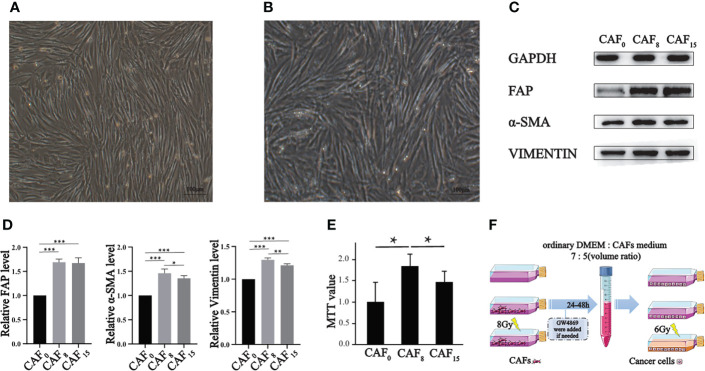
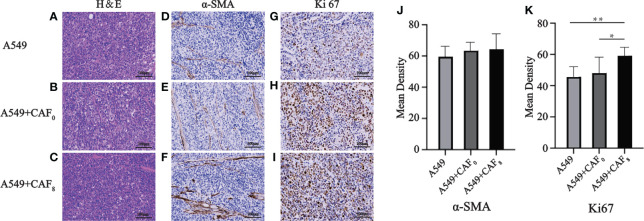
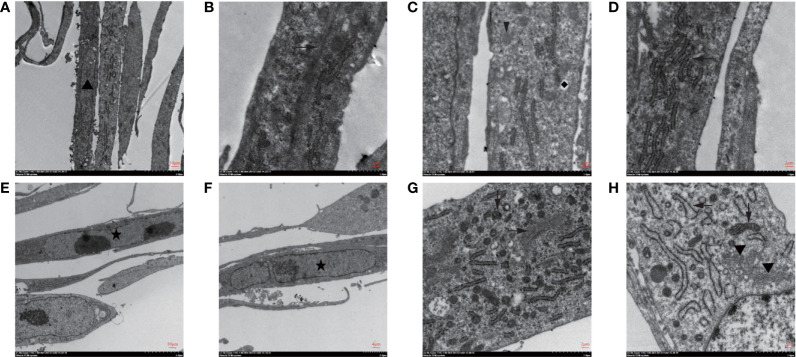
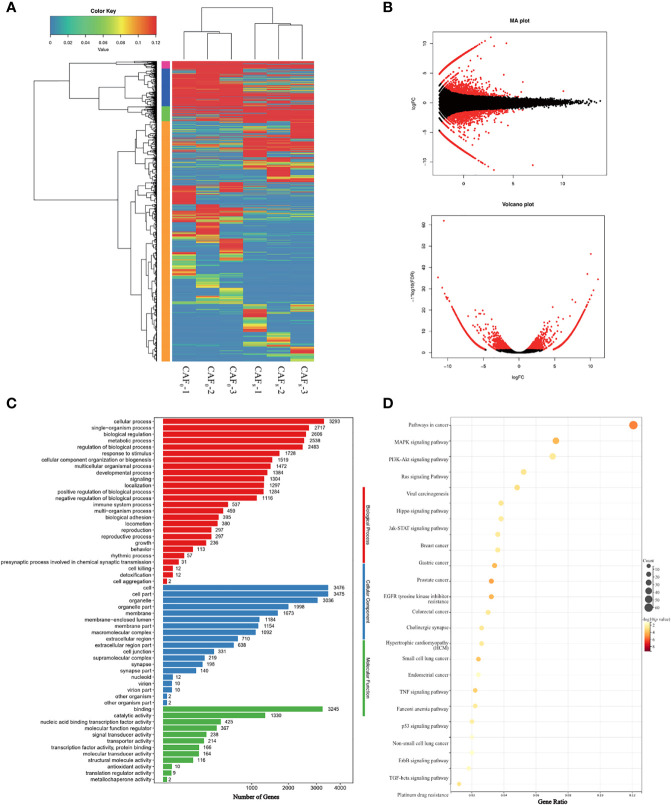
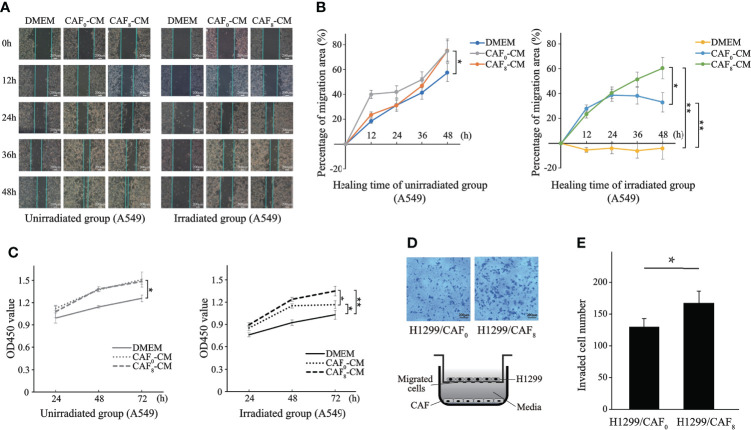
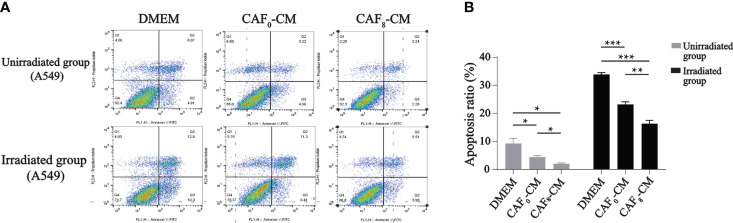
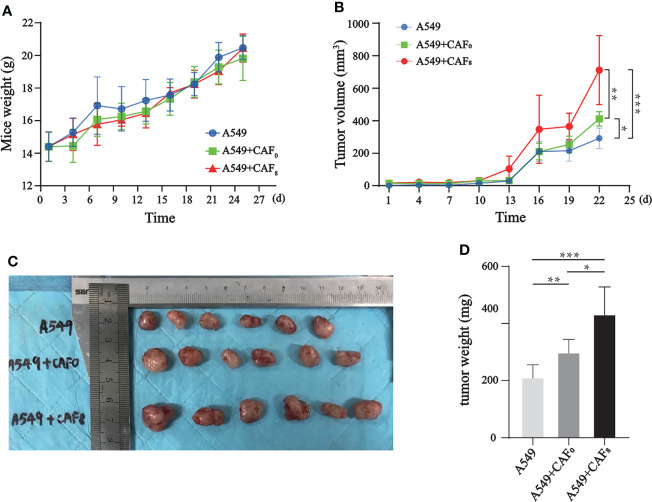
CAFs were isolated from surgical specimens and irradiated with 8Gy x-rays. The changes in cell morphology and subcellular structure were observed. CAFs marker proteins such as FAP and α-SMA were detected by Western Blotting. Cell counting kit-8 (CCK8) assay, flow cytometry, wound healing assay, and transwell chamber assay was used to detect the activation of cell viability and migration ability. A nude mouse xenograft model was established to observe the tumorigenicity of irradiated CAFs . The genomic changes of CAFs after radiation activation were analyzed by transcriptome sequencing technology, and the possible mechanisms were analyzed.
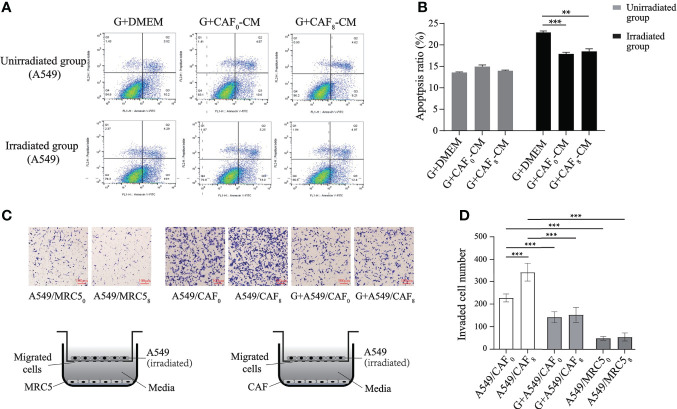
The CAFs showed a disorderly growth pattern after X-ray irradiation. Subcellular observations suggested that metabolism-related organelles exhibited more activity. The expression level of CAFs-related signature molecules was also increased. The CAFs irradiated by 8Gy had good proliferative activity. In the (indirect) co-culture system, CAFs showed radiation protection and migration induction to lung cancer cell lines, and this influence was more obvious in radiation-activated CAFs. The radiation protection was decreased after exosome inhibitors were applied. Vivo study also showed that radiation-activated CAFs have stronger tumorigenesis. Transcriptome analysis showed that genes were enriched in several pro-cancer signaling pathways in radiation-activated CAFs.
Our study confirmed that CAFs could be activated by ionizing radiation. Irradiation-activated CAFs could promote cancer cell proliferation, migration, radiotherapy tolerance, and tumorigenesis. These results suggested that irradiation-activated CAFs might participate in the recurrence of lung cancer after radiotherapy, and the inhibition of CAFs activation may be an important way to improve clinical radiotherapy efficacy.
癌症相关成纤维细胞(CAFs)是肿瘤微环境(TME)的重要组成部分。以往研究发现,一些促恶性CAFs参与放疗抵抗以及肿瘤复发的起始和进展。然而,辐射如何影响CAFs的确切机制仍不清楚。本研究旨在探讨辐射激活的CAFs的作用及可能机制,及其对肺癌的影响。
从手术标本中分离出CAFs,并用8Gy X射线进行照射。观察细胞形态和亚细胞结构的变化。通过蛋白质免疫印迹法检测CAFs标记蛋白如FAP和α-SMA。使用细胞计数试剂盒-8(CCK8)检测、流式细胞术、伤口愈合检测和Transwell小室检测来检测细胞活力和迁移能力的激活情况。建立裸鼠异种移植模型以观察照射后CAFs的致瘤性。通过转录组测序技术分析辐射激活后CAFs的基因组变化,并分析可能的机制。
X射线照射后CAFs呈现无序生长模式。亚细胞观察表明,与代谢相关的细胞器表现出更多活性。CAFs相关标志性分子的表达水平也有所增加。8Gy照射的CAFs具有良好的增殖活性。在(间接)共培养系统中,CAFs对肺癌细胞系表现出辐射保护和迁移诱导作用,且这种影响在辐射激活的CAFs中更为明显。应用外泌体抑制剂后辐射保护作用降低。体内研究还表明,辐射激活的CAFs具有更强的致瘤性。转录组分析表明,辐射激活的CAFs中基因富集于几种促癌信号通路。
我们的研究证实,电离辐射可激活CAFs。照射激活的CAFs可促进癌细胞增殖、迁移、放疗耐受性和肿瘤发生。这些结果表明,照射激活的CAFs可能参与放疗后肺癌的复发,抑制CAFs激活可能是提高临床放疗疗效的重要途径。