Huang Bin, Yu Wenbing, Yang Li, Li Yan, Gu Ning
State Key Laboratory of Bioelectronics, Jiangsu Key Laboratory for Biomaterials and Devices, School of Biological Science and Medical Engineering, Southeast University, Nanjing 210096, PR China.
College of Life Sciences and Chemistry, Jiangsu Key Laboratory of Biofunctional Molecule, Institute of New Materials for Vehicles, Jiangsu Second Normal University, Nanjing 210013, PR China.
Heliyon. 2022 Oct 25;8(10):e11221. doi: 10.1016/j.heliyon.2022.e11221. eCollection 2022 Oct.
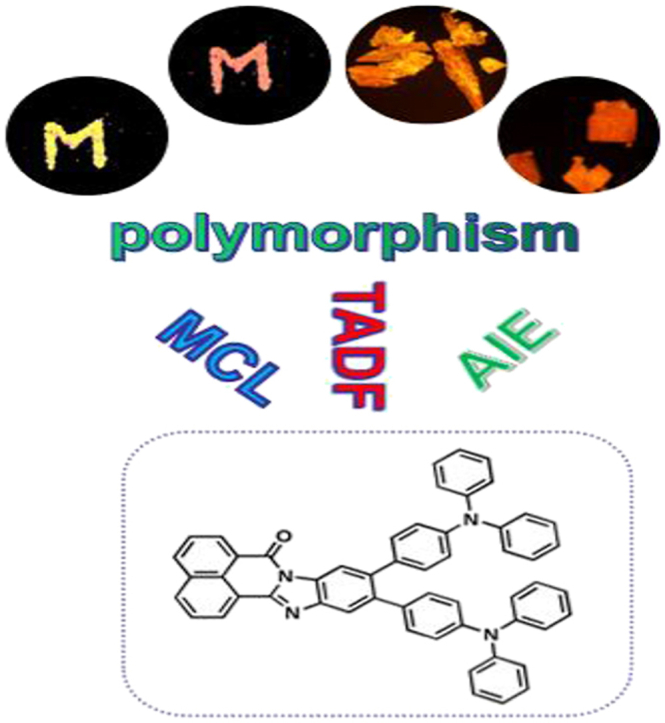
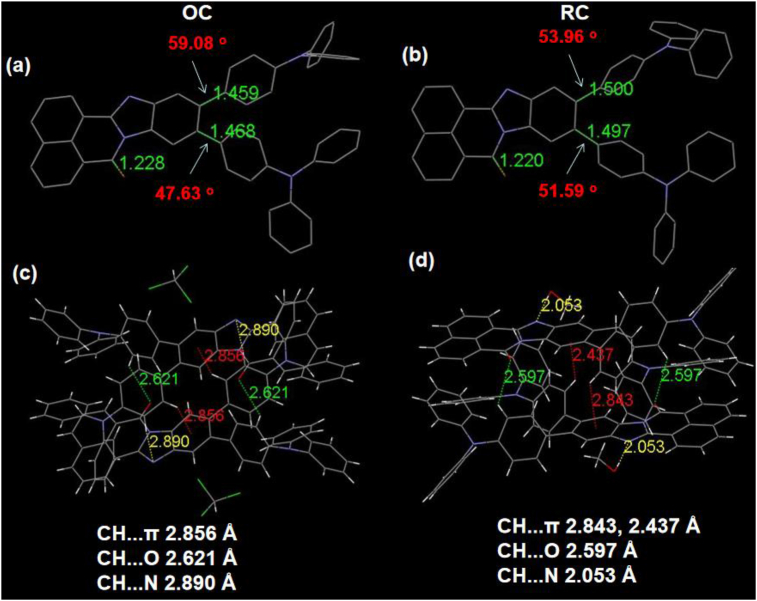
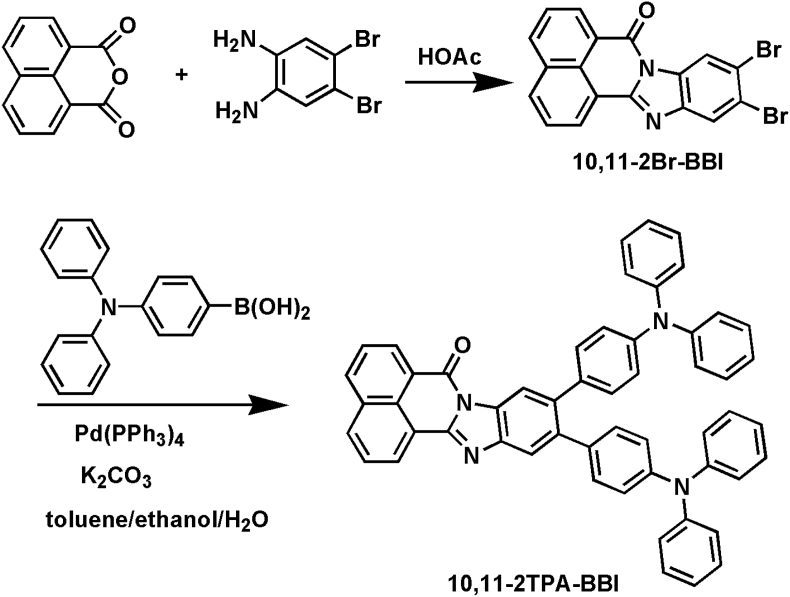
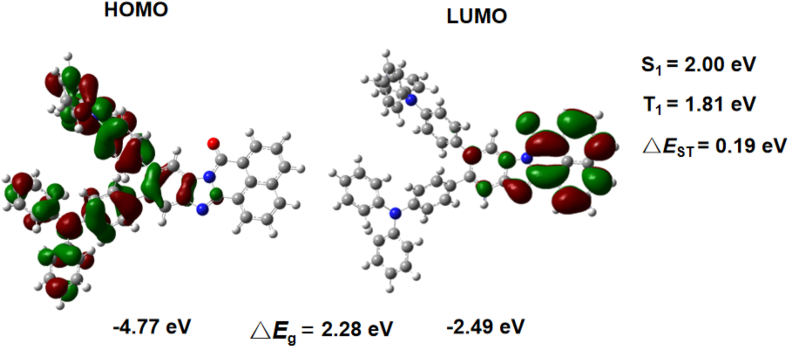
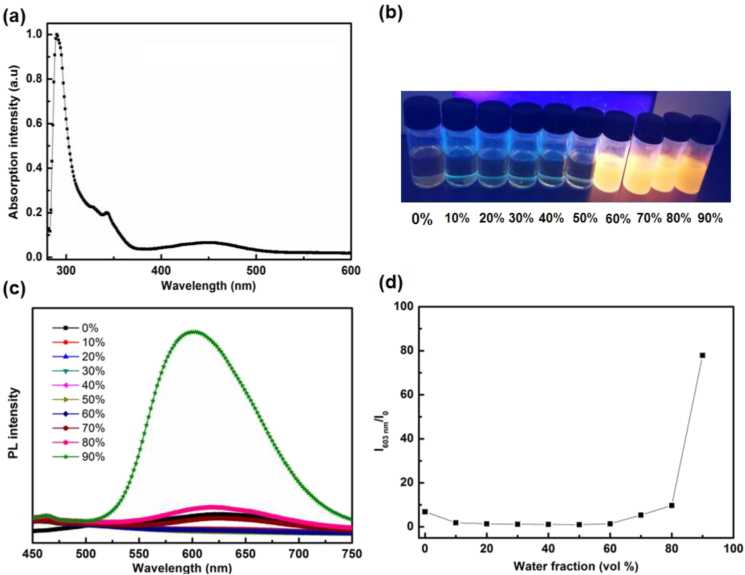
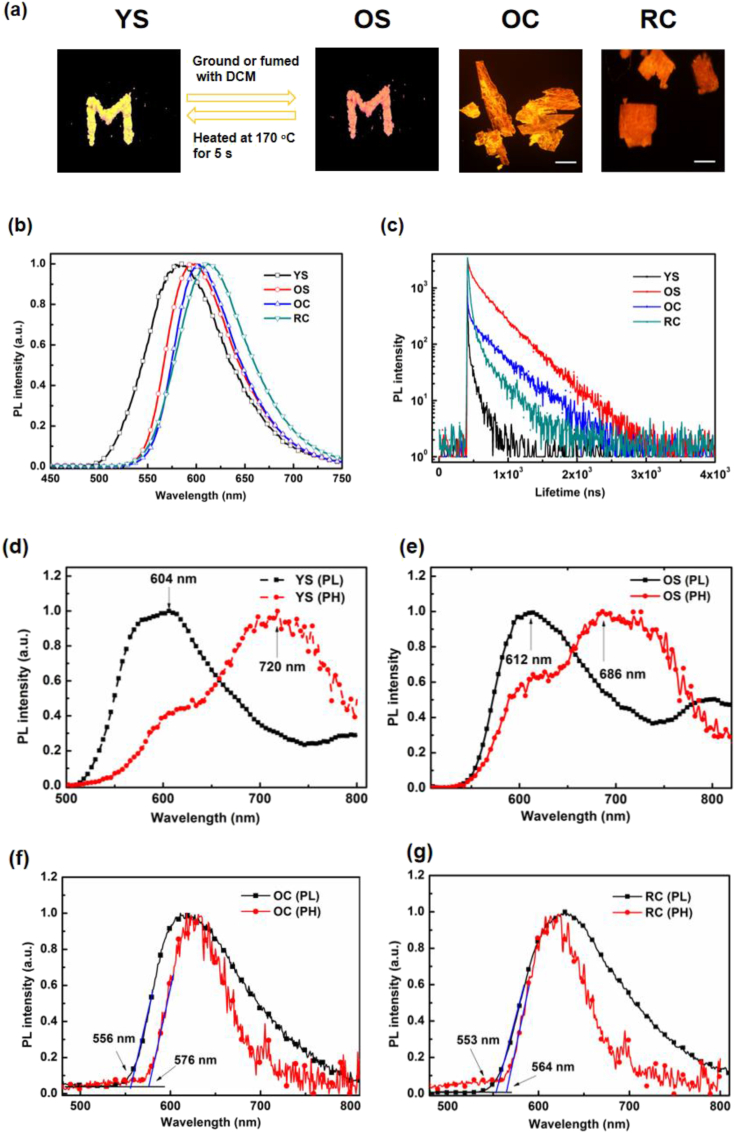
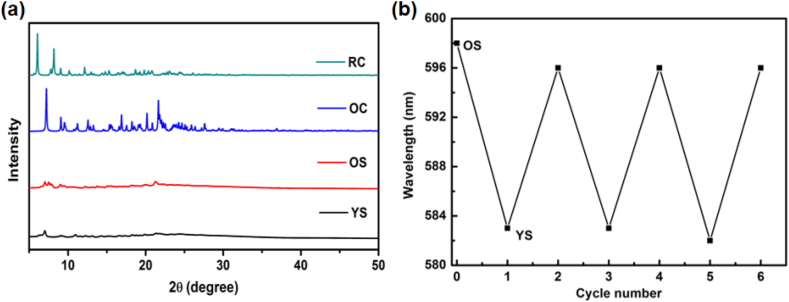
Compared with the large number of single-function materials such as aggregation-induced emission (AIE), mechanochromic luminescence (MCL), or thermally activated delayed fluorescence (TADF) emitters, multifunctional emitting materials offer more opportunities in practical applications. In this report, we provide a simple molecular design strategy towards the conversion of a MCL building block to a multifunctional emitter. Through altering the substituent sites and increasing the number of electron donors and steric hindrance on a normal MCL backbone benzo[,]benzo[4,5]imidazo[2,1-]isoquinolin-7-one, a novel multifunctional material 10,11-bis-(4-diphenylamino-phenyl)-benzo[,]benzo[4,5]imidazo[2,1-]isoquinolin-7-one (10,11-2TPA-BBI) is designed and synthesized. 10,11-2TPA-BBI exhibits simultaneous polymorphism, AIE, MCL and TADF properties. It can form four different aggregate species: yellow solid (YS) and orange solid (OS), orange flake-shaped crystal (OC), and red prism-like crystal (RC). Among them, because of the small energy gaps (Δ s < 0.3 eV) between the singlet and triplet excited states, OS, OC and RC exhibit TADF properties, while YS show normal fluorescence characteristics with a large Δ of 0.33 eV. OS can be reversibly transformed into YS upon external stimuli, which can be attributed to the emission switch between local excited state and charge transfer state. Crystallographic study indicates that the bulky structure and weak intermolecular interactions account for polymorphism and AIE properties. This work will provide a simple molecular design strategy for multifunctional materials.
与大量诸如聚集诱导发光(AIE)、机械变色发光(MCL)或热激活延迟荧光(TADF)发射体等单功能材料相比,多功能发光材料在实际应用中提供了更多机会。在本报告中,我们提供了一种简单的分子设计策略,用于将MCL结构单元转化为多功能发射体。通过改变取代基位点,并在正常的MCL骨架苯并[,]苯并[4,5]咪唑并[2,1 - ]异喹啉 - 7 - 酮上增加电子供体数量和空间位阻,设计并合成了一种新型多功能材料10,11 - 双 - (4 - 二苯胺基 - 苯基) - 苯并[,]苯并[4,5]咪唑并[2,1 - ]异喹啉 - 7 - 酮(10,11 - 2TPA - BBI)。10,11 - 2TPA - BBI表现出同时具有多晶型性、AIE、MCL和TADF性质。它可以形成四种不同的聚集体:黄色固体(YS)、橙色固体(OS)、橙色片状晶体(OC)和红色棱柱状晶体(RC)。其中,由于单重态和三重态激发态之间的能隙较小(Δs < 0.3 eV),OS、OC和RC表现出TADF性质,而YS表现出正常荧光特性,其Δ为0.33 eV。在外部刺激下,OS可以可逆地转化为YS,这可归因于局部激发态和电荷转移态之间的发射开关。晶体学研究表明,庞大的结构和较弱的分子间相互作用导致了多晶型性和AIE性质。这项工作将为多功能材料提供一种简单的分子设计策略。