Liu Yang, Zong Yifeng, Xie Tian, Song Hainong, Zhang Jian
Institute for Light Industry and Food Engineering, Guangxi University, 53004Nanning, PR China.
Guangxi Bossco Environment Company Limited, 530007Nanning, PR China.
ACS Omega. 2022 Oct 24;7(43):38496-38504. doi: 10.1021/acsomega.2c03700. eCollection 2022 Nov 1.
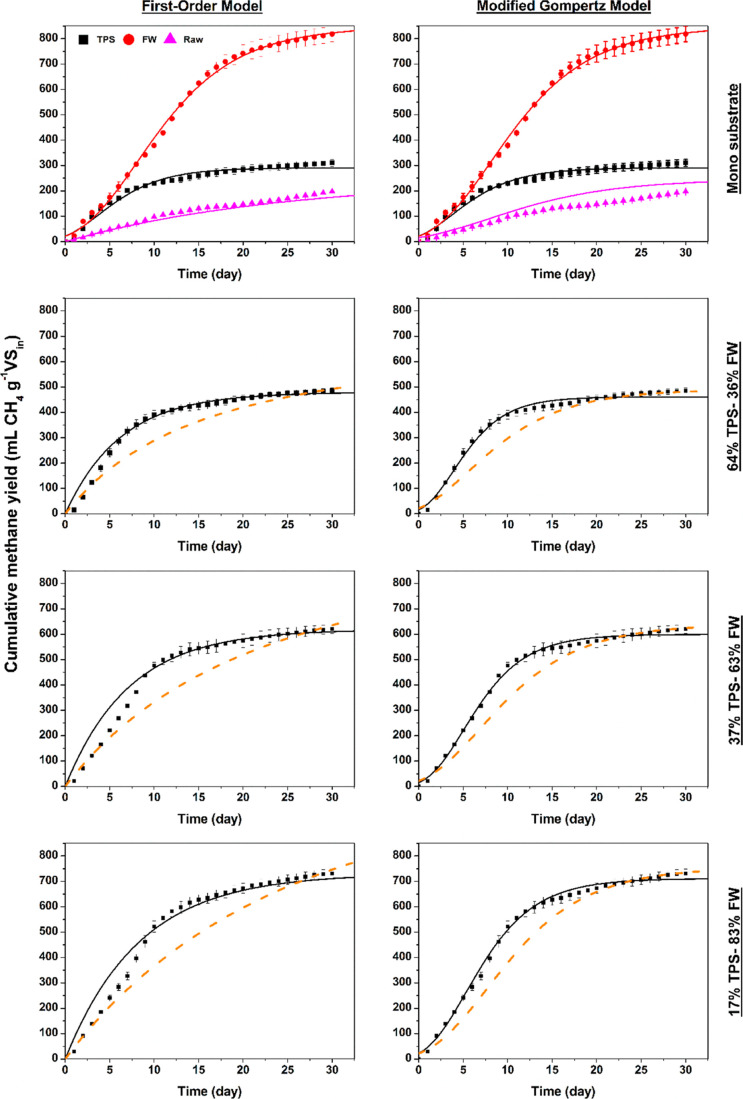
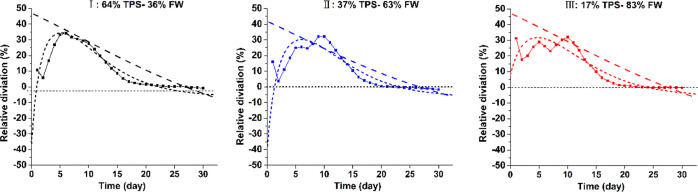
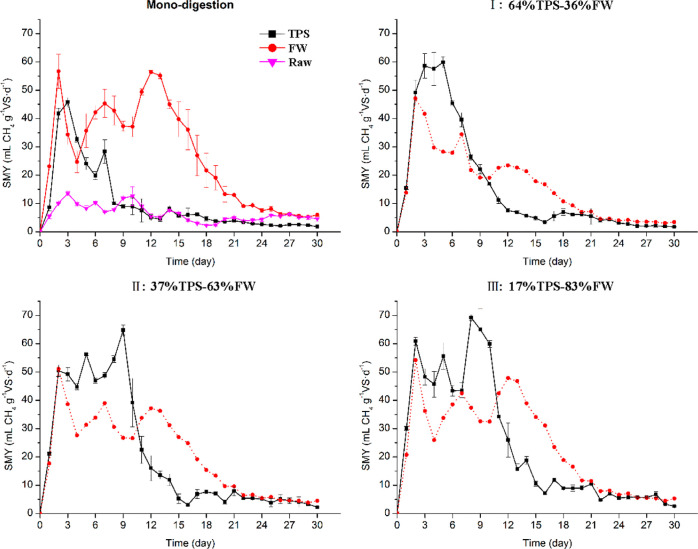
Thermal pretreatment (TP) was an effective method to improve the anaerobic digestion of waste-activated sludge. In order to balance the energy consumption of sludge TP integrated with anaerobic digestion, food waste was introduced as a co-substrate to achieve an energy self-sustainable sludge treatment system. An anaerobic biodegradability test was performed using thermal pretreated sludge and food waste in order to clarify the kinetics and mechanism of co-digestion, especially the synergetic effect on specific methane yield. The prominent synergetic effect was an initial acceleration of cumulative methane production by 20.7-23.8% observed during the first 15 days. The modified Gompertz model presented a better agreement of the experimental results, and it was a suitable tool for methane production prediction of mono- and co-digestion. The energy assessment showed that co-digestion with food waste was a sustainable solution. When the moisture content of the TP sludge was 80-90%, the energy compensation required was about 0.04-0.22 t VS/t VS, which could maintain the integration of neutral or even positive energy between TP and anaerobic digestion.
热预处理(TP)是一种提高剩余活性污泥厌氧消化效果的有效方法。为了平衡污泥热预处理与厌氧消化相结合的能量消耗,引入食物垃圾作为共底物,以实现能量自我可持续的污泥处理系统。为了阐明共消化的动力学和机制,特别是对单位甲烷产量的协同效应,利用热预处理污泥和食物垃圾进行了厌氧生物降解性试验。显著的协同效应是在最初15天内观察到累积甲烷产量初始加速20.7 - 23.8%。修正的Gompertz模型与实验结果吻合较好,是预测单消化和共消化甲烷产量的合适工具。能量评估表明,与食物垃圾共消化是一种可持续的解决方案。当热预处理污泥的含水率为80 - 90%时,所需的能量补偿约为0.04 - 0.22 t VS/t VS,这可以维持热预处理与厌氧消化之间能量的中性甚至正能量整合。