Jahromy Mahsa Hadipour, Baghchesara Bahareh, Javanshir Salar
Herbal Pharmacology Research Center, Faculty of Medicine, Tehran Medical Sciences, Islamic Azad University, Tehran, Iran.
School of Pharmacy and Pharmaceutical sciences, Tehran Medical Sciences, Islamic Azad University, Tehran, Iran.
IBRO Neurosci Rep. 2022 Oct 12;13:373-377. doi: 10.1016/j.ibneur.2022.10.004. eCollection 2022 Dec.
Depression is a psychiatric disorder characterized by low mood and loss of interest in daily activities. Allopurinol, a xanthine oxidase blocker, is widely administered for the treatment of hyperuricemia. Recently, its effects on serotonin and depressive like behaviors have been reported. On the other hand, the level of brain-derived neurotrophic factor (BDNF), a protective and regenerative neurotrophic, has been increased by many antidepressants. The purpose of this study was to evaluate the antidepressant effects of allopurinol and changes in serum level of BDNF compared to those of fluoxetine.
Thirty-five male Wistar albino rats divided into five groups (control, 10 mg/kg fluoxetine, 25, 50 and 100 mg/kg allopurinol; n = 7 per group), that received all treatments intraperitoneally, every day. Forced swimming tests (FST), tail suspension test (TST) and open field test (OFT) were performed after 21 days of drug administration. Finally, the serum BDNF levels were measured using the sandwich ELISA method.
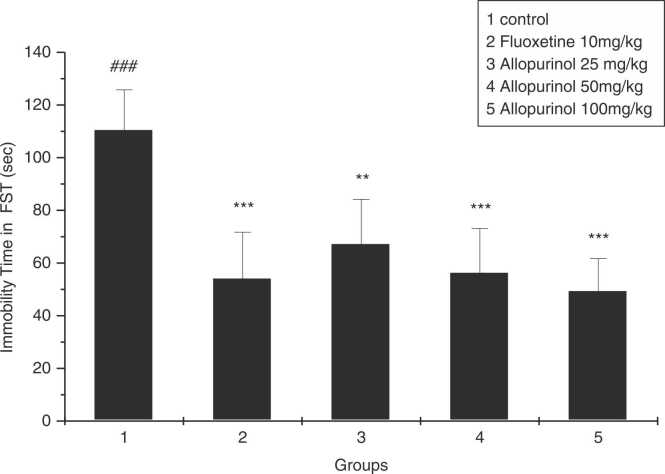
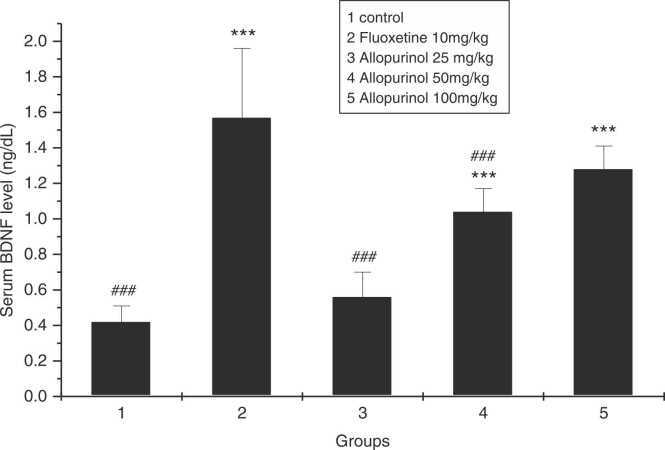
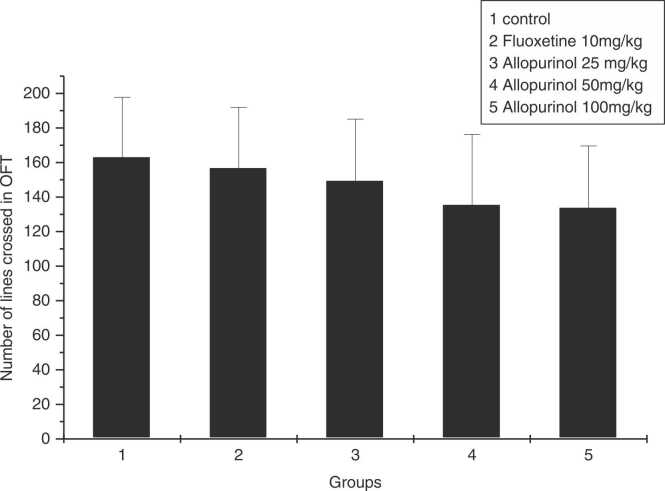
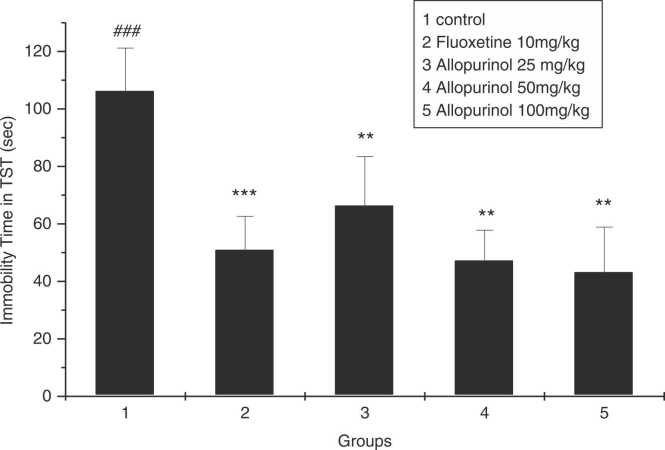
All doses of allopurinol and fluoxetine reduced the duration of immobility time in FST and TST. No significant changes were observed in the number of lines crossed in OFT between either allopurinol or fluoxetine groups and control group. Serum level of BDNF were significantly higher in fluoxetine and allopurinol 50 and 100 mg/kg groups.
Long-term administration of allopurinol 50 and 100 mg/kg have shown antidepressant effects in behavioral tests along with an increase in the amount of serum BDNF concentration. The OFT results suggested that allopurinol did not have any significant effects on motor activity. The increased serum level of the BDNF in the allopurinol group was correlated with FST and TST results. However, it is still not clear whether the antidepressant effects of allopurinol are due to a direct effects on serotonin and/or BDNF or an indirect effect related to its xanthin oxidase inhibition.
抑郁症是一种以情绪低落和对日常活动失去兴趣为特征的精神障碍。别嘌醇是一种黄嘌呤氧化酶阻滞剂,广泛用于治疗高尿酸血症。最近,有报道称其对血清素和抑郁样行为有影响。另一方面,许多抗抑郁药可提高脑源性神经营养因子(BDNF)的水平,BDNF是一种具有保护和再生作用的神经营养因子。本研究的目的是评估别嘌醇的抗抑郁作用以及与氟西汀相比血清BDNF水平的变化。
将35只雄性Wistar白化大鼠分为五组(对照组、10mg/kg氟西汀组、25mg/kg、50mg/kg和100mg/kg别嘌醇组;每组n = 7),每天腹腔注射给药。给药21天后进行强迫游泳试验(FST)、悬尾试验(TST)和旷场试验(OFT)。最后,采用夹心酶联免疫吸附测定法测量血清BDNF水平。
所有剂量的别嘌醇和氟西汀均缩短了FST和TST中的不动时间。别嘌醇组或氟西汀组与对照组在OFT中穿过的线条数未观察到显著变化。氟西汀组以及别嘌醇50mg/kg和100mg/kg组的血清BDNF水平显著更高。
长期给予50mg/kg和100mg/kg别嘌醇在行为试验中显示出抗抑郁作用,同时血清BDNF浓度升高。OFT结果表明别嘌醇对运动活动没有任何显著影响。别嘌醇组血清BDNF水平的升高与FST和TST结果相关。然而,别嘌醇的抗抑郁作用是直接作用于血清素和/或BDNF,还是与其黄嘌呤氧化酶抑制相关的间接作用,目前仍不清楚。