J Neurosci Nurs. 2023 Feb 1;55(1):10-17. doi: 10.1097/JNN.0000000000000682. Epub 2022 Nov 7.
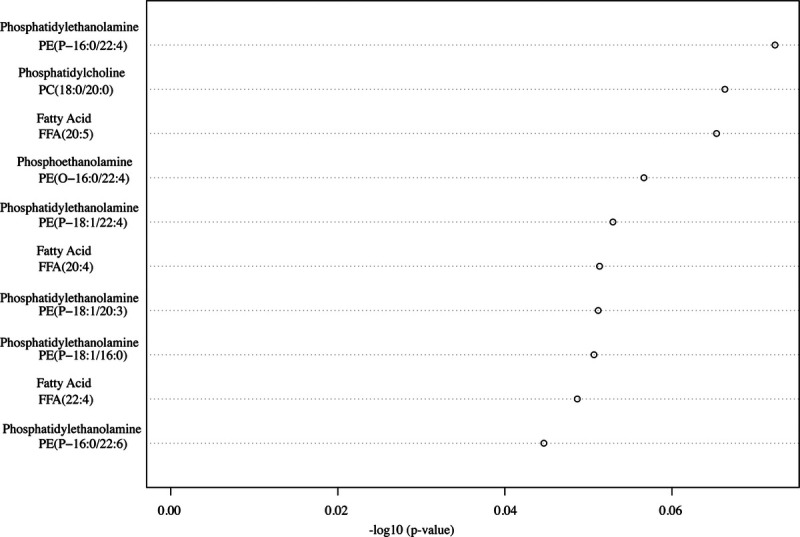
The aim of this study was to identify a signature lipid profile from cerebral thrombi in acute ischemic stroke (AIS) patients at the time of ictus. METHODS: We performed untargeted lipidomics analysis using liquid chromatography-mass spectrometry on cerebral thrombi taken from a nonprobability, convenience sampling of adult subjects (≥18 years old, n = 5) who underwent thrombectomy for acute cerebrovascular occlusion. The data were classified using random forest, a machine learning algorithm. RESULTS: The top 10 metabolites identified from the random forest analysis were of the glycerophospholipid species and fatty acids. CONCLUSION: Preliminary analysis demonstrates feasibility of identification of lipid metabolomic profiling in cerebral thrombi retrieved from AIS patients. Recent advances in omic methodologies enable lipidomic profiling, which may provide insight into the cellular metabolic pathophysiology caused by AIS. Understanding of lipidomic changes in AIS may illuminate specific metabolite and lipid pathways involved and further the potential to develop personalized preventive strategies.
本研究旨在确定脑梗死患者发病时脑血栓中的特征脂质谱。
我们使用液相色谱-质谱联用技术对接受急性血管闭塞取栓术的成年患者(≥18 岁,n=5)的脑血栓进行非概率、便利抽样的靶向脂质组学分析。使用随机森林等机器学习算法对数据进行分类。
随机森林分析中确定的前 10 种代谢物为甘油磷脂类和脂肪酸。
初步分析表明,从急性脑梗死患者的脑血栓中鉴定脂质代谢组特征谱是可行的。组学方法的最新进展使脂质组学分析成为可能,这可能有助于深入了解急性脑梗死引起的细胞代谢病理生理学。对急性脑梗死中脂质组变化的了解可能阐明了涉及的特定代谢物和脂质途径,并进一步有可能制定个性化的预防策略。