Yednock Ted, Fong Donald S, Lad Eleonora M
Annexon Biosciences, 1400 Sierra Point Parkway Building C, 2nd Floor, Brisbane, CA, 94005, USA.
Department of Ophthalmology, Duke University Medical Center, 2351 Erwin Rd, Durham, NC, 27705, USA.
Int J Retina Vitreous. 2022 Nov 8;8(1):79. doi: 10.1186/s40942-022-00431-y.
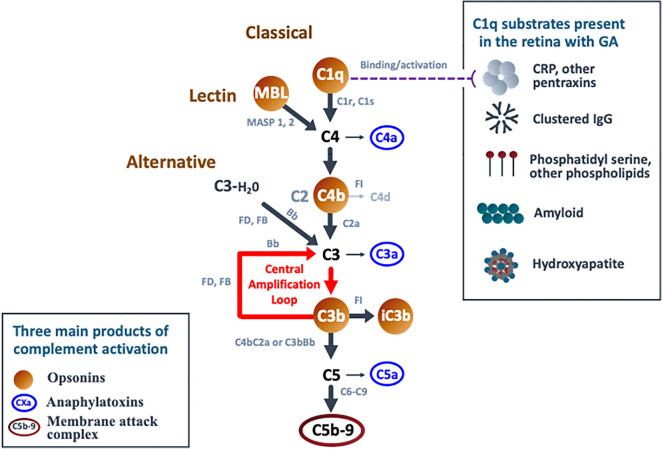
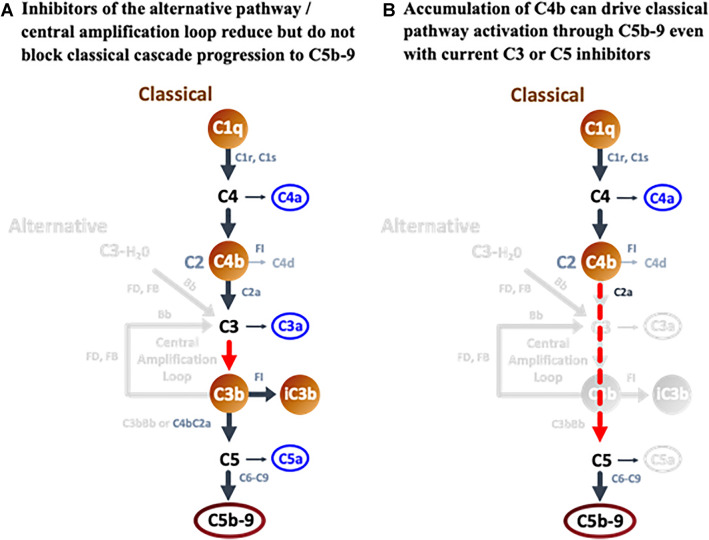
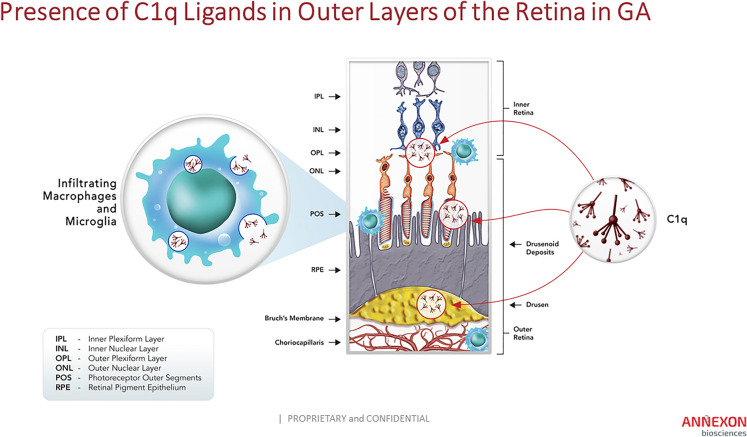
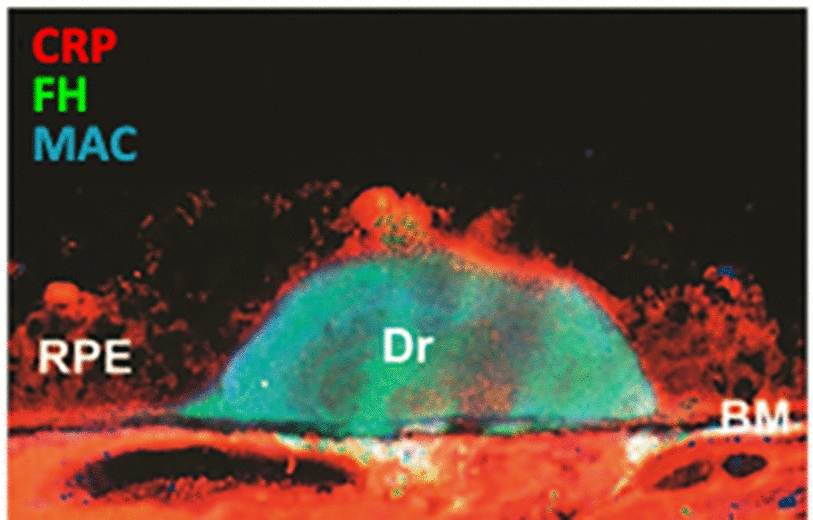
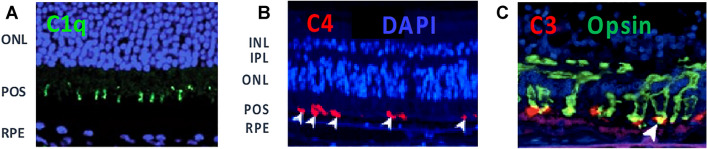
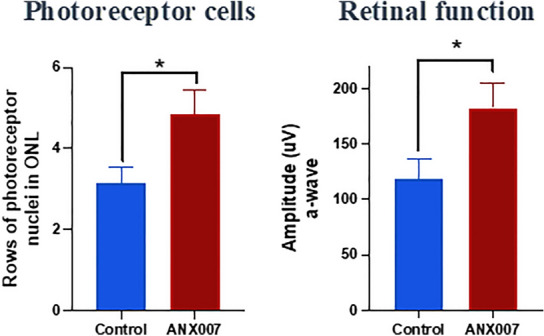
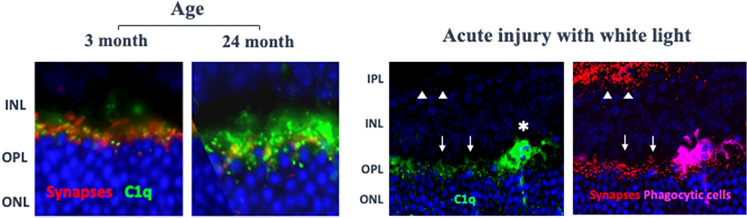
Geographic atrophy (GA) secondary to age-related macular degeneration (AMD) is a retinal neurodegenerative disorder. Human genetic data support the complement system as a key component of pathogenesis in AMD, which has been further supported by pre-clinical and recent clinical studies. However, the involvement of the different complement pathways (classical, lectin, alternative), and thus the optimal complement inhibition target, has yet to be fully defined. There is evidence that C1q, the initiating molecule of the classical pathway, is a key driver of complement activity in AMD. C1q is expressed locally by infiltrating phagocytic cells and C1q-activating ligands are present at disease onset and continue to accumulate with disease progression. The accumulation of C1q on photoreceptor synapses with age and disease is consistent with its role in synapse elimination and neurodegeneration that has been observed in other neurodegenerative disorders. Furthermore, genetic deletion of C1q, local pharmacologic inhibition within the eye, or genetic deletion of downstream C4 prevents photoreceptor cell damage in mouse models. Hence, targeting the classical pathway in GA could provide a more specific therapeutic approach with potential for favorable efficacy and safety.
年龄相关性黄斑变性(AMD)继发的地图样萎缩(GA)是一种视网膜神经退行性疾病。人类遗传数据支持补体系统是AMD发病机制的关键组成部分,临床前和近期的临床研究进一步证实了这一点。然而,不同补体途径(经典途径、凝集素途径、替代途径)的参与情况,以及因此最佳的补体抑制靶点,尚未完全明确。有证据表明,经典途径的起始分子C1q是AMD中补体活性的关键驱动因素。C1q由浸润的吞噬细胞在局部表达,C1q激活配体在疾病发作时就已存在,并随着疾病进展持续积累。随着年龄增长和疾病发展,C1q在光感受器突触上的积累与其在突触消除和神经退行性变中的作用一致,这在其他神经退行性疾病中也有观察到。此外,在小鼠模型中,C1q的基因缺失、眼内局部药物抑制或下游C4的基因缺失可防止光感受器细胞损伤。因此,针对GA中的经典途径可能提供一种更具特异性的治疗方法,具有良好疗效和安全性的潜力。