Lelong Emeline I J, Khelifi Gabriel, Adjibade Pauline, Joncas France-Hélène, Grenier St-Sauveur Valérie, Paquette Virginie, Gris Typhaine, Zoubeidi Amina, Audet-Walsh Etienne, Lambert Jean-Philippe, Toren Paul, Mazroui Rachid, Hussein Samer M I
Cancer Research Center, Université Laval, Quebec City, Québec G1R 3S3, Canada.
CHU of Québec-Université Laval Research Center, Oncology Division, Quebec City, Québec G1R 3S3, Canada.
NAR Cancer. 2022 Nov 4;4(4):zcac034. doi: 10.1093/narcan/zcac034. eCollection 2022 Dec.
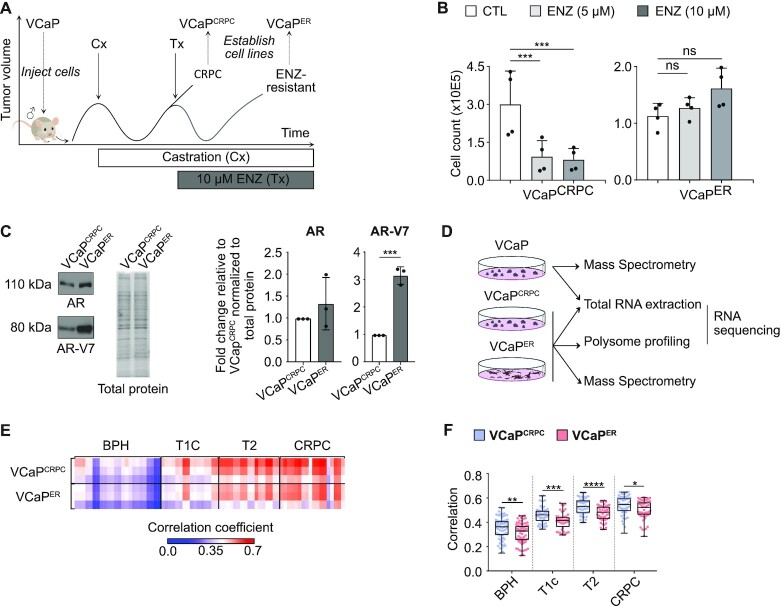
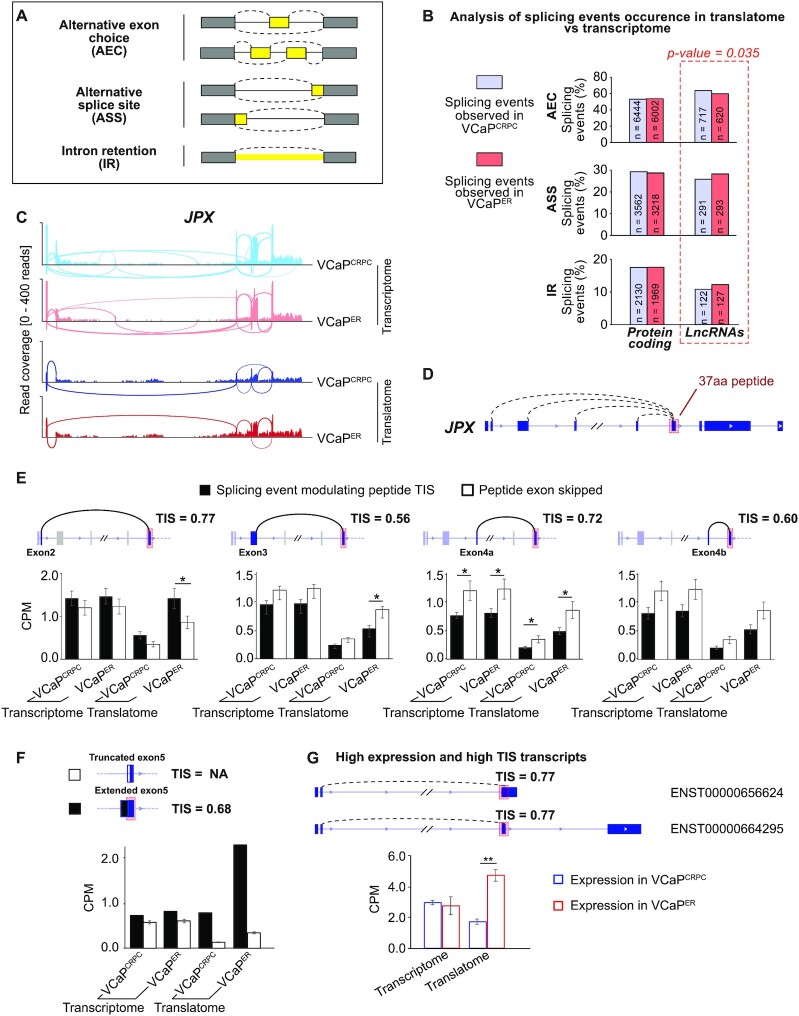
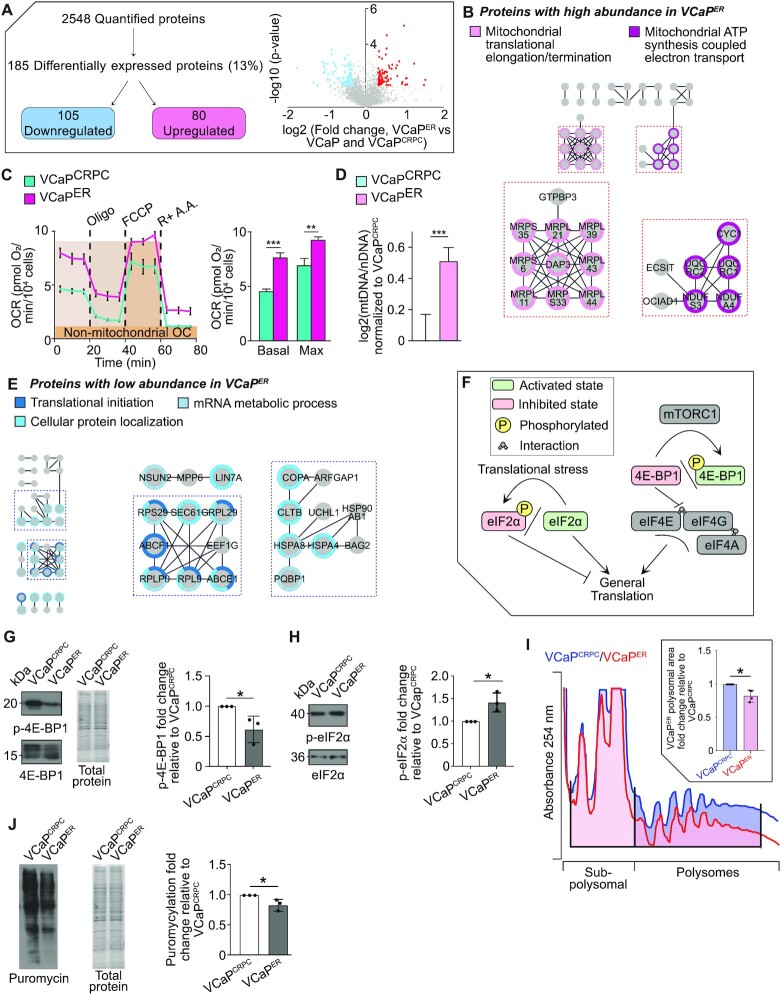
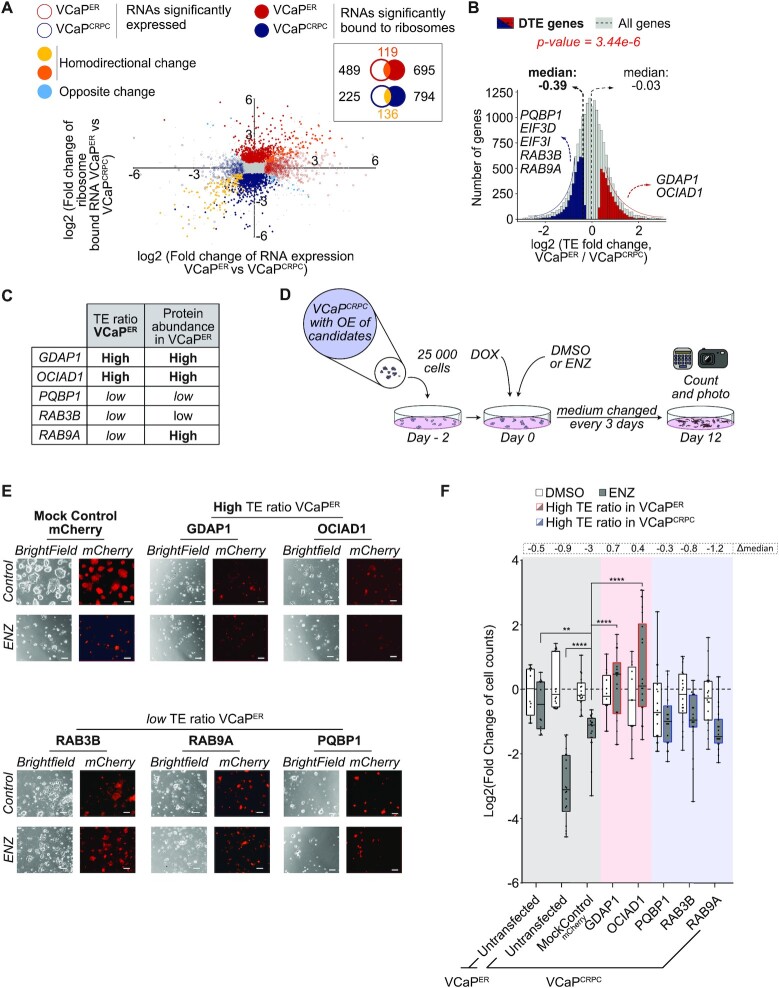
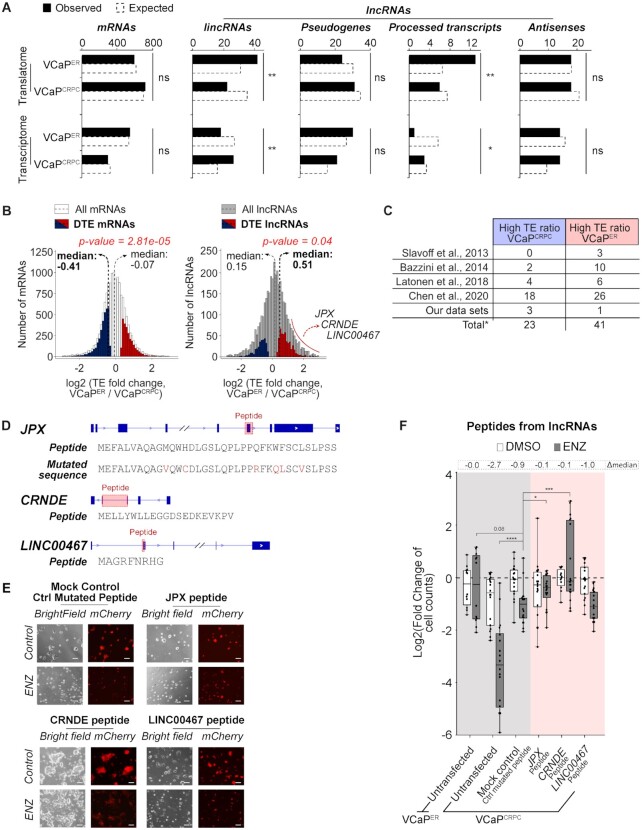
Emerging evidence associates translation factors and regulators to tumorigenesis. However, our understanding of translational changes in cancer resistance is still limited. Here, we generated an enzalutamide-resistant prostate cancer (PCa) model, which recapitulated key features of clinical enzalutamide-resistant PCa. Using this model and poly(ribo)some profiling, we investigated global translation changes that occur during acquisition of PCa resistance. We found that enzalutamide-resistant cells exhibit an overall decrease in mRNA translation with a specific deregulation in the abundance of proteins involved in mitochondrial processes and in translational regulation. However, several mRNAs escape this translational downregulation and are nonetheless bound to heavy polysomes in enzalutamide-resistant cells suggesting active translation. Moreover, expressing these corresponding genes in enzalutamide-sensitive cells promotes resistance to enzalutamide treatment. We also found increased association of long non-coding RNAs (lncRNAs) with heavy polysomes in enzalutamide-resistant cells, suggesting that some lncRNAs are actively translated during enzalutamide resistance. Consistent with these findings, expressing the predicted coding sequences of known lncRNAs and in enzalutamide-sensitive cells drove resistance to enzalutamide. Taken together, this suggests that aberrant translation of specific mRNAs and lncRNAs is a strong indicator of PCa enzalutamide resistance, which points towards novel therapeutic avenues that may target enzalutamide-resistant PCa.
新出现的证据将翻译因子和调节因子与肿瘤发生联系起来。然而,我们对癌症耐药性中翻译变化的理解仍然有限。在这里,我们构建了一个恩杂鲁胺耐药前列腺癌(PCa)模型,该模型概括了临床恩杂鲁胺耐药PCa的关键特征。利用这个模型和多核糖体分析,我们研究了PCa耐药性获得过程中发生的全局翻译变化。我们发现,恩杂鲁胺耐药细胞的mRNA翻译总体下降,线粒体过程和翻译调节中涉及的蛋白质丰度出现特定失调。然而,一些mRNA逃脱了这种翻译下调,并且在恩杂鲁胺耐药细胞中仍与重多核糖体结合,表明存在活跃翻译。此外,在恩杂鲁胺敏感细胞中表达这些相应基因可促进对恩杂鲁胺治疗的耐药性。我们还发现,在恩杂鲁胺耐药细胞中,长链非编码RNA(lncRNA)与重多核糖体的结合增加,这表明在恩杂鲁胺耐药期间,一些lncRNA被积极翻译。与这些发现一致,在恩杂鲁胺敏感细胞中表达已知lncRNA的预测编码序列会导致对恩杂鲁胺的耐药性。综上所述,这表明特定mRNA和lncRNA的异常翻译是PCa对恩杂鲁胺耐药的有力指标,这为可能靶向恩杂鲁胺耐药PCa的新治疗途径指明了方向。