
马来西亚航空公司17号航班坠毁事件中,在遇难者身份识别之前进行的法医分诊结果。
The outcome of the forensic triage preceding disaster victim identification in the downing of Malaysia Airlines flight 17.
作者信息
Vermeij Erwin, Zoon Peter, Gerretsen Reza, Otieno-Alego Vincent
机构信息
Microtraces and Materials, Netherlands Forensic Institute, Den Haag, The Netherlands.
Forensic Anthropology and Archaeology, Netherlands Forensic Institute, Den Haag, The Netherlands.
出版信息
Forensic Sci Res. 2022 Nov 4;7(3):566-575. doi: 10.1080/20961790.2022.2043611. eCollection 2022.
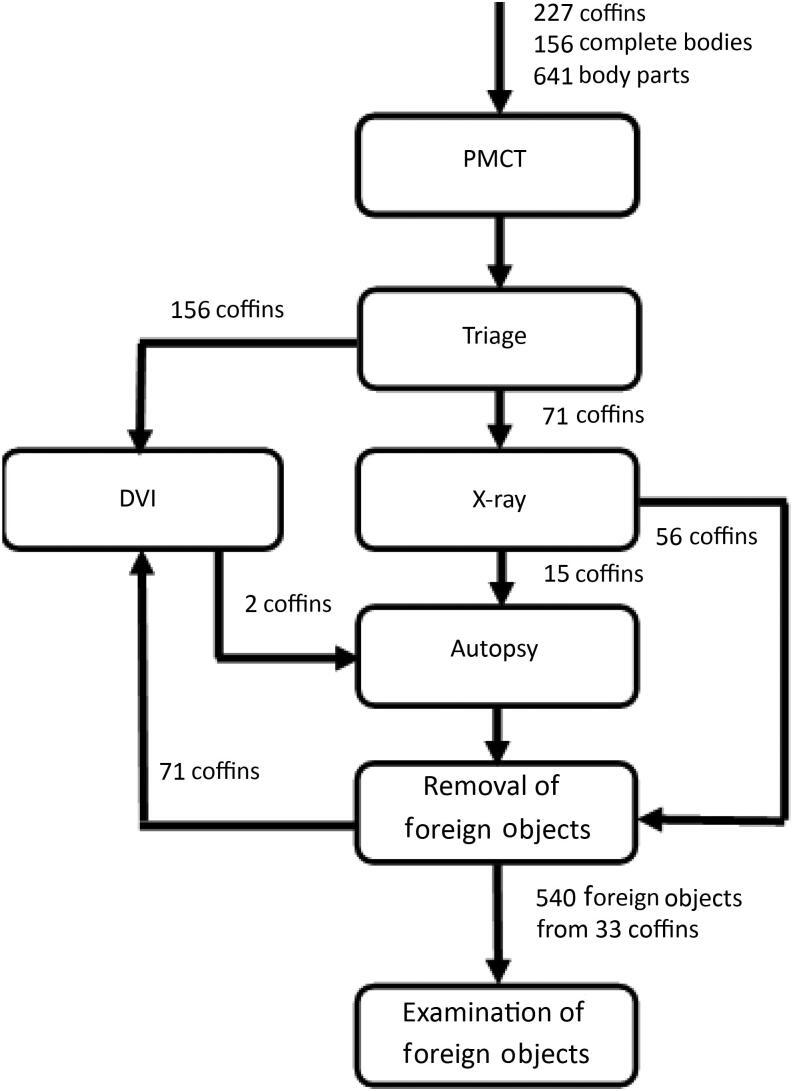
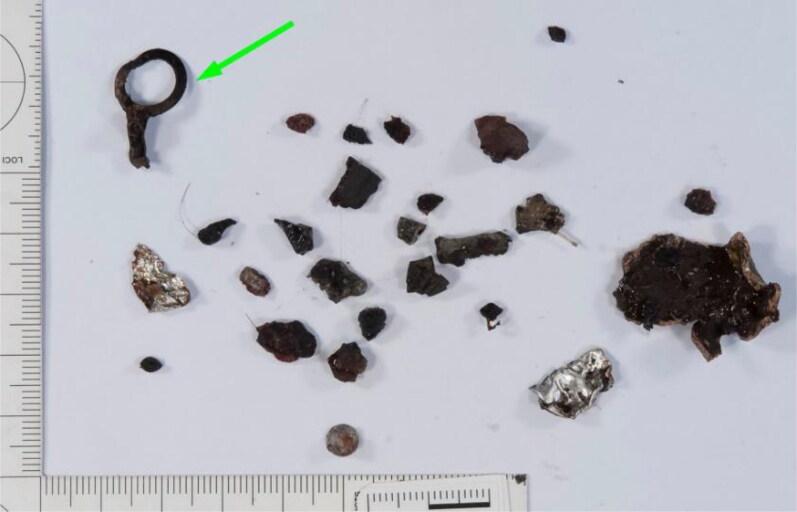
Malaysia Airlines flight 17 crashed on 17 July 2014 while flying over an area of armed conflict in eastern Ukraine. The first forensic trace evidence was collected after the human remains were transferred to a safe location in the Netherlands for identification and repatriation. Disaster victim identification processes were therefore undertaken in concert with the forensic investigation. Prior to these processes, X-ray and computed tomography scanners were used to reveal foreign objects in the human remains, and a large number of these fragments were recovered after the forensic triage. A distinct group of metal fragments was identified as being potential remnants of high-energy foreign objects. Forensic analysis revealed that they were explosively deformed unalloyed steel fragments, some of which had shapes consistent with pre-formed metal fragments found in a 9N314M warhead used in Buk SA-11 missiles. Furthermore, thin film deposits of cockpit glass and aluminium were identified on the most heavily deformed side of some of the explosively deformed metal fragments, suggesting they came from outside the airplane. These findings supported early suspicions that Malaysia Airlines flight 17 was struck by a Buk SA-11 missile. KeypointsA multidisciplinary approach for combined identification and forensic investigation of human remains after a mass fatality incident.The combined use of complementary X-ray techniques for detection and provisional characterization of foreign objects in human remains.The use of sensitive and highly discriminative state of the art techniques for analysing foreign objects recovered from human remains.
2014年7月17日,马来西亚航空17号班机在飞越乌克兰东部武装冲突地区时坠毁。在遗体被转移至荷兰的一个安全地点进行身份鉴定和遣返后,收集了首批法医痕迹证据。因此,遇难者身份鉴定工作与法医调查同步进行。在这些工作之前,使用了X光和计算机断层扫描仪来揭示遗体中的异物,并且在法医分类后回收了大量此类碎片。一组独特的金属碎片被确定为高能异物的潜在残余物。法医分析表明,它们是爆炸变形的非合金钢碎片,其中一些的形状与在布克SA-11导弹所用9N314M弹头中发现的预制金属碎片一致。此外,在一些爆炸变形金属碎片变形最严重的一侧发现了驾驶舱玻璃和铝的薄膜沉积物,这表明它们来自飞机外部。这些发现支持了早期的怀疑,即马来西亚航空17号班机是被一枚布克SA-11导弹击中。要点大规模伤亡事件后对遗体进行联合鉴定和法医调查的多学科方法。联合使用互补的X光技术来检测和初步鉴定遗体中的异物。使用灵敏且高度有区分力的先进技术来分析从遗体中回收的异物。





 Zotero 插件