Simhal Anish K, Carpenter Kimberly L H, Kurtzberg Joanne, Song Allen, Tannenbaum Allen, Zhang Lijia, Sapiro Guillermo, Dawson Geraldine
Department of Medical Physics, Memorial Sloan Kettering Cancer Center, New York, NY, United States.
Duke Center for Autism and Brain Development, Department of Psychiatry and Behavioral Sciences, Duke University School of Medicine, Durham, NC, United States.
Front Psychiatry. 2022 Oct 20;13:1026279. doi: 10.3389/fpsyt.2022.1026279. eCollection 2022.
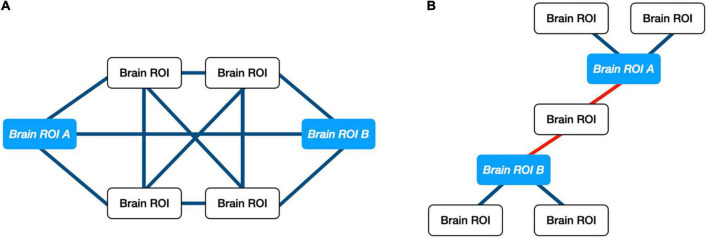
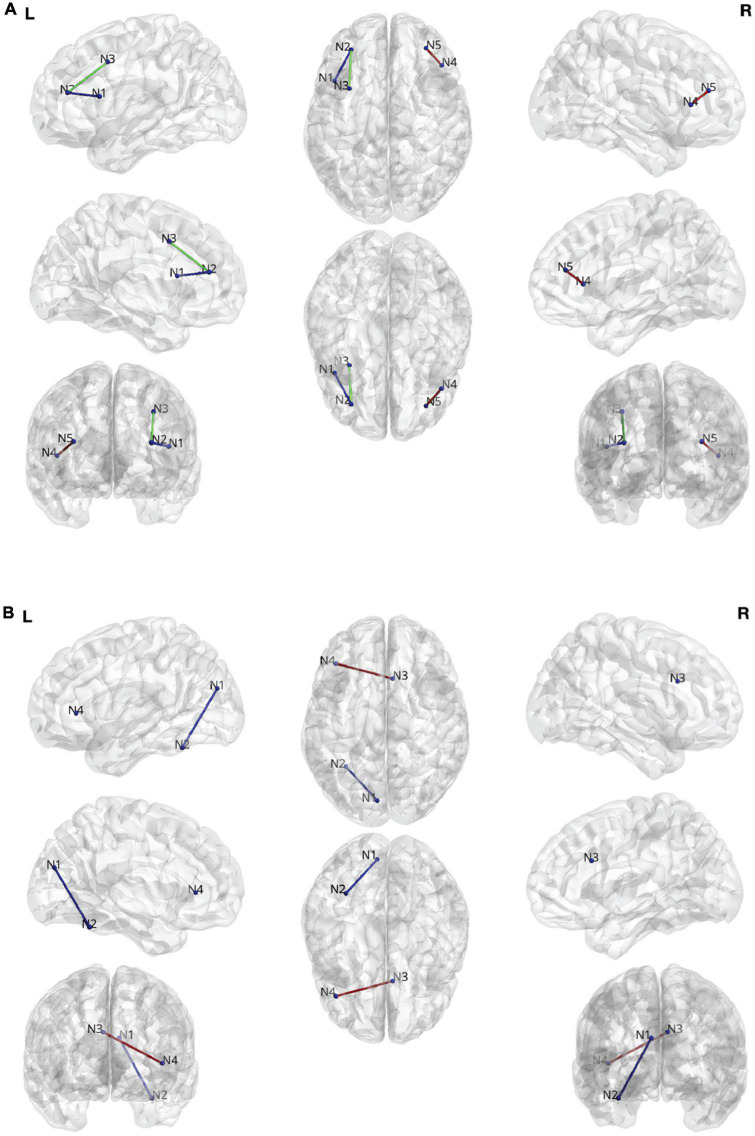
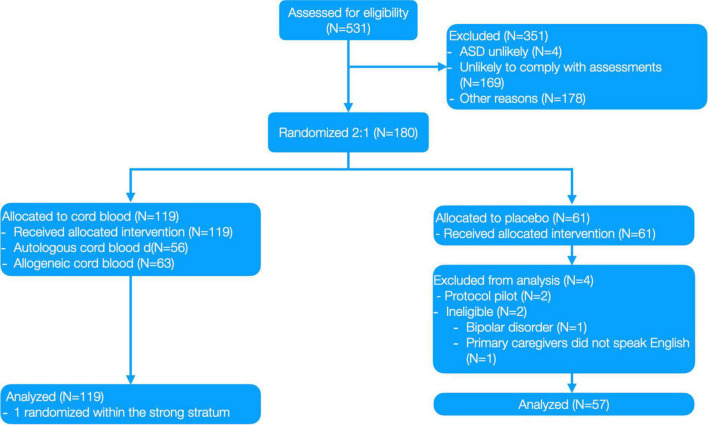
Diffusion tensor imaging (DTI) has been used as an outcome measure in clinical trials for several psychiatric disorders but has rarely been explored in autism clinical trials. This is despite a large body of research suggesting altered white matter structure in autistic individuals. The current study is a secondary analysis of changes in white matter connectivity from a double-blind placebo-control trial of a single intravenous cord blood infusion in 2-7-year-old autistic children (1). Both clinical assessments and DTI were collected at baseline and 6 months after infusion. This study used two measures of white matter connectivity: change in node-to-node connectivity as measured through DTI streamlines and a novel measure of feedback network connectivity, Ollivier-Ricci curvature (ORC). ORC is a network measure which considers both local and global connectivity to assess the robustness of any given pathway. Using both the streamline and ORC analyses, we found reorganization of white matter pathways in predominantly frontal and temporal brain networks in autistic children who received umbilical cord blood treatment versus those who received a placebo. By looking at changes in network robustness, this study examined not only the direct, physical changes in connectivity, but changes with respect to the whole brain network. Together, these results suggest the use of DTI and ORC should be further explored as a potential biomarker in future autism clinical trials. These results, however, should not be interpreted as evidence for the efficacy of cord blood for improving clinical outcomes in autism. This paper presents a secondary analysis using data from a clinical trial that was prospectively registered with ClinicalTrials.gov(NCT02847182).
扩散张量成像(DTI)已被用作多种精神疾病临床试验的结果指标,但在自闭症临床试验中却很少被探索。尽管大量研究表明自闭症个体的白质结构发生了改变,但情况依然如此。本研究是对一项针对2至7岁自闭症儿童进行的单次静脉输注脐带血的双盲安慰剂对照试验中白质连接性变化的二次分析(1)。在基线和输注后6个月收集了临床评估和DTI数据。本研究使用了两种白质连接性测量方法:通过DTI流线测量的节点间连接性变化,以及一种新的反馈网络连接性测量方法,奥利维耶 - 里奇曲率(ORC)。ORC是一种网络测量方法,它同时考虑局部和全局连接性,以评估任何给定通路的稳健性。通过流线分析和ORC分析,我们发现接受脐带血治疗的自闭症儿童与接受安慰剂治疗的儿童相比,额叶和颞叶脑网络中的白质通路发生了重组。通过观察网络稳健性的变化,本研究不仅考察了连接性的直接物理变化,还考察了相对于整个脑网络的变化。总之,这些结果表明,在未来的自闭症临床试验中,应进一步探索将DTI和ORC用作潜在生物标志物的可能性。然而,这些结果不应被解释为脐带血对改善自闭症临床结局有效性的证据。本文呈现了一项使用来自ClinicalTrials.gov(NCT02847182)前瞻性注册的临床试验数据的二次分析。