Vaccine Research Center, National Institute of Allergy and Infectious Diseases, National Institutes of Health, Bethesda, MD, USA.
Zuckerman Mind Brain Behavior Institute, Columbia University, New York, NY, USA.
Immunity. 2022 Dec 13;55(12):2405-2418.e7. doi: 10.1016/j.immuni.2022.10.015. Epub 2022 Nov 9.
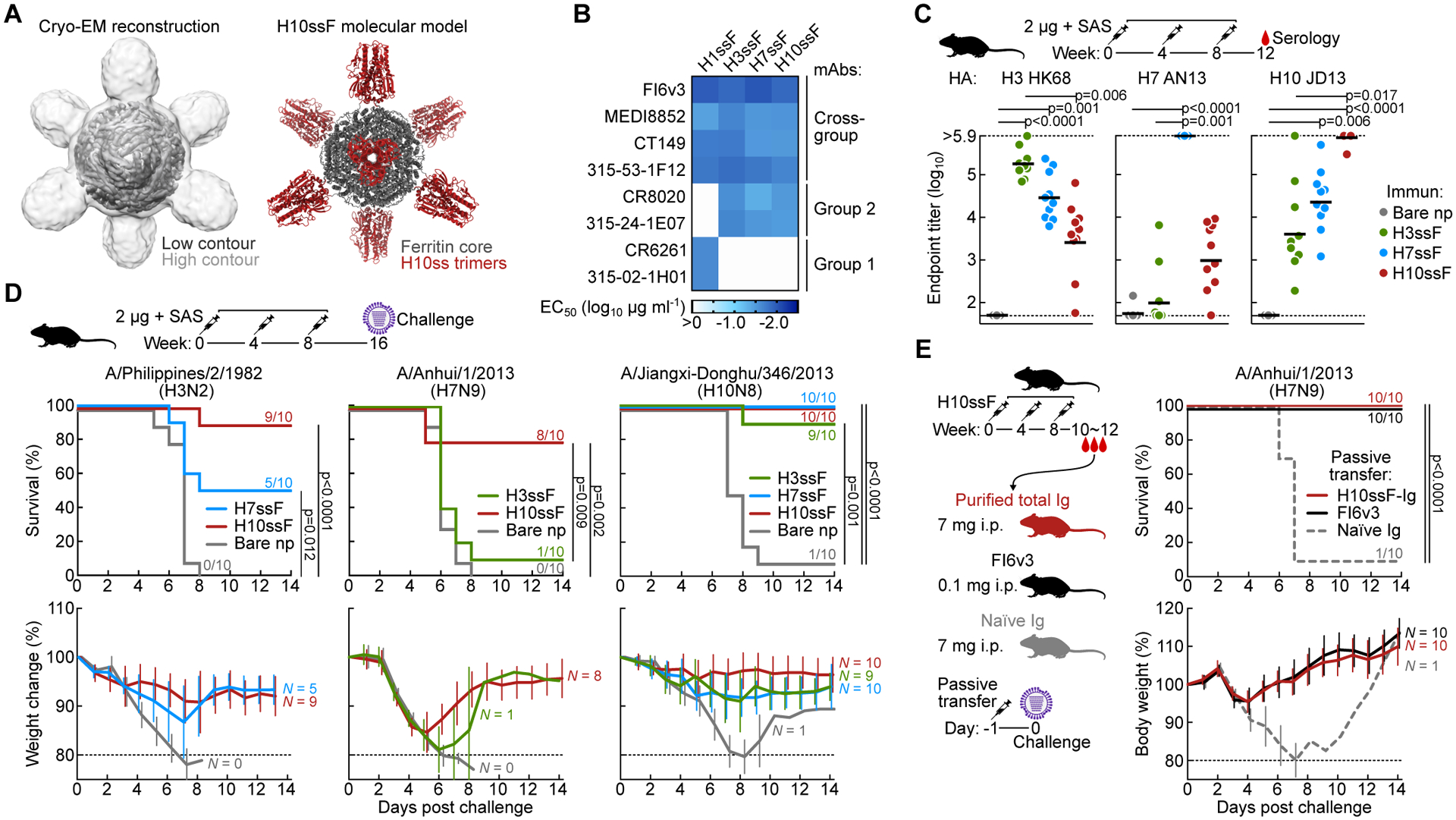
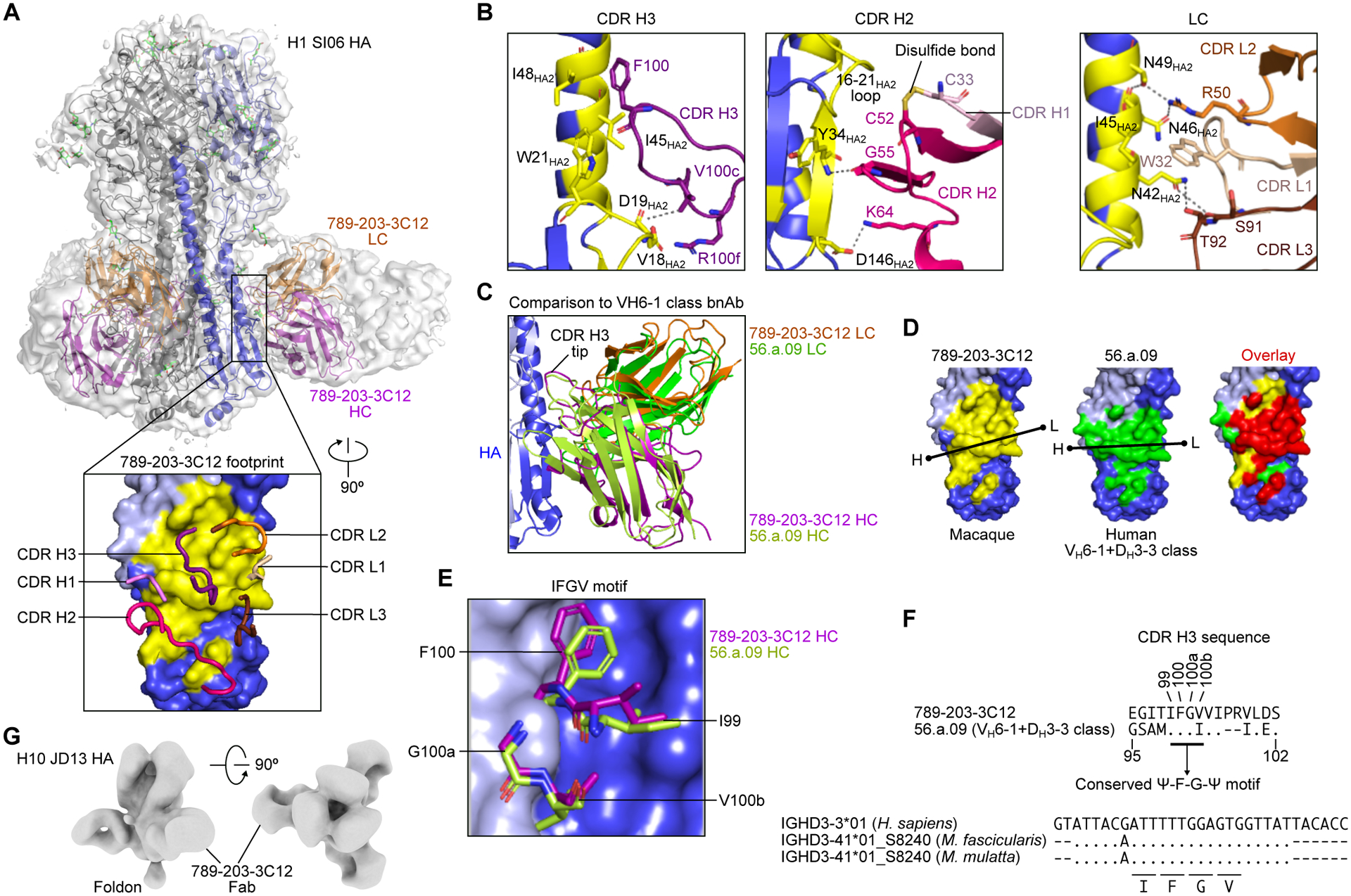
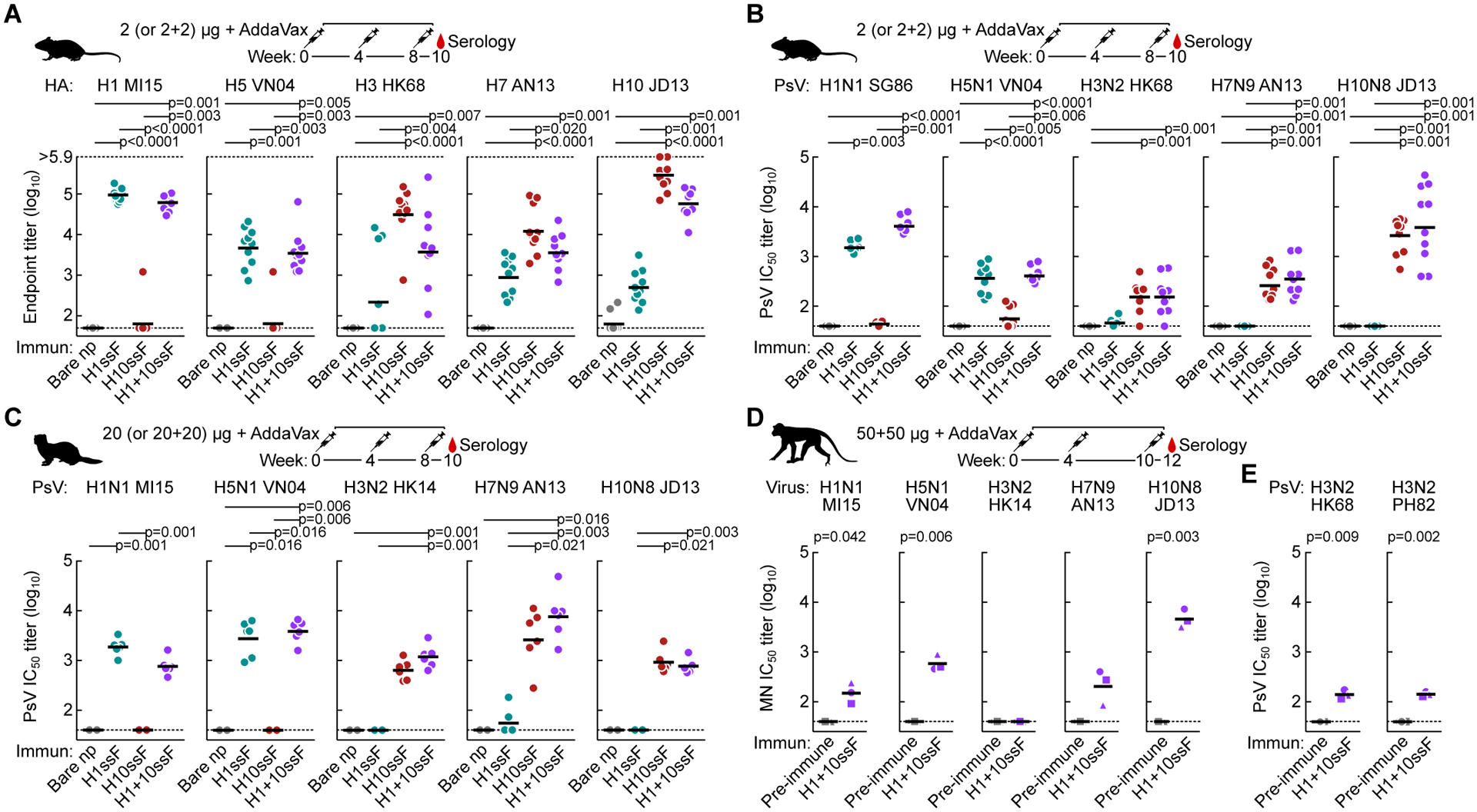
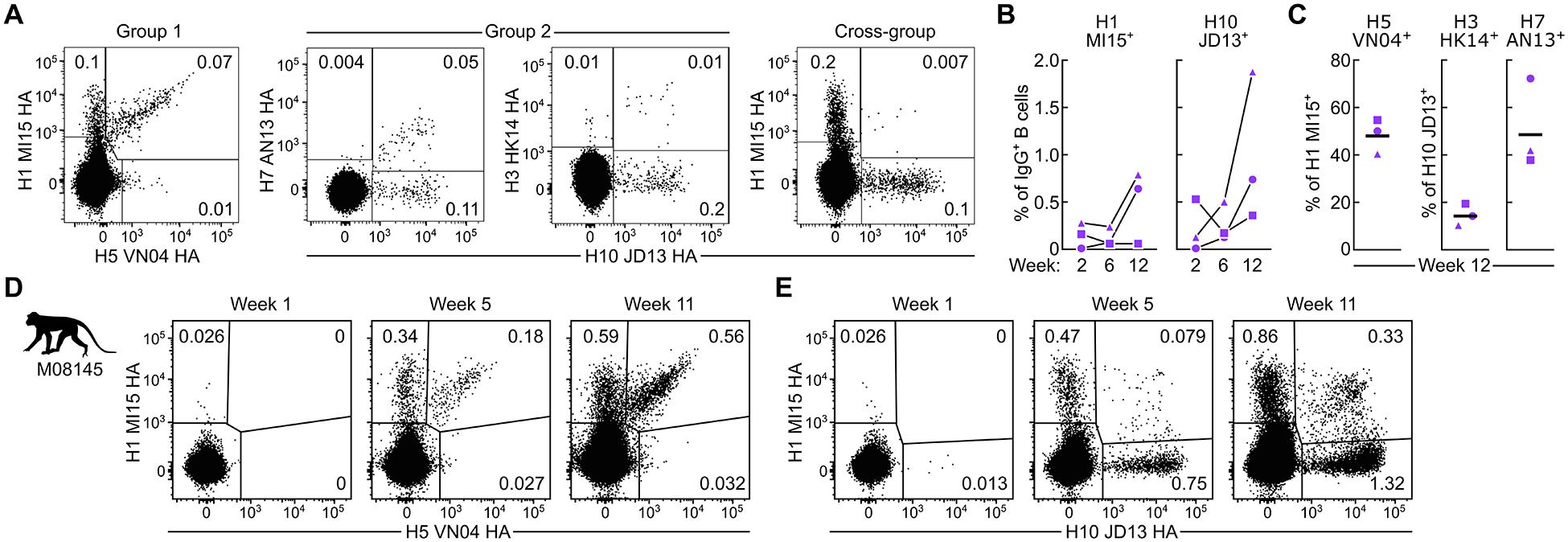
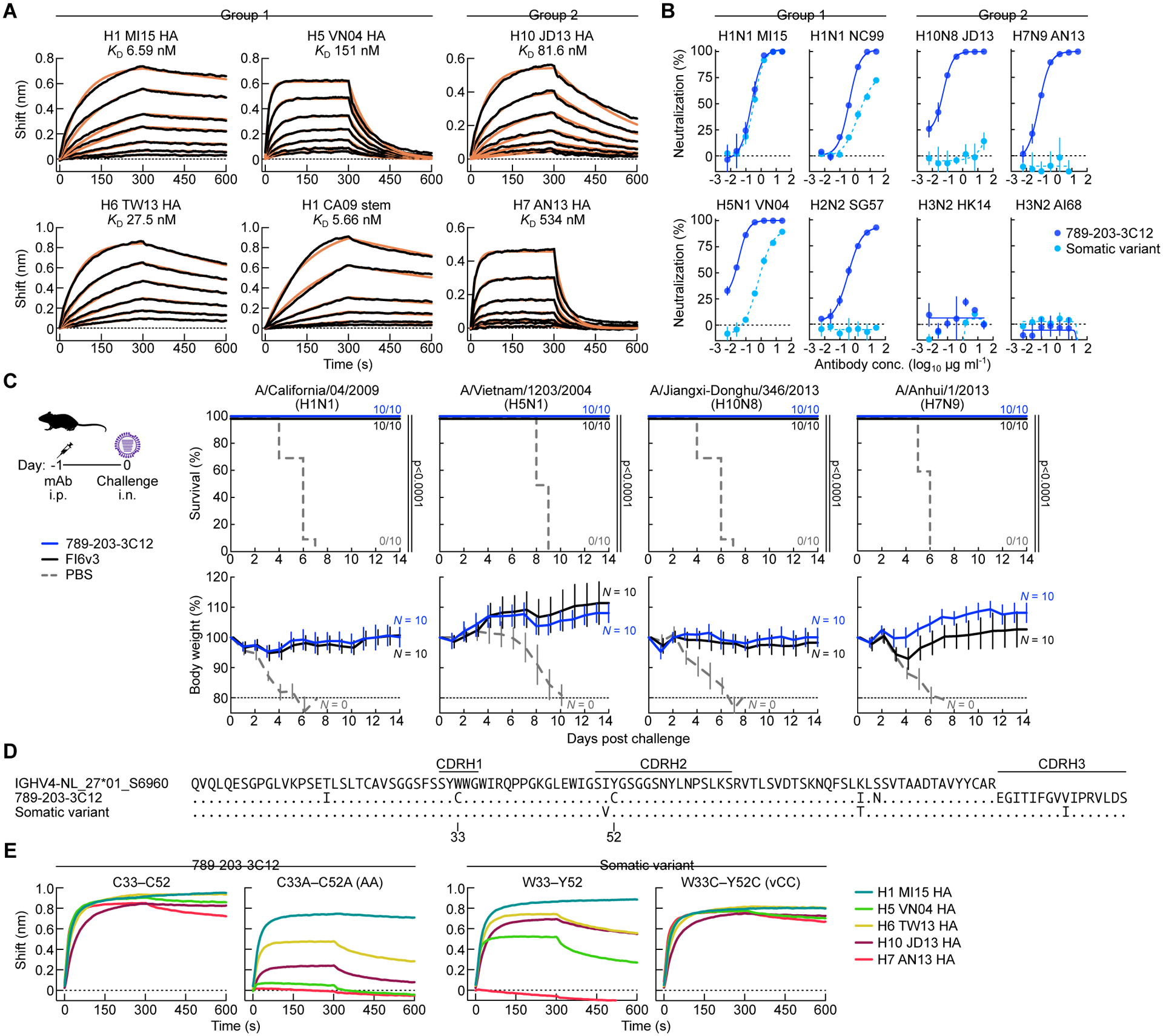
Current influenza vaccines predominantly induce immunity to the hypervariable hemagglutinin (HA) head, requiring frequent vaccine reformulation. Conversely, the immunosubdominant yet conserved HA stem harbors a supersite that is targeted by broadly neutralizing antibodies (bnAbs), representing a prime target for universal vaccines. Here, we showed that the co-immunization of two HA stem immunogens derived from group 1 and 2 influenza A viruses elicits cross-group protective immunity and neutralizing antibody responses in mice, ferrets, and nonhuman primates (NHPs). Immunized mice were protected from multiple group 1 and 2 viruses, and all animal models showed broad serum-neutralizing activity. A bnAb isolated from an immunized NHP broadly neutralized and protected against diverse viruses, including H5N1 and H7N9. Genetic and structural analyses revealed strong homology between macaque and human bnAbs, illustrating common biophysical constraints for acquiring cross-group specificity. Vaccine elicitation of stem-directed cross-group-protective immunity represents a step toward the development of broadly protective influenza vaccines.
目前的流感疫苗主要诱导针对高度可变的血凝素 (HA) 头部的免疫反应,因此需要频繁进行疫苗配方改革。相反,免疫原性较低但保守的 HA 茎部却具有一个超表位,该表位是广谱中和抗体 (bnAb) 的靶向目标,是通用疫苗的主要目标。在这里,我们表明,来自甲型流感病毒 1 组和 2 组的两种 HA 茎免疫原的共同免疫可在小鼠、雪貂和非人类灵长类动物 (NHP) 中引发跨组保护免疫和中和抗体反应。免疫接种的小鼠可免受多种 1 组和 2 组病毒的侵害,所有动物模型均显示出广泛的血清中和活性。从免疫的 NHP 中分离出的一种 bnAb 可广泛中和并保护免受多种病毒的侵害,包括 H5N1 和 H7N9。遗传和结构分析表明,猕猴和人类 bnAb 之间具有很强的同源性,说明了获得跨组特异性的常见生物物理限制。针对茎部的疫苗引发跨组保护免疫反应,是朝着开发广谱保护性流感疫苗迈出的一步。