Department of Environmental Sciences and Engineering, Gillings School of Global Public Health, University of North Carolina at Chapel Hill, 135 Dauer Drive, Chapel Hill, NC 27599, United States.
Department of Environmental Sciences and Engineering, Gillings School of Global Public Health, University of North Carolina at Chapel Hill, 135 Dauer Drive, Chapel Hill, NC 27599, United States; Department of Epidemiology, Gillings School of Global Public Health, University of North Carolina at Chapel Hill, 135 Dauer Drive, Chapel Hill, NC 27599, United States.
Sci Total Environ. 2023 Feb 1;858(Pt 3):159996. doi: 10.1016/j.scitotenv.2022.159996. Epub 2022 Nov 7.
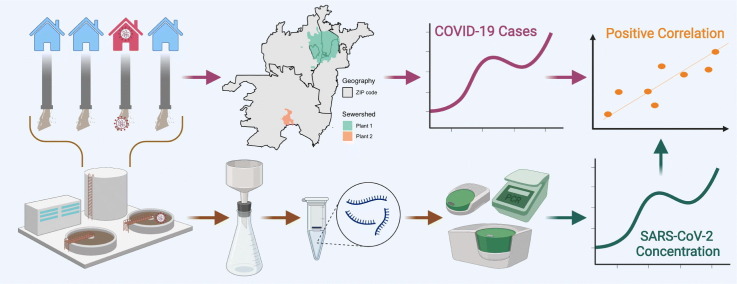
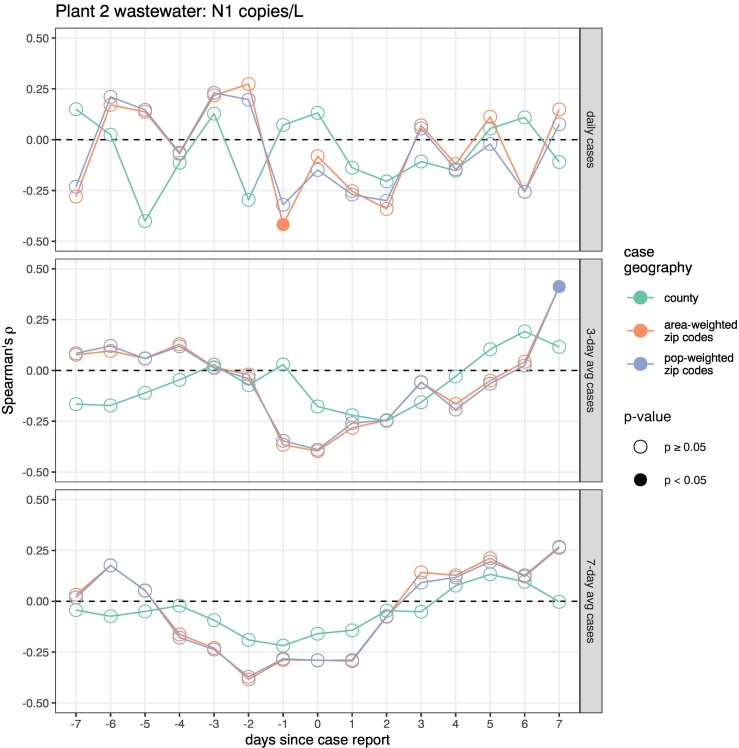
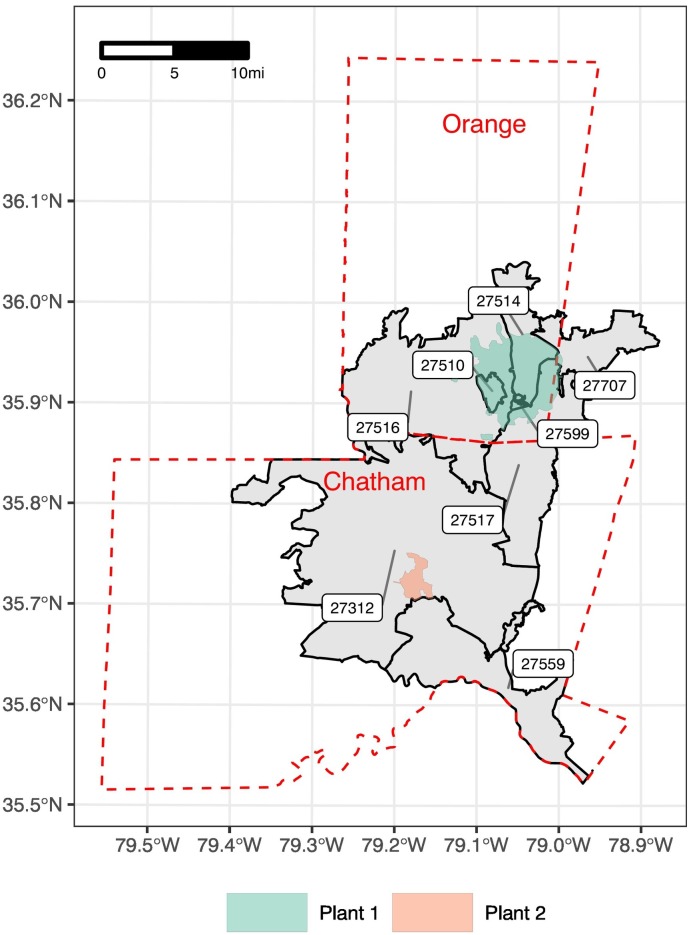
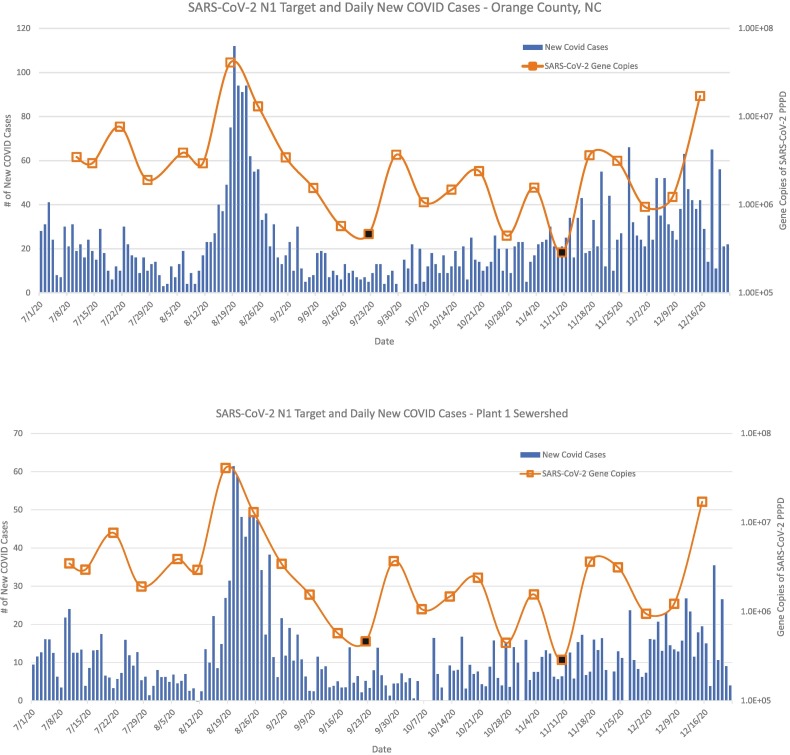
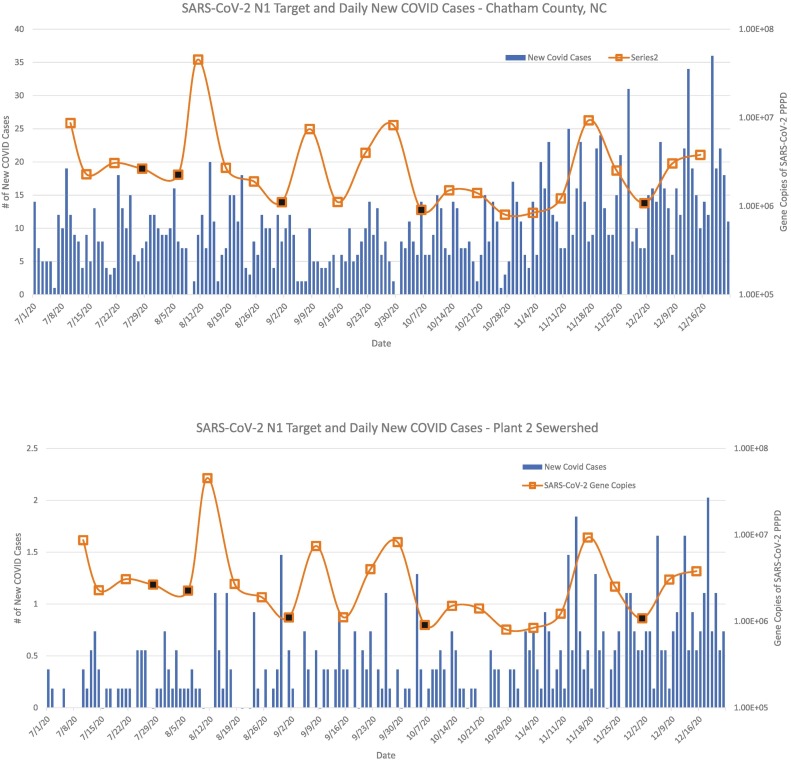
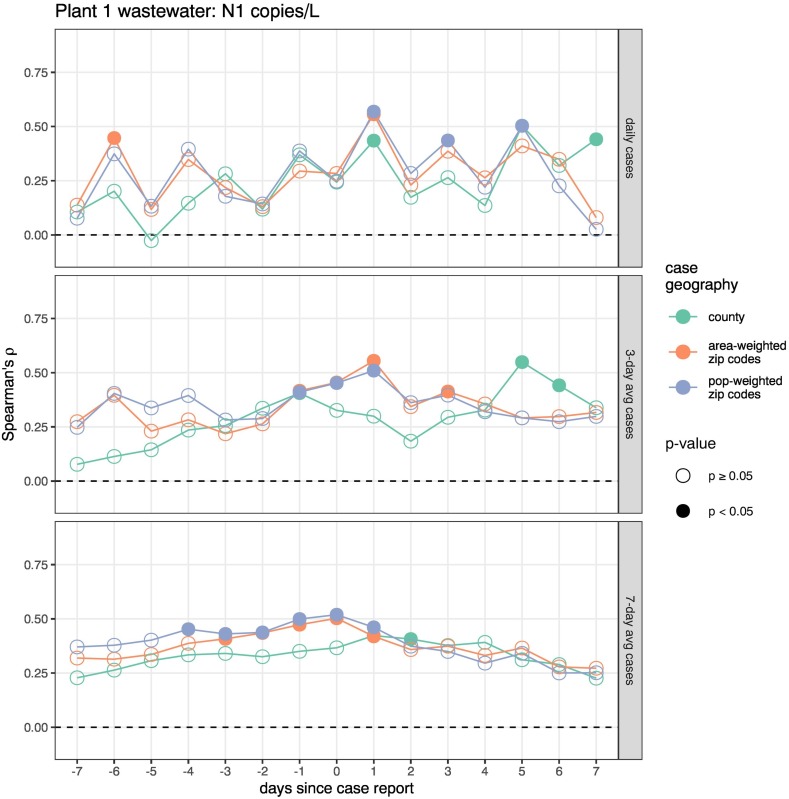
Wastewater surveillance of severe acute respiratory syndrome coronavirus 2 (SARS-CoV-2) may be useful for monitoring population-wide coronavirus disease 2019 (COVID-19) infections, especially given asymptomatic infections and limitations in diagnostic testing. We aimed to detect SARS-CoV-2 RNA in wastewater and compare viral concentrations to COVID-19 case numbers in the respective counties and sewersheds. Influent 24-hour composite wastewater samples were collected from July to December 2020 from two municipal wastewater treatment plants serving different population sizes in Orange and Chatham Counties in North Carolina. After a concentration step via HA filtration, SARS-CoV-2 RNA was detected and quantified by reverse transcription droplet digital polymerase chain reaction (RT-ddPCR) and quantitative PCR (RT-qPCR), targeting the N1 and N2 nucleocapsid genes. SARS-CoV-2 RNA was detected by RT-ddPCR in 100 % (24/24) and 79 % (19/24) of influent wastewater samples from the larger and smaller plants, respectively. In comparison, viral RNA was detected by RT-qPCR in 41.7 % (10/24) and 8.3 % (2/24) of samples from the larger and smaller plants, respectively. Positivity rates and method agreement further increased for the RT-qPCR assay when samples with positive signals below the limit of detection were counted as positive. The wastewater data from the larger plant generally correlated (⍴ ~0.5, p < 0.05) with, and even anticipated, the trends in reported COVID-19 cases, with a notable spike in measured viral RNA preceding a spike in cases when students returned to a college campus in the Orange County sewershed. Correlations were generally higher when using estimates of sewershed-level case data rather than county-level data. This work supports use of wastewater surveillance for tracking COVID-19 disease trends, especially in identifying spikes in cases. Wastewater-based epidemiology can be a valuable resource for tracking disease trends, allocating resources, and evaluating policy in the fight against current and future pandemics.
污水监测严重急性呼吸综合征冠状病毒 2 (SARS-CoV-2) 可能有助于监测全人群 2019 年冠状病毒病 (COVID-19) 感染情况,尤其是无症状感染和诊断检测的局限性。我们旨在检测污水中的 SARS-CoV-2 RNA,并将病毒浓度与各自县和污水流域的 COVID-19 病例数进行比较。2020 年 7 月至 12 月,从北卡罗来纳州橙县和查塔姆县的两个城市污水处理厂收集了 24 小时混合污水样本,这两个污水处理厂服务于不同的人口规模。经过 HA 过滤浓缩步骤后,通过逆转录液滴数字聚合酶链反应 (RT-ddPCR) 和定量聚合酶链反应 (RT-qPCR) 检测和定量污水中的 SARS-CoV-2 RNA,靶向 N1 和 N2 核衣壳基因。在较大和较小的污水处理厂中,RT-ddPCR 检测到污水中 SARS-CoV-2 RNA 的阳性率分别为 100 %(24/24)和 79 %(19/24)。相比之下,较大和较小的污水处理厂的样本中,通过 RT-qPCR 检测到病毒 RNA 的阳性率分别为 41.7 %(10/24)和 8.3 %(2/24)。当将检测下限以下的阳性信号样本计为阳性时,RT-qPCR 检测的阳性率和方法一致性进一步提高。较大的污水处理厂的污水数据与报告的 COVID-19 病例趋势大致相关(r 约为 0.5,p < 0.05),甚至可以预测病例趋势,当橙县污水流域的一所大学校园的学生返校时,污水中病毒 RNA 检测值先出现峰值,随后病例数出现峰值。当使用污水流域级病例数据估计值而不是县级数据时,相关性通常更高。这项工作支持使用污水监测来跟踪 COVID-19 疾病趋势,特别是在识别病例激增方面。污水流行病学可以成为跟踪疾病趋势、分配资源和评估当前和未来大流行期间政策的宝贵资源。