Puvanasundram Puvaneswari, Chong Chou Min, Sabri Suriana, Yusoff Md Sabri Mohd, Lim Keng Chin, Karim Murni
Laboratory of Aquatic Animal Health and Therapeutics, Institute of Biosciences, University Putra Malaysia, Serdang 43400, Selangor, Malaysia.
Department of Aquaculture, Faculty of Agriculture, University Putra Malaysia, Serdang 43400, Selangor, Malaysia.
Biology (Basel). 2022 Nov 10;11(11):1644. doi: 10.3390/biology11111644.
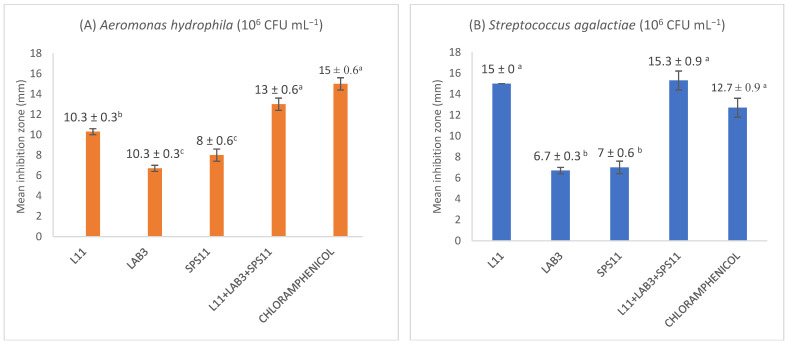
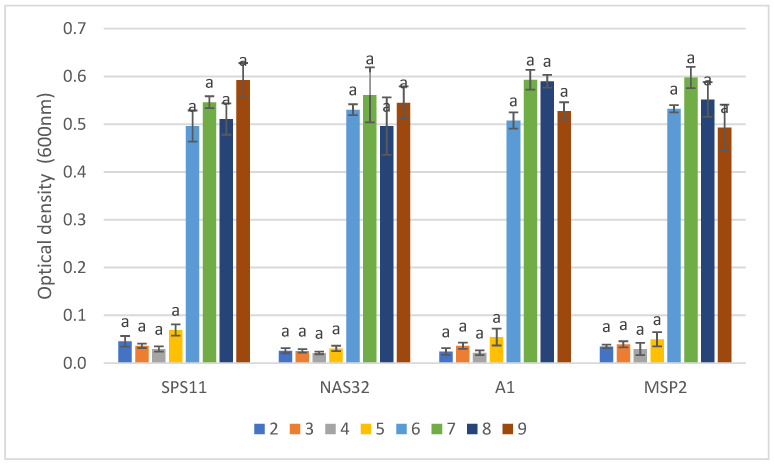
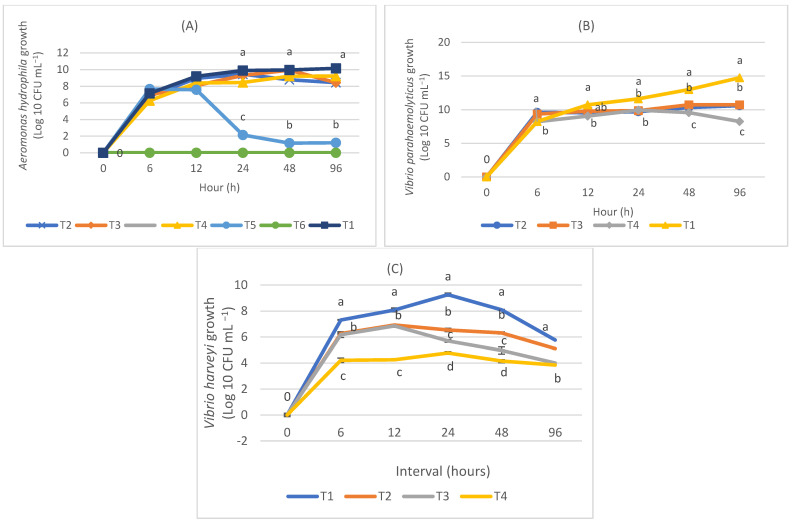
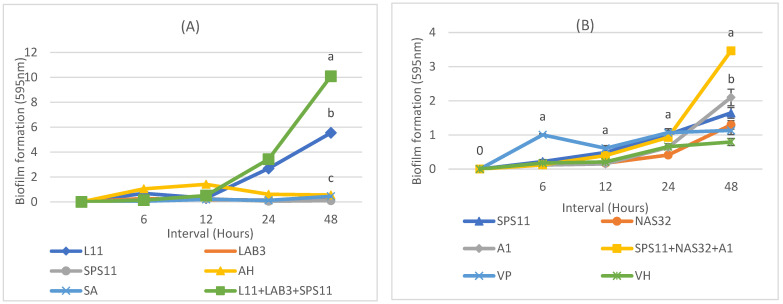
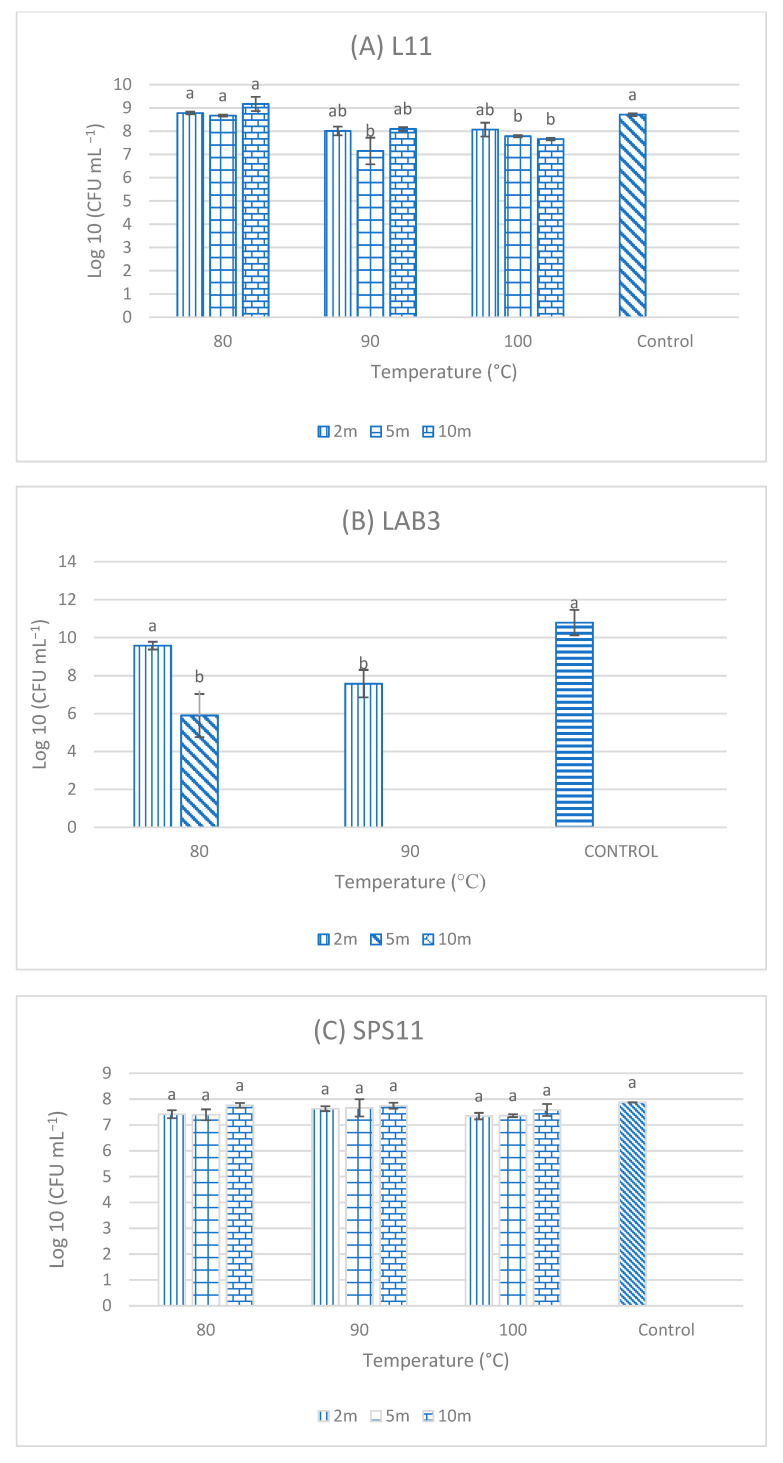
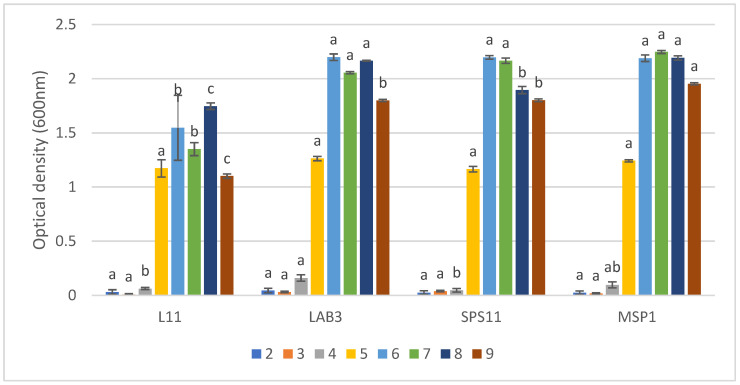
Compatibility of each strain in a multi-strain probiotic (MSP), along with its properties, becomes a strong base for its formulation. In this study, single-strain probiotics (SSPs) and multi-strain probiotics (MSPs) were evaluated in vitro for strain compatibility, microbial antagonism, biofilm formation capacity, and stress tolerance. Bacillus amyloliquefaciens L11, Enterococcus hirae LAB3, and Lysinibacillus fusiformis SPS11 were chosen as MSP1 candidates because they showed much stronger antagonism to Aeromonas hydrophila and Streptococcus agalactiae than a single probiotic. MSP 2 candidates were Lysinibacillus fusiformis strains SPS11, A1, and Lysinibacillus sphaericus strain NAS32 because the inhibition zone produced by MSP 2 against Vibrio harveyi and Vibrio parahaemolyticus was much higher than that produced by its constituent SSPs. MSP1 in the co-culture assay reduced (p < 0.05) A. hydrophila count from 9.89 ± 0.1 CFU mL−1 to 2.14 ± 0.2 CFU mL−1. The biofilm formation of both MSPs were significantly higher (p < 0.05) than its constituent SSPs and the pathogens. The SSPs in both MSPs generally showed resistance to high temperatures (80, 90, and 100 °C) and a wide range of pH (2 to 9). This in vitro assessment study demonstrates that MSP1 and 2 have the potential to be further explored as multi-strain probiotics on selected aquatic species.
多菌株益生菌(MSP)中各菌株的兼容性及其特性,构成了其配方的坚实基础。在本研究中,对单菌株益生菌(SSP)和多菌株益生菌(MSP)进行了体外评估,以检测菌株兼容性、微生物拮抗作用、生物膜形成能力和应激耐受性。解淀粉芽孢杆菌L11、平肠球菌LAB3和梭形赖氨酸芽孢杆菌SPS11被选为MSP1候选菌株,因为它们对嗜水气单胞菌和无乳链球菌的拮抗作用比单一益生菌强得多。MSP 2候选菌株为梭形赖氨酸芽孢杆菌菌株SPS11、A1和球形赖氨酸芽孢杆菌菌株NAS32,因为MSP 2对哈维氏弧菌和副溶血性弧菌产生的抑菌圈比其组成的SSP产生的抑菌圈大得多。在共培养试验中,MSP1使嗜水气单胞菌数量从9.89±0.1 CFU mL−1降至2.14±0.2 CFU mL−1(p<0.05)。两种MSP的生物膜形成均显著高于其组成的SSP和病原体(p<0.05)。两种MSP中的SSP通常对高温(80、90和100°C)和广泛的pH范围(2至9)具有抗性。这项体外评估研究表明,MSP1和2有潜力作为多菌株益生菌在选定的水生物种上进一步探索。