Sebastian-Valles Fernando, Sánchez de la Blanca Carrero Nuria, Rodríguez-Laval Víctor, Martinez-Hernández Rebeca, Serrano-Somavilla Ana, Knott-Torcal Carolina, Muñoz de Nova José Luis, Martín-Pérez Elena, Marazuela Mónica, Sampedro-Nuñez Miguel Antonio
Department of Endocrinology and Nutrition, Hospital Universitario de La Princesa, Instituto de Investigación Sanitaria de La Princesa, 28006 Madrid, Spain.
Instituto de Investigación Sanitaria del Hospital Universitario de La Princesa, 28006 Madrid, Spain.
Cancers (Basel). 2022 Oct 22;14(21):5189. doi: 10.3390/cancers14215189.
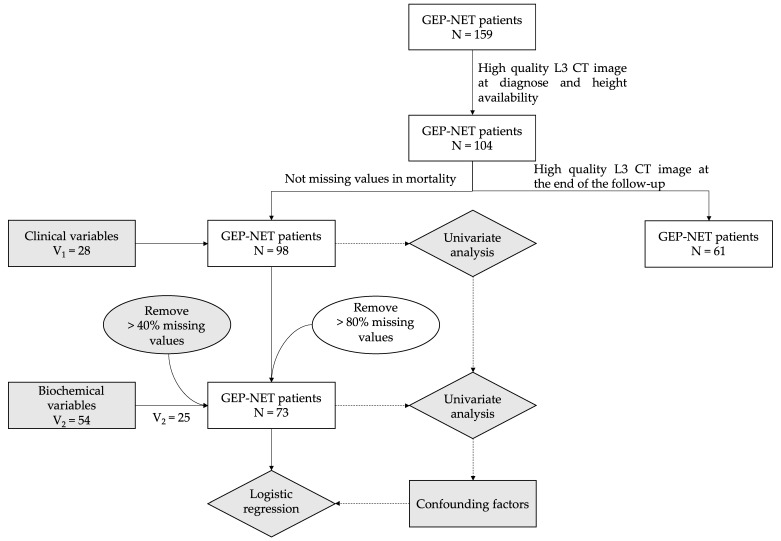
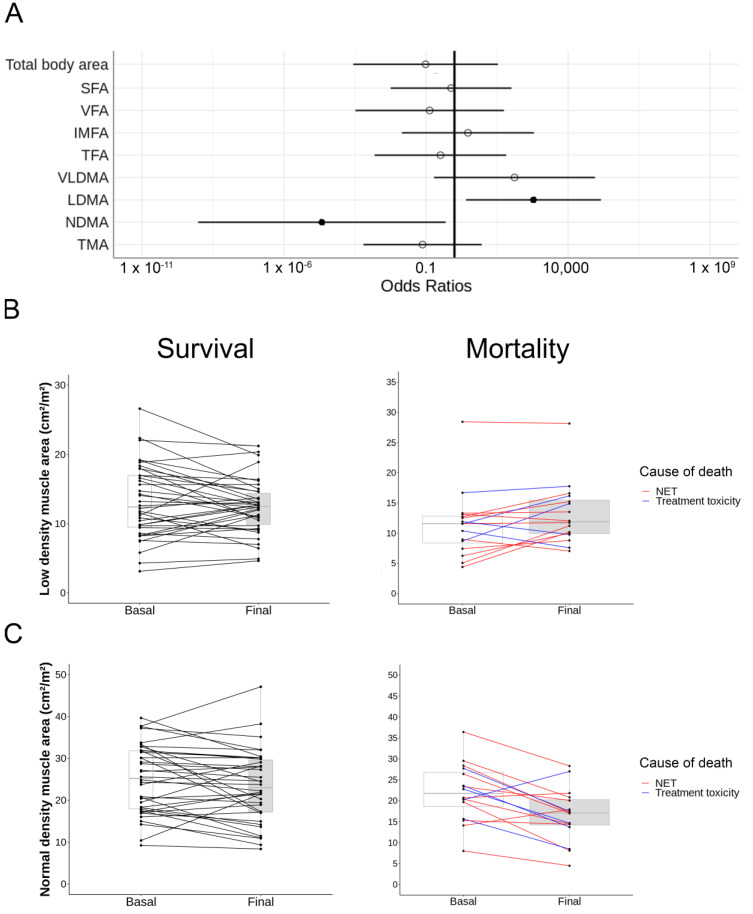
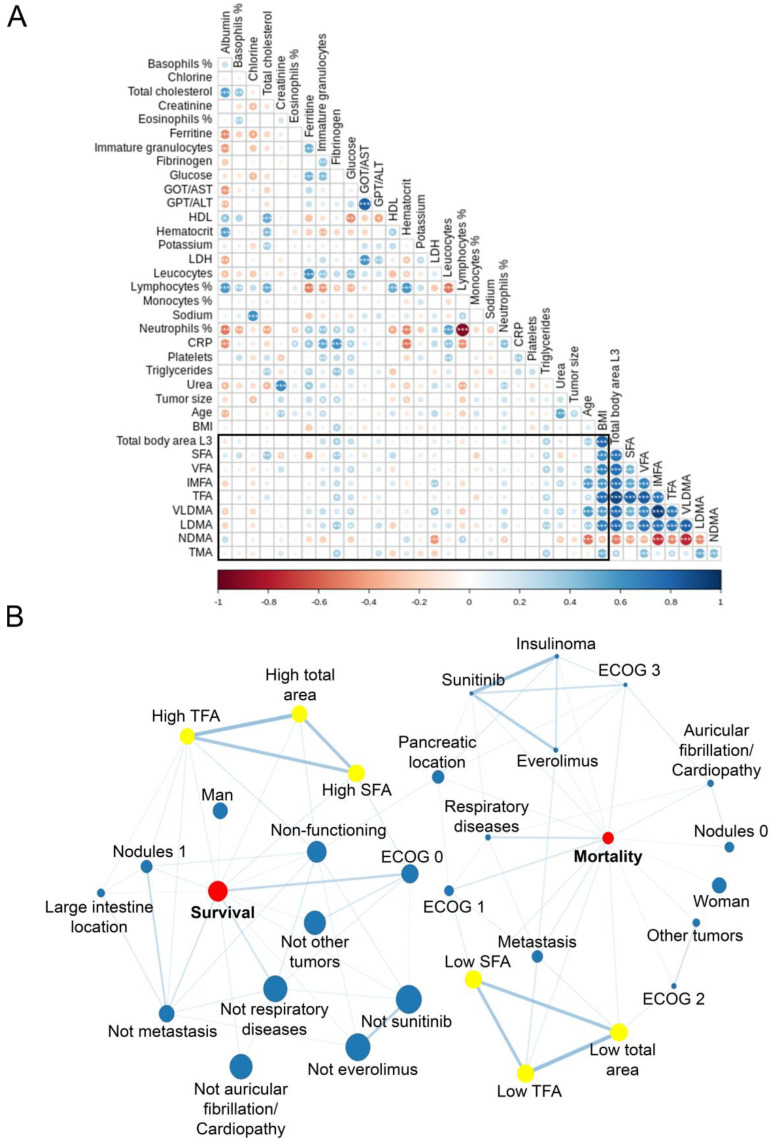
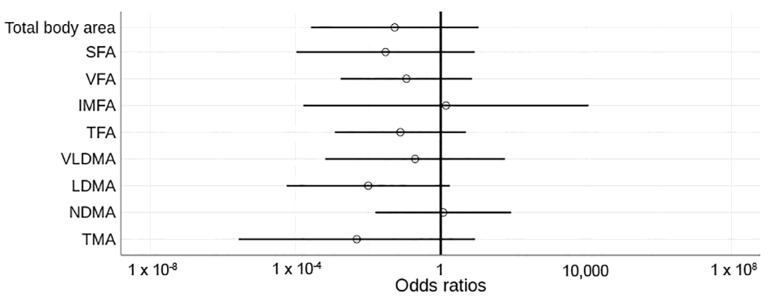
Background: Gastroenteropancreatic neuroendocrine tumors (GEP-NETs) are heterogeneous rare diseases causing malnutrition and cachexia in which the study of body composition may have an impact in prognosis. Aim: Evaluation of muscle and fat tissues by computed tomography (CT) at the level of the third lumbar (L3 level) at diagnosis and at the end of follow-up in GET-NET patients and their relationships with clinical and biochemical variables as predictors of survival. Methodology: Ninety-eight GEP-NET patients were included. Clinical and biochemical parameters were evaluated. Total body, subcutaneous, visceral and total fat areas and very low-density, low-density, normal density, high-density, very high-density and total muscle areas were obtained from CT images. Results: Body composition measures and overall mortality correlated with age, ECOG (Eastern Cooperative Oncology Group performance status) metastases, lactate dehydrogenase (LDH), albumin and urea levels. Although there was no relationship between body composition variables at diagnosis and overall and specific mortality, an increase in low-density muscle and a decrease in normal-density muscle during follow-up were independently correlated to overall (p <0.05) and tumor-cause mortality (p < 0.05). Conclusion: Although body composition measures obtained by CT at diagnosis did not impact survival of GEP-NET patients, a loss of good quality muscle during follow-up was associated with an increased overall and tumor-related mortality. Nutritional status should therefore be supervised by nutrition specialists and an increase in good quality muscle could improve prognosis.
胃肠胰神经内分泌肿瘤(GEP-NETs)是一种异质性罕见疾病,可导致营养不良和恶病质,其中身体成分的研究可能对预后产生影响。目的:在GEP-NET患者诊断时及随访结束时,通过计算机断层扫描(CT)评估第三腰椎水平(L3水平)的肌肉和脂肪组织,并研究它们与作为生存预测指标的临床和生化变量之间的关系。方法:纳入98例GEP-NET患者。评估临床和生化参数。从CT图像中获取全身、皮下、内脏和总脂肪面积以及极低密度、低密度、正常密度、高密度、极高密度和总肌肉面积。结果:身体成分测量值和总死亡率与年龄、东部肿瘤协作组(ECOG)体力状况、转移情况、乳酸脱氢酶(LDH)、白蛋白和尿素水平相关。虽然诊断时的身体成分变量与总死亡率和特定死亡率之间没有关系,但随访期间低密度肌肉增加和正常密度肌肉减少与总死亡率(p<0.05)和肿瘤相关死亡率(p<0.05)独立相关。结论:虽然诊断时通过CT获得的身体成分测量值对GEP-NET患者的生存没有影响,但随访期间优质肌肉的减少与总死亡率和肿瘤相关死亡率增加有关。因此,营养状况应由营养专家进行监测,增加优质肌肉量可能改善预后。