Manetti Alice Chiara, Visi Giacomo, Spina Federica, De Matteis Alessandra, Del Duca Fabio, Turillazzi Emanuela, Maiese Aniello
Department of Surgical, Medical, and Molecular Pathology and Critical Care Medicine, Institute of Legal Medicine, University of Pisa, via Roma 55, 56126 Pisa, Italy.
Department of Anatomical, Histological, Forensic and Orthopedical Sciences, Sapienza University of Rome, Viale Regina Elena 336, 00161 Rome, Italy.
Biomedicines. 2022 Nov 5;10(11):2823. doi: 10.3390/biomedicines10112823.
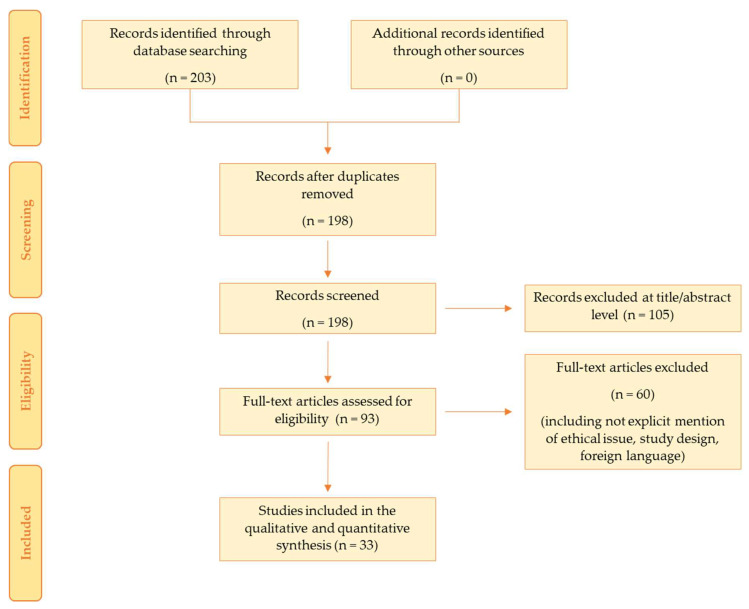
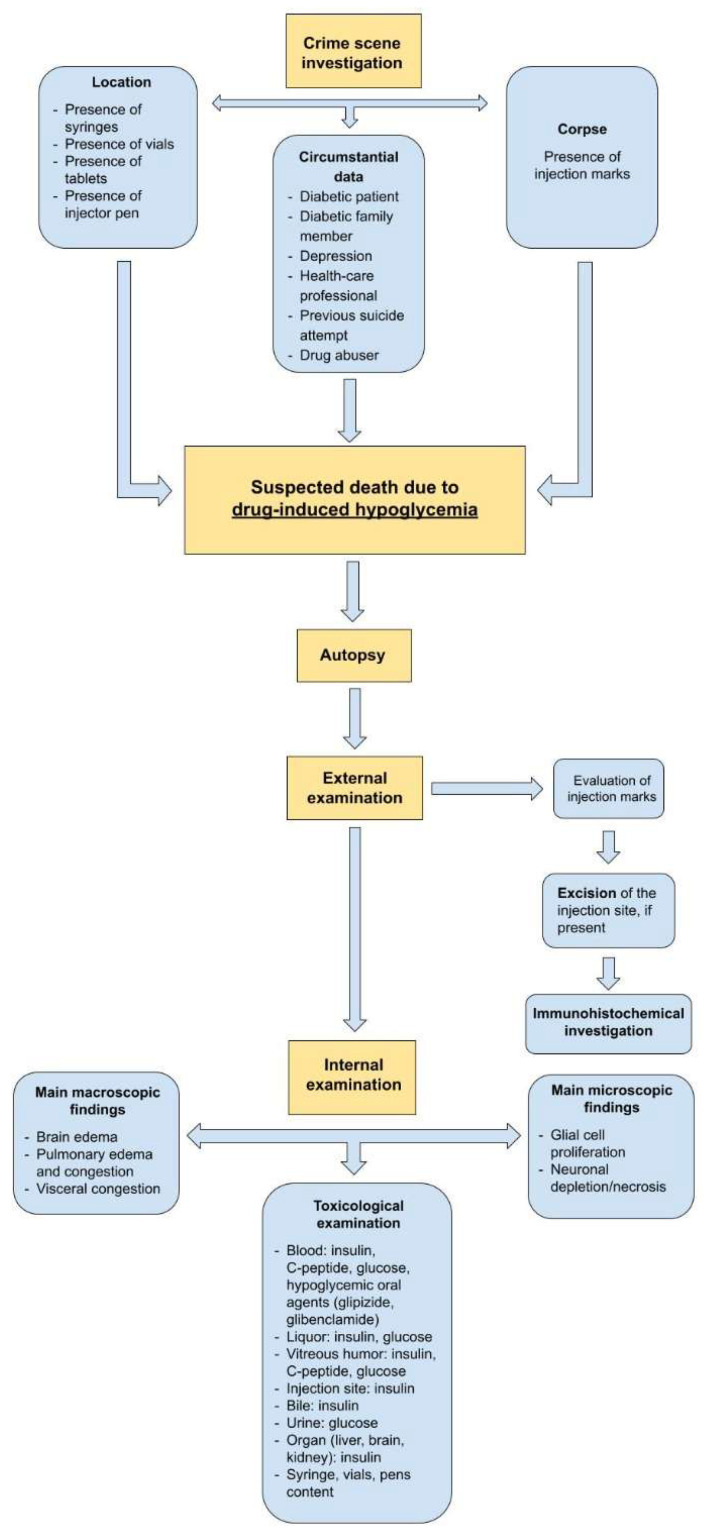
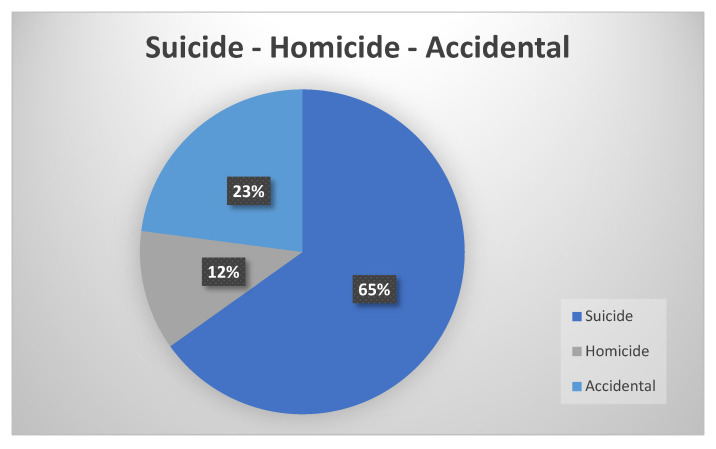
Insulin and oral hypoglycemic agents are drugs widely used in the world population due to their therapeutic effects on diabetes mellitus. Despite these benefits, they can also cause accidental or voluntary drug overdose. This review aims to evaluate post-mortem investigations in cases of suspected hypoglycemic drug overdose. We performed a comprehensive search using the Preferred Reporting Items for Systematic Review (PRISMA) standards; we systematically searched the PubMed, Science Direct Scopus, Google Scholar, and Excerpta Medica Database (EM-BASE) databases from the point of database inception until August 2022. The following inclusion criteria were used: (1) original research articles, (2) reviews and mini-reviews, (3) case reports/series, (4) and only papers written in English. Thirty-three scientific papers, including original research articles, case reports, and case series, fulfilled the inclusion criteria. A total of 109 cases of insulin or hypoglycemic drug overdose were found. There were 71 cases of suicide (65%), 25 cases of accidental poisoning (23%), and 13 cases of homicide (12%). The most commonly used drug was insulin (95.4%). Autopsy and post-mortem examinations were performed in 84 cases, while toxicological investigations were performed in 79 cases. The most common gross findings in the autopsy were pulmonary edema (55.7%) and congestion (41.8%), while the most common histological finding was neuronal depletion or necrosis (29.1%). In the suspicion of death from insulin or overdose from oral hypoglycemic agents, autopsy findings may be nonspecific, and the search for injection marks can be positive at the external examination. Significant post-mortal alterations can interest biological samples and an early autopsy investigation is recommended.
胰岛素和口服降糖药因其对糖尿病的治疗作用而在全球广泛使用。尽管有这些益处,但它们也可能导致意外或故意药物过量。本综述旨在评估疑似降糖药过量病例的尸检调查。我们使用系统评价的首选报告项目(PRISMA)标准进行了全面检索;我们系统地检索了PubMed、科学Direct Scopus、谷歌学术和医学文摘数据库(EM-BASE),检索时间从数据库建立到2022年8月。使用了以下纳入标准:(1)原创研究文章,(2)综述和小型综述,(3)病例报告/系列,(4)且仅为英文撰写的论文。33篇科学论文,包括原创研究文章、病例报告和病例系列,符合纳入标准。共发现109例胰岛素或降糖药过量病例。其中自杀71例(65%),意外中毒25例(23%),他杀13例(12%)。最常用的药物是胰岛素(95.4%)。84例进行了尸检和死后检查,79例进行了毒理学调查。尸检中最常见的大体发现是肺水肿(55.7%)和充血(41.8%),而最常见的组织学发现是神经元减少或坏死(29.1%)。在怀疑死于胰岛素或口服降糖药过量的情况下,尸检结果可能不具有特异性,在外部检查中寻找注射痕迹可能呈阳性。死后显著变化可能影响生物样本,建议尽早进行尸检调查。