Institute of Cardiovascular Sciences & Department of Physiology & Pathophysiology, Max Rady College of Medicine, University of Manitoba, Winnipeg, MB R2H 2A6, Canada.
Cells. 2022 Oct 22;11(21):3336. doi: 10.3390/cells11213336.
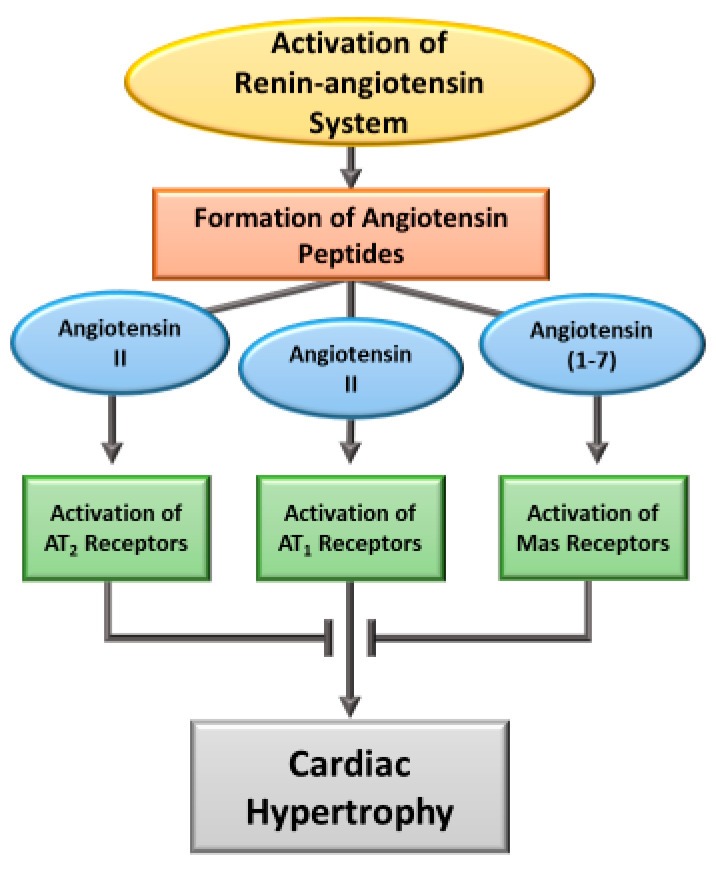
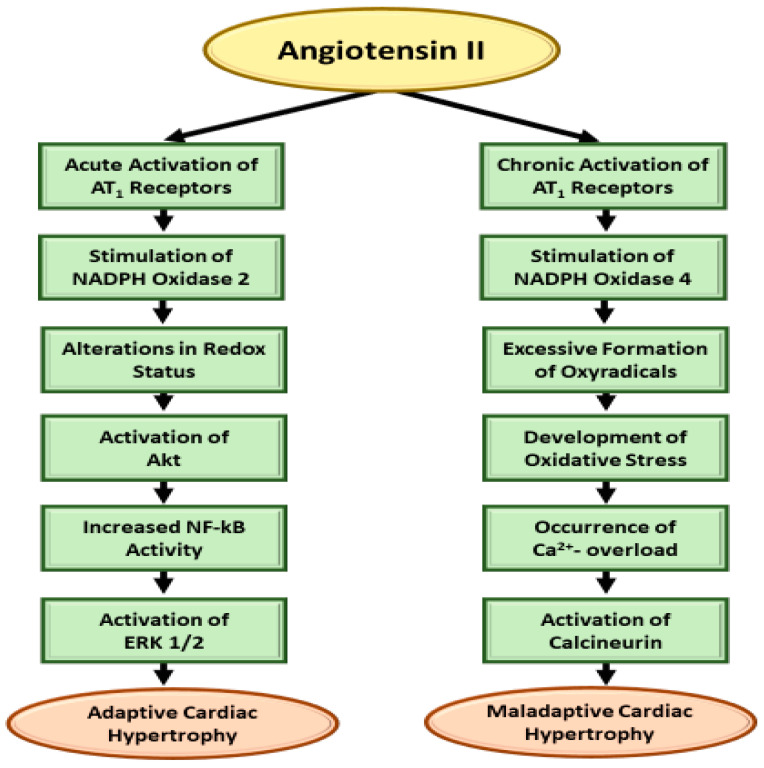
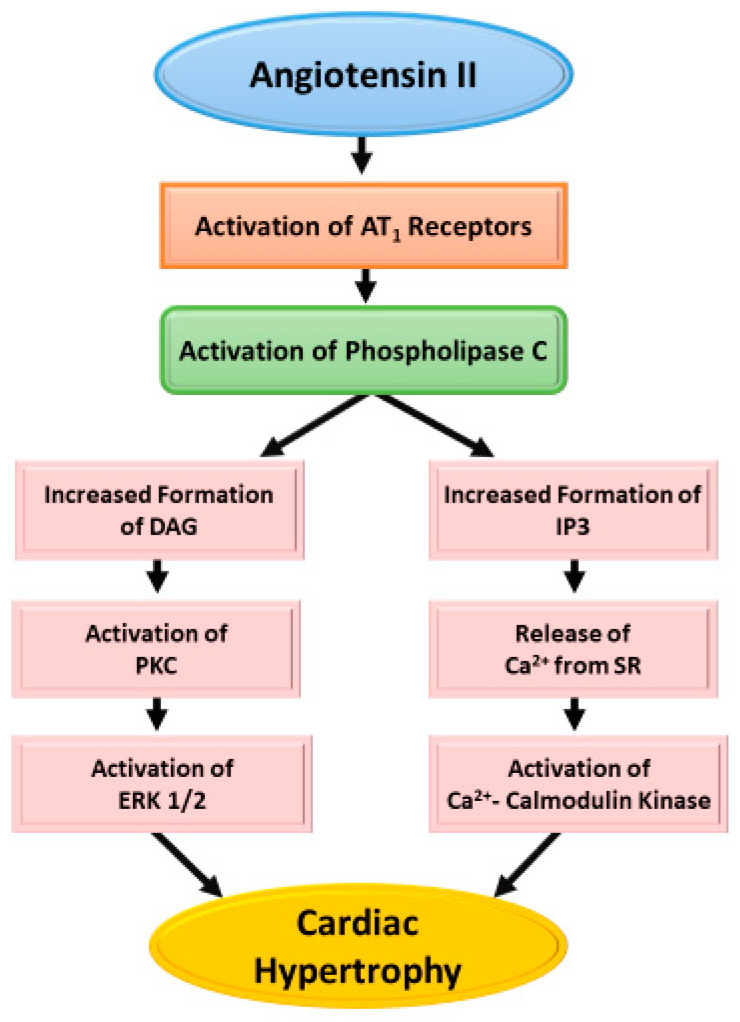
Although acute exposure of the heart to angiotensin (Ang II) produces physiological cardiac hypertrophy and chronic exposure results in pathological hypertrophy, the signal transduction mechanisms for these effects are of complex nature. It is now evident that the hypertrophic response is mediated by the activation of Ang type 1 receptors (ATR), whereas the activation of Ang type 2 receptors (ATR) by Ang II and Mas receptors by Ang-(1-7) exerts antihypertrophic effects. Furthermore, ATR-induced activation of phospholipase C for stimulating protein kinase C, influx of Ca through sarcolemmal Ca- channels, release of Ca from the sarcoplasmic reticulum, and activation of sarcolemmal NADPH oxidase 2 for altering cardiomyocytes redox status may be involved in physiological hypertrophy. On the other hand, reduction in the expression of ATR and Mas receptors, the release of growth factors from fibroblasts for the occurrence of fibrosis, and the development of oxidative stress due to activation of mitochondria NADPH oxidase 4 as well as the depression of nuclear factor erythroid-2 activity for the occurrence of Ca-overload and activation of calcineurin may be involved in inducing pathological cardiac hypertrophy. These observations support the view that inhibition of ATR or activation of ATR and Mas receptors as well as depression of oxidative stress may prevent or reverse the Ang II-induced cardiac hypertrophy.
虽然心脏急性暴露于血管紧张素(Ang II)会产生生理性心肌肥厚,而慢性暴露则会导致病理性心肌肥厚,但这些效应的信号转导机制非常复杂。现在已经很明显,肥厚反应是由 Ang 型 1 受体(ATR)的激活介导的,而 Ang II 激活 Ang 型 2 受体(ATR)和 Ang-(1-7)激活 Mas 受体则产生抗肥厚作用。此外,ATR 诱导的磷脂酶 C 激活以刺激蛋白激酶 C、肌浆网 Ca 通道的 Ca 内流、肌浆网内 Ca 的释放以及肌浆膜 NADPH 氧化酶 2 的激活以改变心肌细胞的氧化还原状态可能参与生理性肥厚。另一方面,ATR 和 Mas 受体表达减少、成纤维细胞中生长因子的释放导致纤维化、线粒体 NADPH 氧化酶 4 的激活导致氧化应激以及核因子红系 2 活性的抑制导致 Ca 过载和钙调神经磷酸酶的激活可能参与诱导病理性心肌肥厚。这些观察结果支持这样的观点,即抑制 ATR 或激活 ATR 和 Mas 受体以及抑制氧化应激可能预防或逆转 Ang II 诱导的心肌肥厚。