Department of Internal Medicine, Kaohsiung Chang Gung Memorial Hospital, Chang Gung University College of Medicine, Kaohsiung 83301, Taiwan.
Center for Mitochondrial Research and Medicine, Kaohsiung Chang Gung Memorial Hospital, Chang Gung University College of Medicine, Kaohsiung 83301, Taiwan.
Cells. 2022 Oct 24;11(21):3350. doi: 10.3390/cells11213350.
Several environmental stimuli may influence lupus, particularly viral infections. In this study, we used an imiquimod-induced lupus mouse model focused on the TLR7 pathway and proteomics analysis to determine the specific pathway related to viral infection and the related protein expressions in splenic B cells to obtain insight into B-cell responses to viral infection in the lupus model.
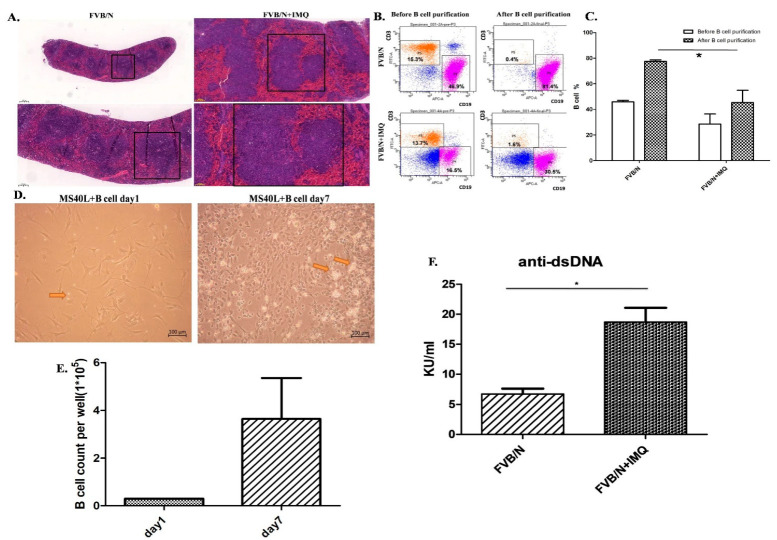
We treated FVB/N wild-type mice with imiquimod for 8 weeks to induce lupus symptoms and signs, retrieved splenocytes, selected B cells, and conducted the proteomic analysis. The B cells were co-cultured with CD40L+ feeder cells for another week before performing Western blot analysis. Panther pathway analysis was used to disclose the pathways activated and the protein-protein interactome was analyzed by the STRING database in this lupus murine model.
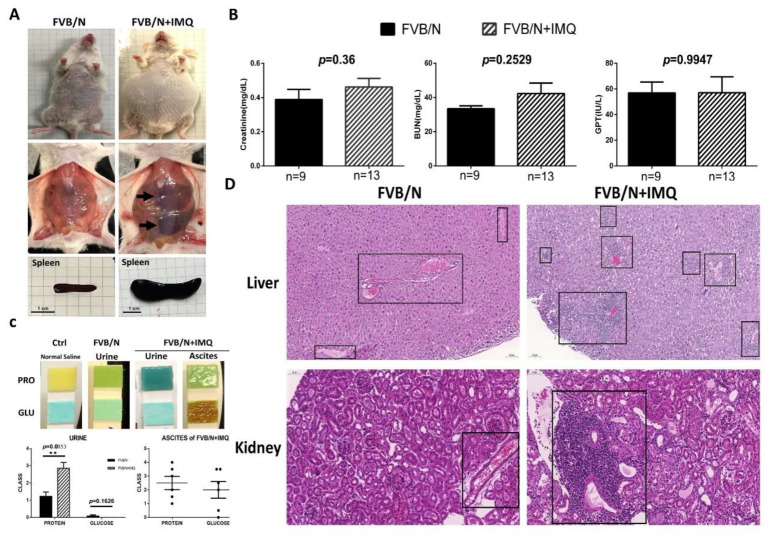
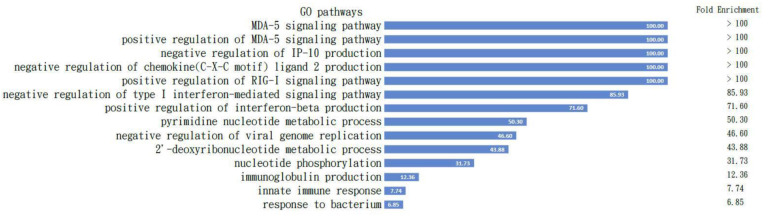
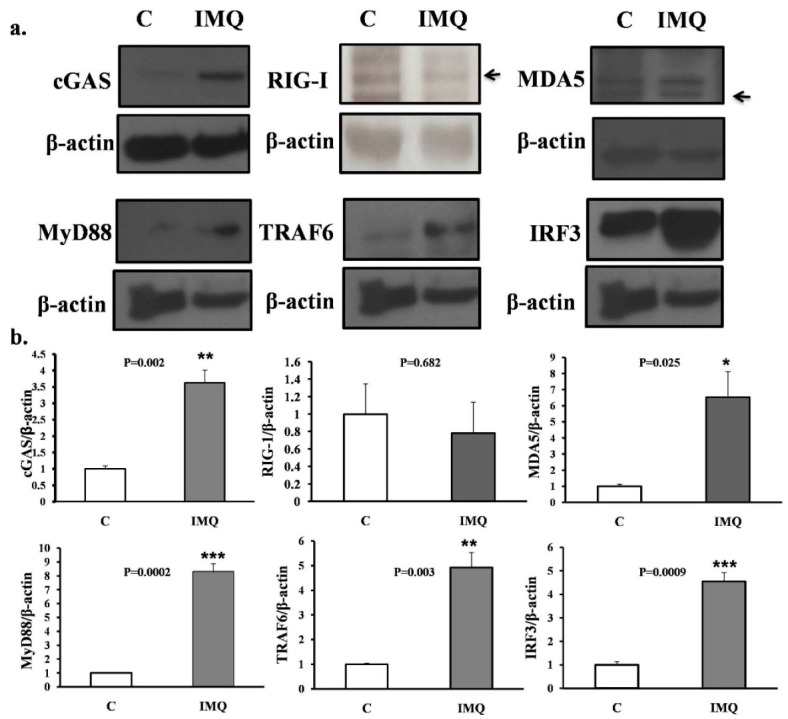
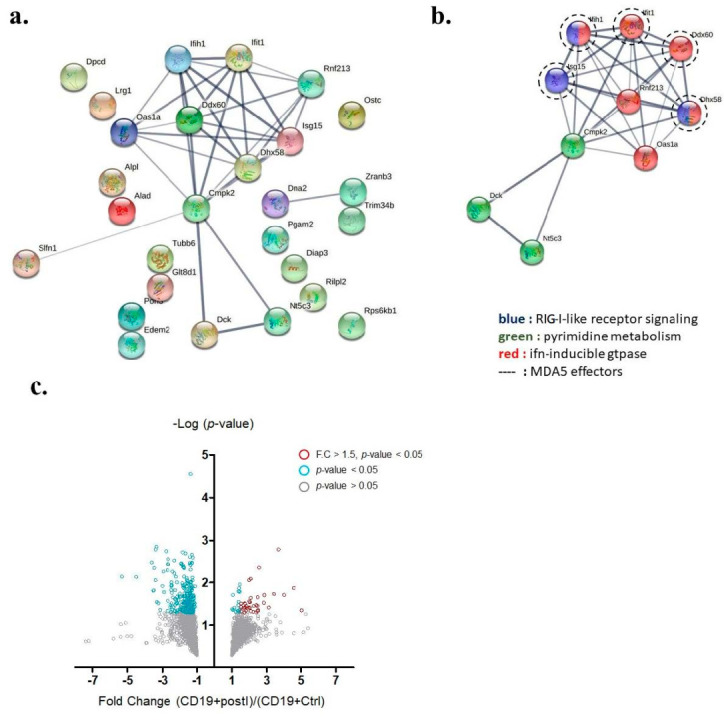
The lupus model was well established and well demonstrated with serology evidence and pathology proof of lupus-mimicking organ damage. Proteomics data of splenic B cells revealed that the most important activated pathways (fold enrichment > 100) demonstrated positive regulation of the MDA5 signaling pathway, negative regulation of IP-10 production, negative regulation of chemokine (C-X-C motif) ligand 2 production, and positive regulation of the RIG-I signaling pathway. A unique protein-protein interactome containing 10 genes was discovered, within which ISG15, IFIH1, IFIT1, DDX60, and DHX58 were demonstrated to be downstream effectors of MDA5 signaling. Finally, we found B-cell intracellular cytosolic proteins via Western blot experiment and continued to observe MDA5-related pathway activation.
In this experiment, we confirmed that the B cells in the lupus murine model focusing on the TLR7 pathway were activated through the MDA5 signaling pathway, an important RNA sensor implicated in the detection of viral infections and autoimmunity. The MDA5 agonist/antagonist RNAs and the detailed molecular interactions within B cells are worthy of further investigation for lupus therapy.
许多环境刺激因素可能会影响狼疮,尤其是病毒感染。在这项研究中,我们使用咪喹莫特诱导的狼疮小鼠模型,重点关注 TLR7 途径和蛋白质组学分析,以确定与病毒感染相关的特定途径以及脾 B 细胞中的相关蛋白表达,从而深入了解狼疮模型中 B 细胞对病毒感染的反应。
我们用咪喹莫特处理 FVB/N 野生型小鼠 8 周,以诱导狼疮症状和体征,提取脾细胞,选择 B 细胞,并进行蛋白质组学分析。在进行 Western blot 分析之前,将 B 细胞与 CD40L+饲养细胞共培养一周。在这个狼疮小鼠模型中,使用 Panther 途径分析来揭示激活的途径,并使用 STRING 数据库分析蛋白质-蛋白质相互作用网络。
成功建立了狼疮模型,并通过狼疮样器官损伤的血清学证据和病理学证据得到了很好的证明。脾 B 细胞的蛋白质组学数据显示,最重要的激活途径(折叠富集>100)表现为 MDA5 信号通路的正调控、IP-10 产生的负调控、趋化因子(C-X-C 基序)配体 2 产生的负调控以及 RIG-I 信号通路的正调控。发现了一个独特的蛋白质-蛋白质相互作用网络,包含 10 个基因,其中 ISG15、IFIH1、IFIT1、DDX60 和 DHX58 被证明是 MDA5 信号通路的下游效应物。最后,我们通过 Western blot 实验发现了 B 细胞胞质内蛋白,并继续观察 MDA5 相关途径的激活。
在这项实验中,我们证实了 TLR7 途径的狼疮小鼠模型中的 B 细胞通过 MDA5 信号通路被激活,MDA5 是一种重要的 RNA 传感器,参与病毒感染和自身免疫的检测。MDA5 激动剂/拮抗剂 RNA 以及 B 细胞内的详细分子相互作用值得进一步研究,以用于狼疮治疗。