Leibniz Research Centre for Working Environment and Human Factors (IfADo), Technical University of Dortmund, Ardeystrasse 67, 44139 Dortmund, Germany.
Working Group Sachinidis, Center for Physiology, Faculty of Medicine and University Hospital Cologne, University of Cologne, Robert-Koch-Str. 39, 50931 Cologne, Germany.
Cells. 2022 Oct 27;11(21):3404. doi: 10.3390/cells11213404.
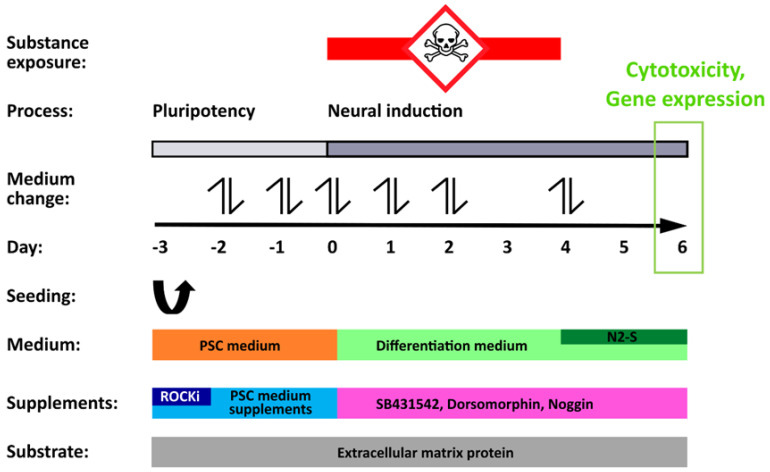
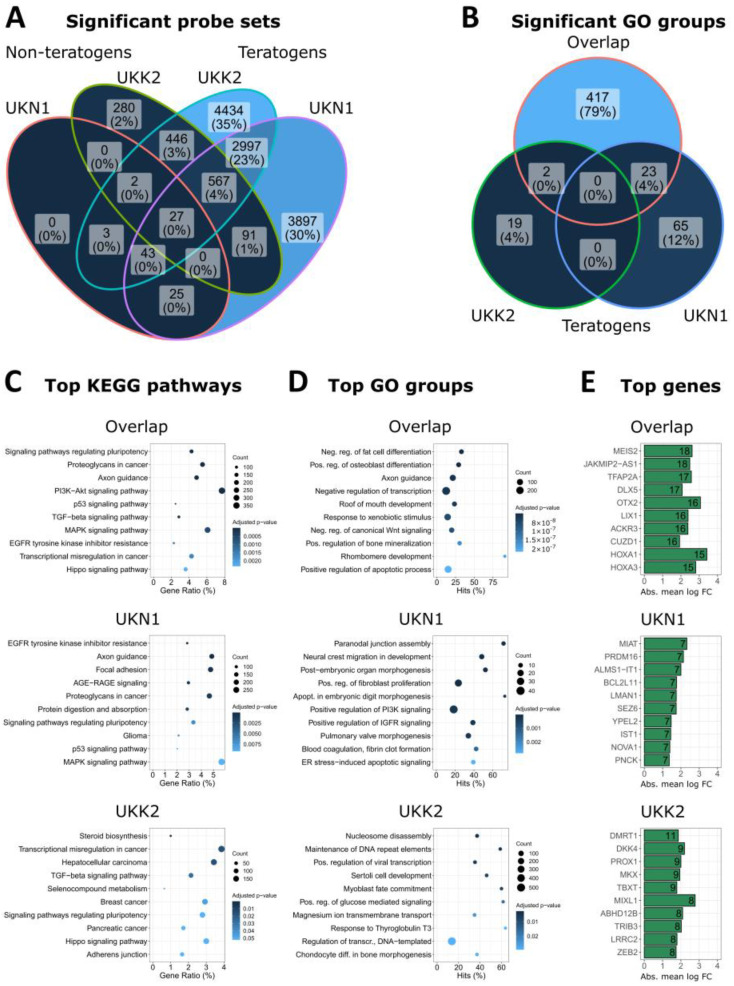
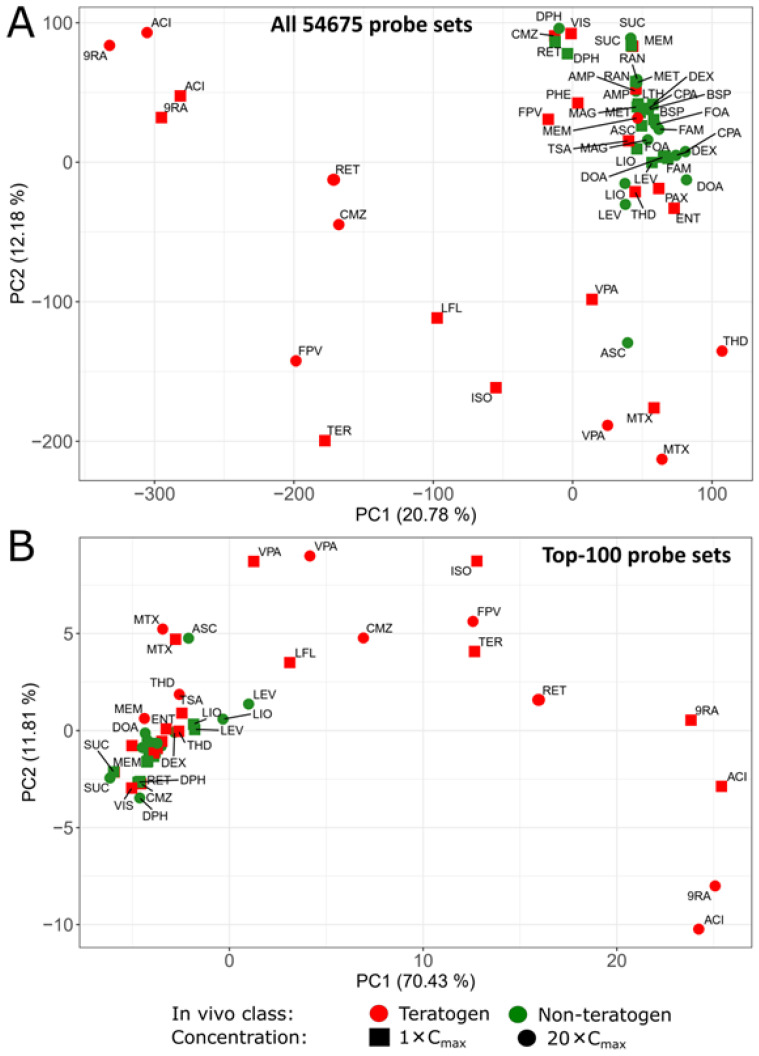
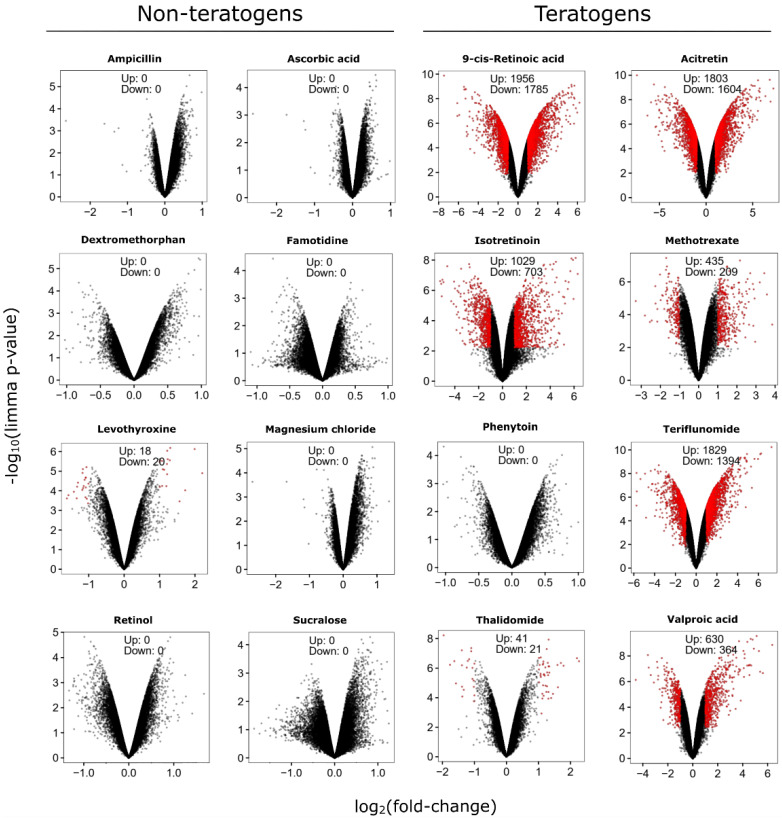
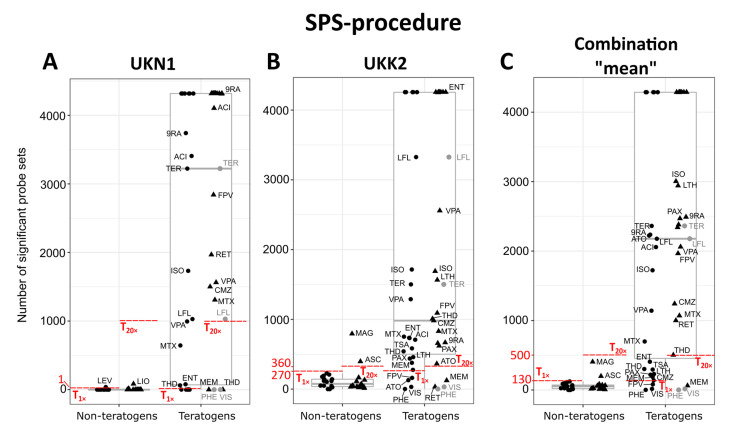
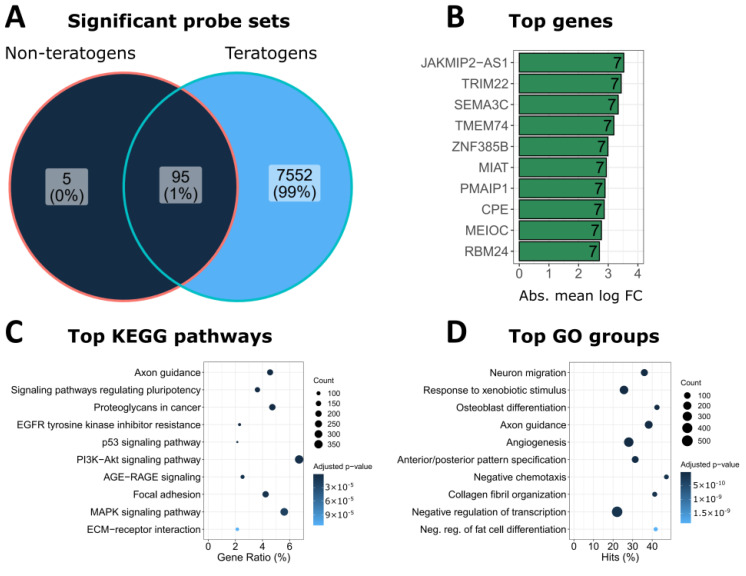
Human-relevant tests to predict developmental toxicity are urgently needed. A currently intensively studied approach makes use of differentiating human stem cells to measure chemically-induced deviations of the normal developmental program, as in a recent study based on cardiac differentiation (UKK2). Here, we (i) tested the performance of an assay modeling neuroepithelial differentiation (UKN1), and (ii) explored the benefit of combining assays (UKN1 and UKK2) that model different germ layers. Substance-induced cytotoxicity and genome-wide expression profiles of 23 teratogens and 16 non-teratogens at human-relevant concentrations were generated and used for statistical classification, resulting in accuracies of the UKN1 assay of 87-90%. A comparison to the UKK2 assay (accuracies of 90-92%) showed, in general, a high congruence in compound classification that may be explained by the fact that there was a high overlap of signaling pathways. Finally, the combination of both assays improved the prediction compared to each test alone, and reached accuracies of 92-95%. Although some compounds were misclassified by the individual tests, we conclude that UKN1 and UKK2 can be used for a reliable detection of teratogens in vitro, and that a combined analysis of tests that differentiate hiPSCs into different germ layers and cell types can even further improve the prediction of developmental toxicants.
迫切需要能够预测发育毒性的人类相关测试。目前正在深入研究的一种方法是利用分化的人类干细胞来测量化学物质引起的正常发育程序的偏差,如最近基于心脏分化的 UKK2 研究所示。在这里,我们 (i) 测试了模拟神经上皮分化的测定法 (UKN1) 的性能,以及 (ii) 探索了结合模拟不同胚层的测定法 (UKN1 和 UKK2) 的益处。在人类相关浓度下,生成了 23 种致畸物和 16 种非致畸物的诱导细胞毒性和全基因组表达谱,并用于统计分类,导致 UKN1 测定法的准确率为 87-90%。与 UKK2 测定法(准确率为 90-92%)的比较表明,化合物分类的总体一致性很高,这可能是由于信号通路高度重叠所致。最后,与单独测试相比,两种测定法的组合提高了预测准确性,达到了 92-95%。尽管一些化合物被个别测试错误分类,但我们得出结论,UKN1 和 UKK2 可用于体外可靠地检测致畸物,并且分析将 hiPSC 分化为不同胚层和细胞类型的测试的组合甚至可以进一步提高发育毒物的预测准确性。