Lain Maria Grazia, Vaz Paula, Sanna Marco, Ismael Nalia, Chicumbe Sérgio, Simione Teresa Beatriz, Cantarutti Anna, Porcu Gloria, Rinaldi Stefano, de Armas Lesley, Dinh Vinh, Pallikkuth Suresh, Pahwa Rajendra, Palma Paolo, Cotugno Nicola, Pahwa Savita
Fundação Ariel Glaser Contra o SIDA Pediátrico, Maputo P.O.Box 2822, Mozambique.
Research Unit of Clinical Immunology and Vaccinology, Children's Hospital Bambino Gesù, IRCCS, 0165 Rome, Italy.
Healthcare (Basel). 2022 Oct 28;10(11):2156. doi: 10.3390/healthcare10112156.
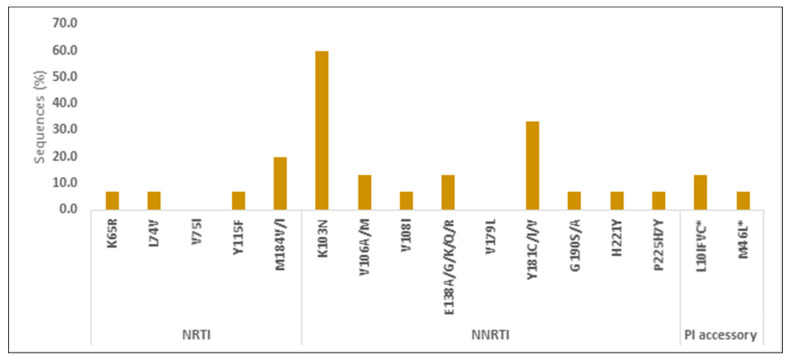
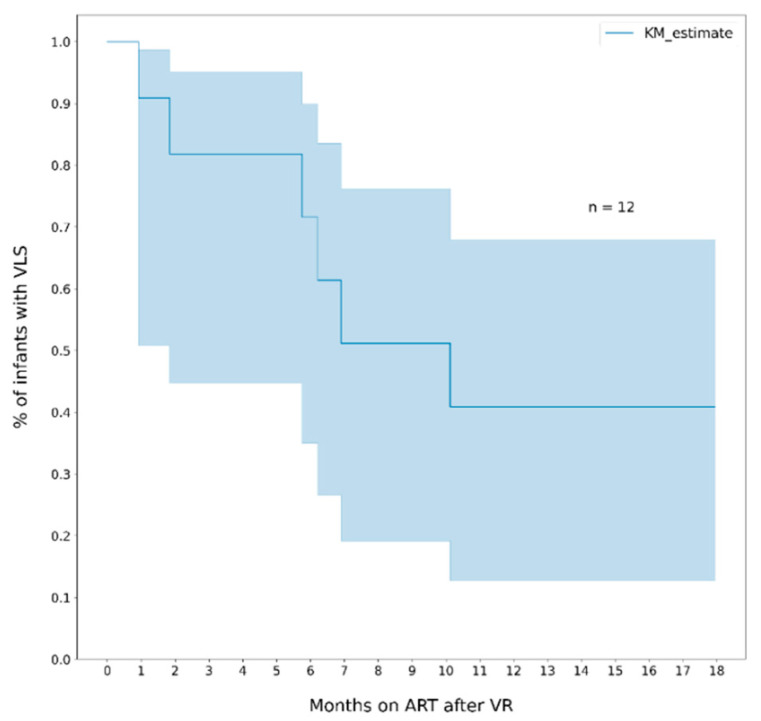
Early initiation of antiretroviral therapy and adherence to achieve viral load suppression (VLS) are crucial for reducing morbidity and mortality of perinatally HIV-infected infants. In this descriptive cohort study of 39 HIV perinatally infected infants, who started treatment at one month of life in Mozambique, we aimed to describe the viral response over 2 years of follow up. VLS ≤ 400 copies/mL, sustained VLS and viral rebound were described using a Kaplan-Meier estimator. Antiretroviral drug transmitted resistance was assessed for a sub-group of non-VLS infants. In total, 61% of infants reached VLS, and 50% had a rebound. Cumulative probability of VLS was 36%, 51%, and 69% at 6, 12 and 24 months of treatment, respectively. The median duration of VLS was 7.4 months (IQR 12.6) and the cumulative probability of rebound at 6 months was 30%. Two infants had resistance biomarkers to drugs included in their treatment regimen. Our findings point to a low rate of VLS and high rate of viral rebound. More frequent viral response monitoring is advisable to identify infants with rebound and offer timely adherence support. It is urgent to tailor the psychosocial support model of care to this specific age group and offer differentiated service delivery to mother-baby pairs.
尽早开始抗逆转录病毒治疗并坚持治疗以实现病毒载量抑制(VLS)对于降低围产期感染艾滋病毒婴儿的发病率和死亡率至关重要。在这项对39名在莫桑比克出生一个月时开始治疗的围产期感染艾滋病毒婴儿的描述性队列研究中,我们旨在描述两年随访期间的病毒反应。使用Kaplan-Meier估计量描述病毒载量≤400拷贝/毫升、持续病毒载量抑制和病毒反弹情况。对一部分未实现病毒载量抑制的婴儿评估抗逆转录病毒药物传播耐药性。总体而言,61%的婴儿实现了病毒载量抑制,50%出现了反弹。治疗6个月、12个月和24个月时病毒载量抑制的累积概率分别为36%、51%和69%。病毒载量抑制的中位持续时间为7.4个月(四分位间距12.6),6个月时反弹的累积概率为30%。两名婴儿对其治疗方案中包含的药物有耐药生物标志物。我们的研究结果表明病毒载量抑制率低且病毒反弹率高。建议更频繁地监测病毒反应,以识别出现反弹的婴儿并及时提供依从性支持。迫切需要针对这一特定年龄组调整心理社会支持护理模式,并为母婴对提供差异化服务。