State Key Laboratory for Conservation & Utilization of Subtropical Agro-Bioresources, College of Agriculture, Guangxi University, Nanning 530004, China.
College of Plant Science & Technology, Huazhong Agricultural University, Wuhan 430070, China.
Int J Mol Sci. 2022 Oct 30;23(21):13208. doi: 10.3390/ijms232113208.
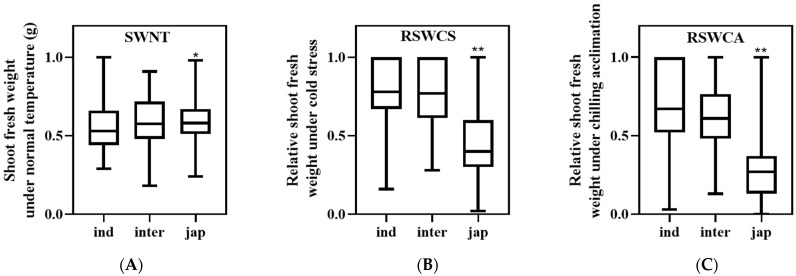
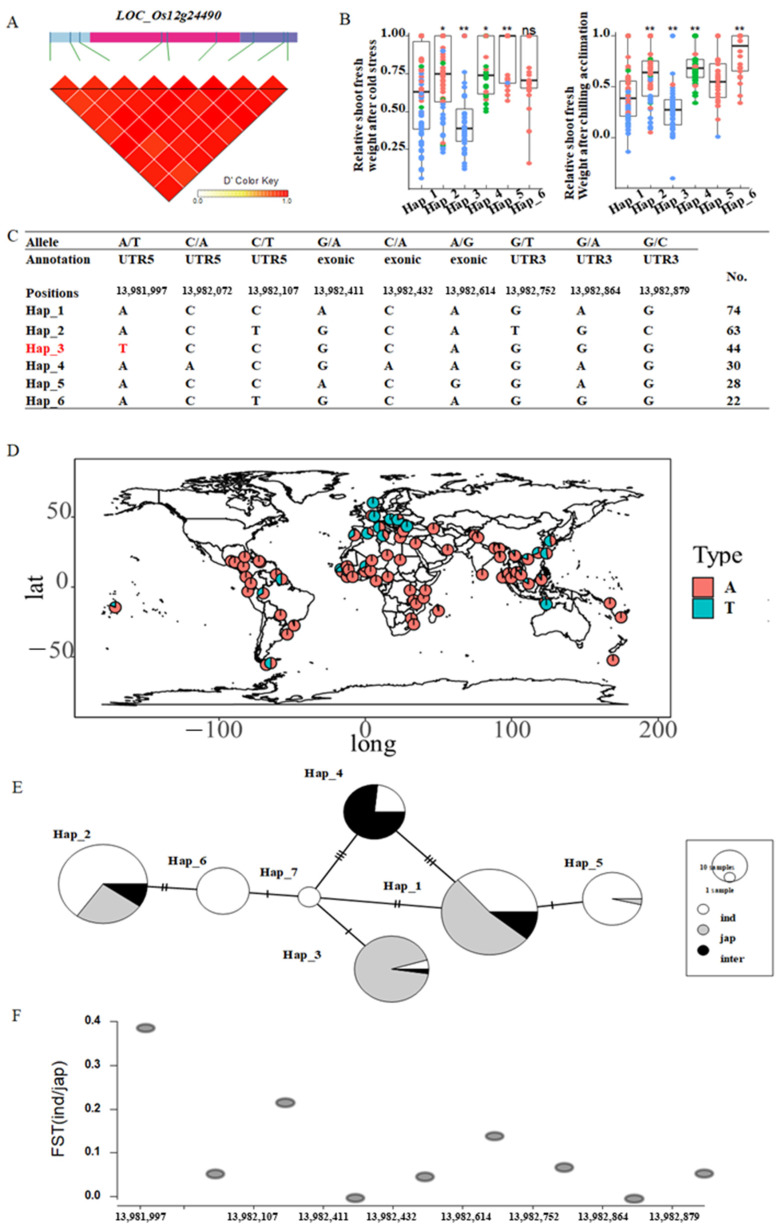
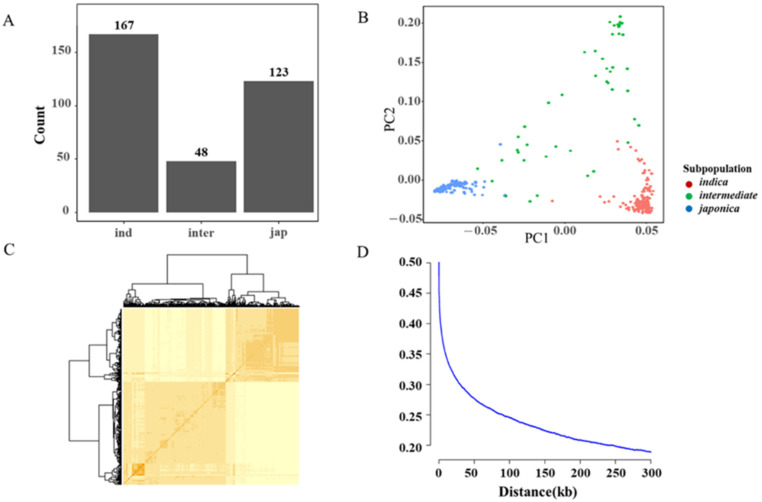
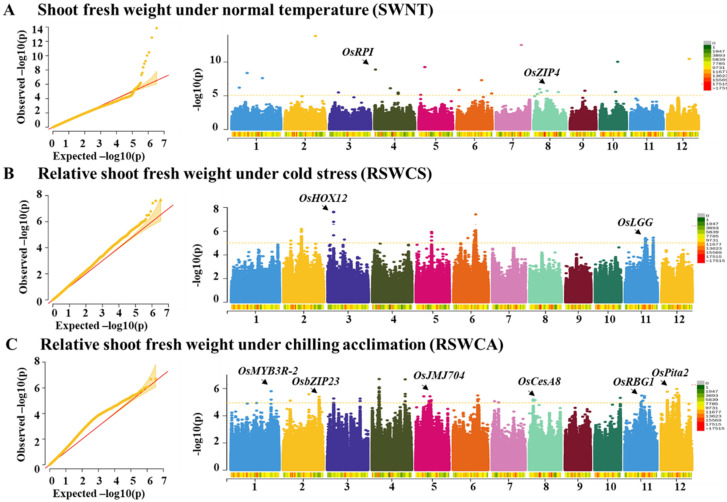
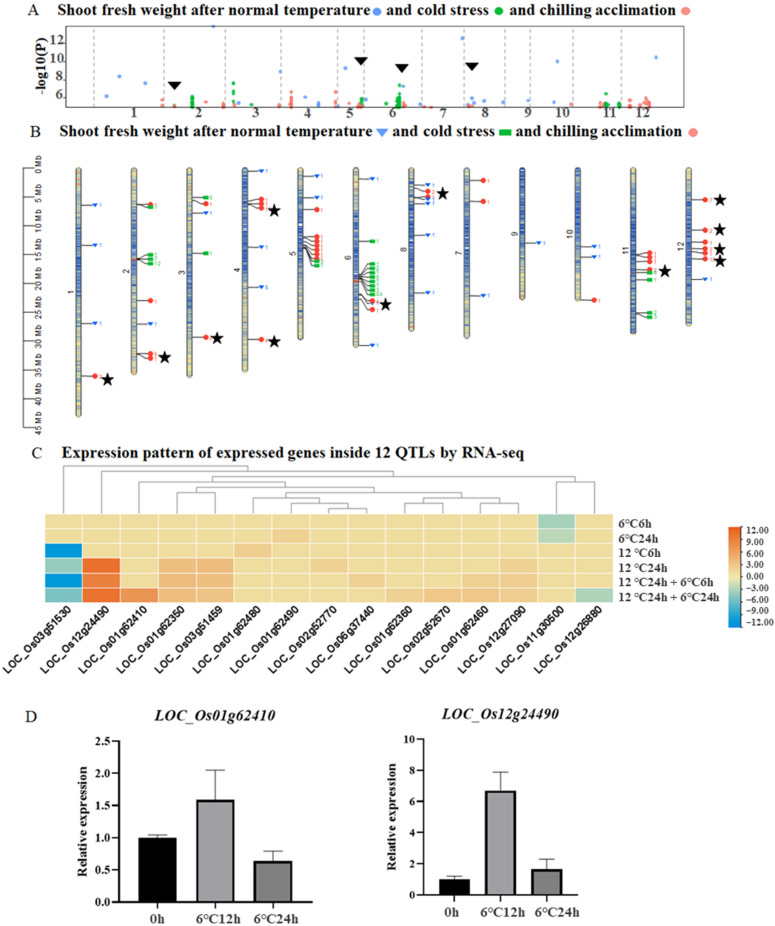
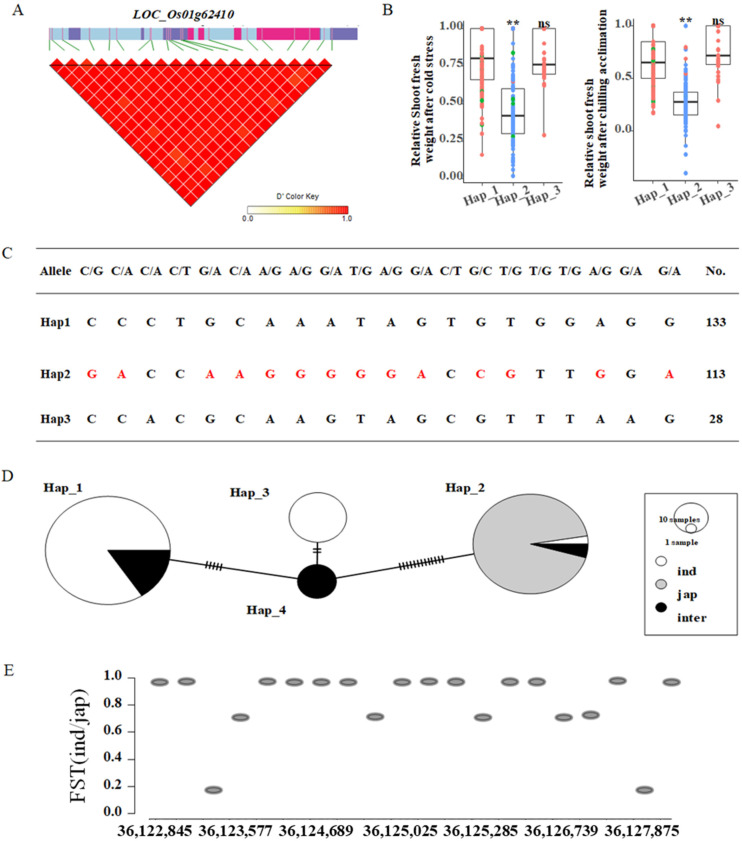
Rice (Oryza sativa L.) is a chilling-sensitive staple food crop, and thus, low temperature significantly affects rice growth and yield. Many studies have focused on the cold shock of rice although chilling acclimation is more likely to happen in the field. In this paper, a genome-wide association study (GWAS) was used to identify the genes that participated in cold stress and chilling accumulation. A total of 235 significantly associated single-nucleotide polymorphisms (SNPs) were identified. Among them, we detected 120 and 88 SNPs for the relative shoot fresh weight under cold stress and chilling acclimation, respectively. Furthermore, 11 and 12 quantitative trait loci (QTLs) were identified for cold stress and chilling acclimation, respectively, by integrating the co-localized SNPs. Interestingly, we identified 10 and 15 candidate genes in 11 and 12 QTLs involved in cold stress and chilling acclimation, respectively, and two new candidate genes (LOC_Os01g62410, LOC_Os12g24490) were obviously up-regulated under chilling acclimation. Furthermore, OsMYB3R-2 (LOC_Os01g62410) that encodes a R1R2R3 MYB gene was associated with cold tolerance, while a new C3HC4-type zinc finger protein-encoding gene LOC_Os12g24490 was found to function as a putative E3 ubiquitin-protein ligase in rice. Moreover, haplotype, distribution, and Wright’s fixation index (FST) of both genes showed that haplotype 3 of LOC_Os12g24490 is more stable in chilling acclimation, and the SNP (A > T) showed a difference in latitudinal distribution. FST analysis of SNPs in OsMYB3R-2 (LOC_Os01g62410) and LOC_Os12g24490 indicated that several SNPs were under selection in rice indica and japonica subspecies. This study provided new candidate genes in genetic improvement of chilling acclimation response in rice.
水稻(Oryza sativa L.)是一种对低温敏感的主要粮食作物,因此,低温会显著影响水稻的生长和产量。尽管在田间更可能发生冷驯化,但许多研究都集中在水稻的冷冲击上。在本文中,进行了全基因组关联研究(GWAS),以鉴定参与冷胁迫和冷积累的基因。共鉴定出 235 个显著相关的单核苷酸多态性(SNP)。其中,我们在冷胁迫和冷驯化下分别检测到相对新梢鲜重的 120 个和 88 个 SNP。此外,通过整合共定位的 SNP,分别鉴定到冷胁迫和冷驯化的 11 个和 12 个数量性状位点(QTL)。有趣的是,我们在涉及冷胁迫和冷驯化的 11 和 12 个 QTL 中分别鉴定到 10 和 15 个候选基因,两个新的候选基因(LOC_Os01g62410、LOC_Os12g24490)在冷驯化下明显上调。此外,编码 R1R2R3 MYB 基因的 OsMYB3R-2(LOC_Os01g62410)与耐冷性相关,而新发现的 C3HC4 型锌指蛋白编码基因 LOC_Os12g24490被认为在水稻中是一种推定的 E3 泛素蛋白连接酶。此外,两个基因的单倍型、分布和 Wright 的固定指数(FST)表明,LOC_Os12g24490 的单倍型 3在冷驯化中更稳定,SNP(A > T)在纬度分布上存在差异。OsMYB3R-2(LOC_Os01g62410)和 LOC_Os12g24490 中 SNP 的 FST 分析表明,在水稻籼稻和粳稻亚种中,几个 SNP 受到选择。本研究为水稻冷驯化响应的遗传改良提供了新的候选基因。