Department of Biomechanical Engineering, Faculty of Mechanical, Maritime, and Materials Engineering, Delft University of Technology, Mekelweg 2, 2628 CD Delft, The Netherlands.
Microbiology Unit, Department of Botany and Plant Biology, University of Geneva, 30 Quai Ernest-Ansermet, 1211 Geneva, Switzerland.
Int J Mol Sci. 2022 Oct 31;23(21):13239. doi: 10.3390/ijms232113239.
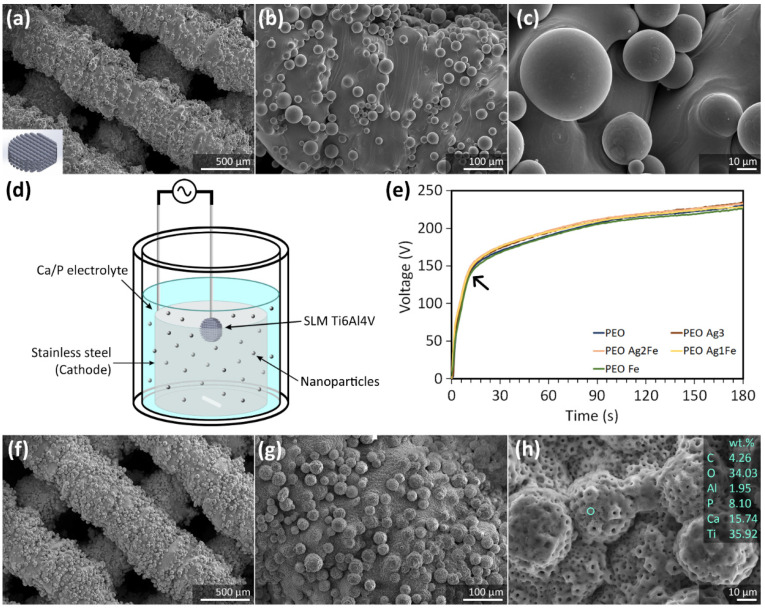
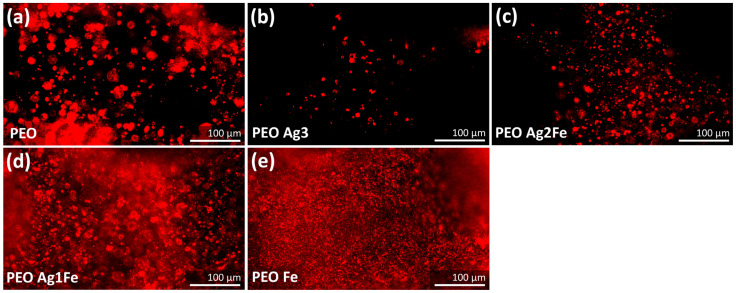
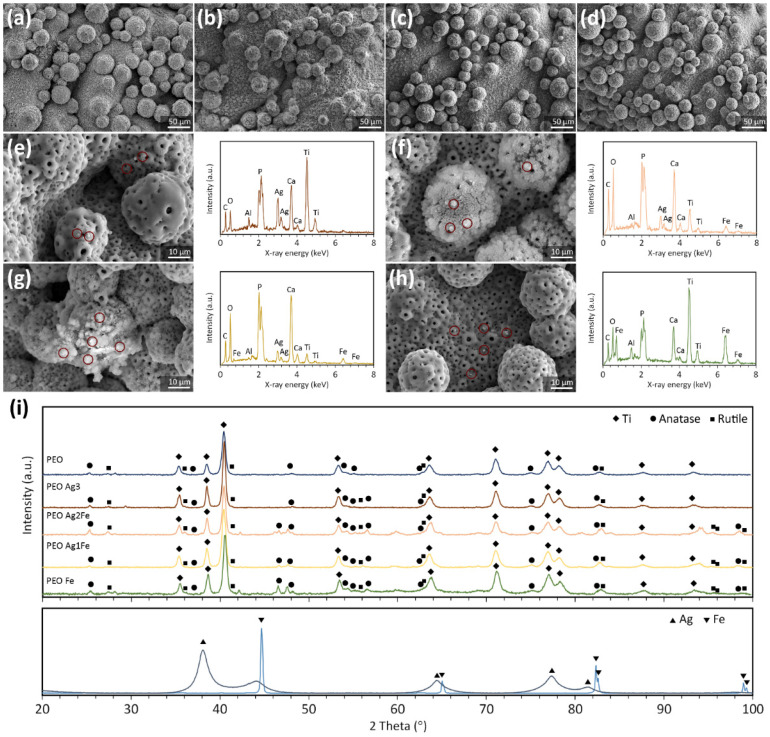
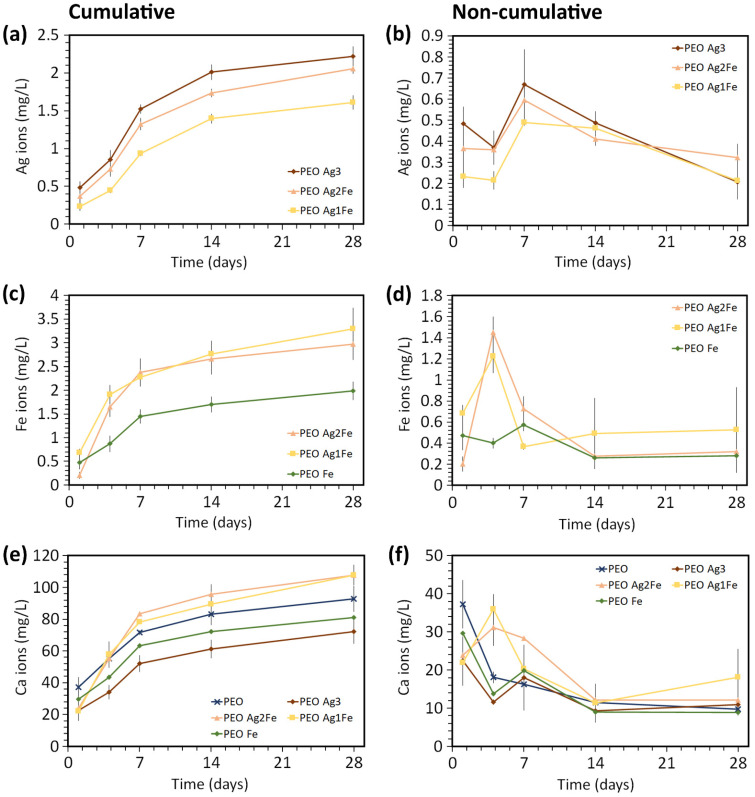
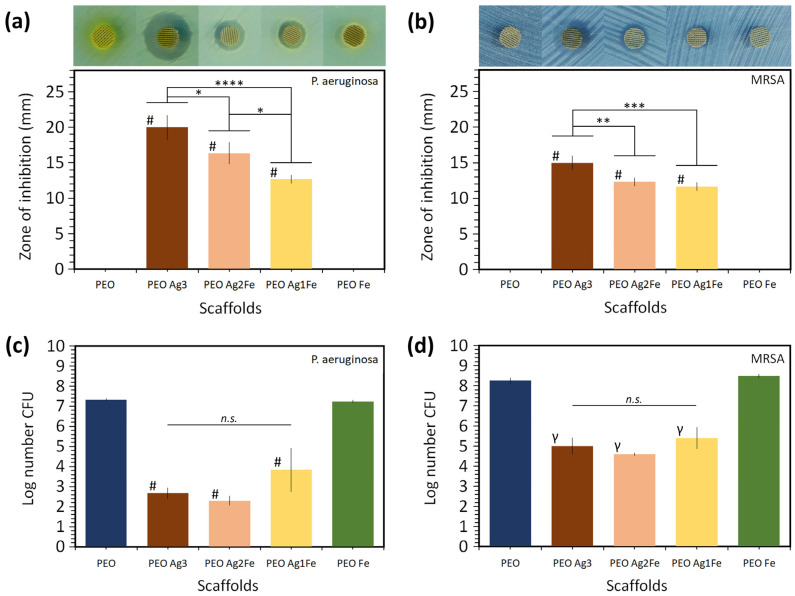
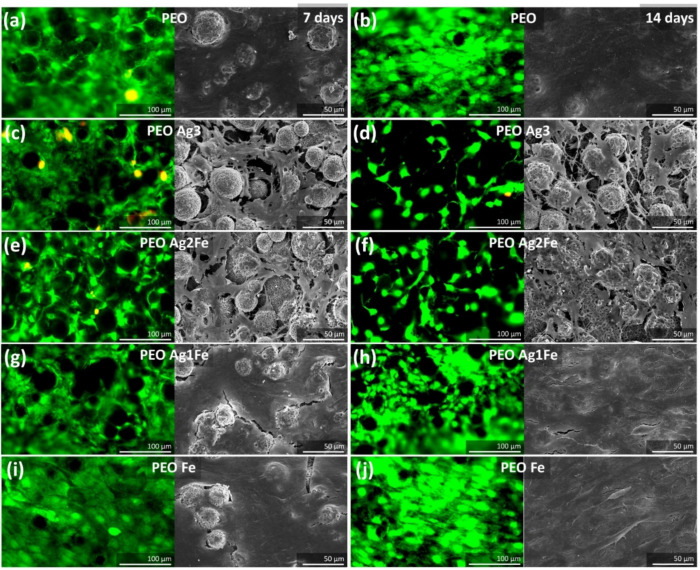
Implant-associated infections are highly challenging to treat, particularly with the emergence of multidrug-resistant microbials. Effective preventive action is desired to be at the implant site. Surface biofunctionalization of implants through Ag-doping has demonstrated potent antibacterial results. However, it may adversely affect bone regeneration at high doses. Benefiting from the potential synergistic effects, combining Ag with other antibacterial agents can substantially decrease the required Ag concentration. To date, no study has been performed on immobilizing both Ag and Fe nanoparticles (NPs) on the surface of additively manufactured porous titanium. We additively manufactured porous titanium and biofunctionalized its surface with plasma electrolytic oxidation using a Ca/P-based electrolyte containing Fe NPs, Ag NPs, and the combinations. The specimen's surface morphology featured porous TiO bearing Ag and Fe NPs. During immersion, Ag and Fe ions were released for up to 28 days. Antibacterial assays against methicillin-resistant and showed that the specimens containing Ag NPs and Ag/Fe NPs exhibit bactericidal activity. The Ag and Fe NPs worked synergistically, even when Ag was reduced by up to three times. The biofunctionalized scaffold reduced Ag and Fe NPs, improving preosteoblasts proliferation and Ca-sensing receptor activation. In conclusion, surface biofunctionalization of porous titanium with Ag and Fe NPs is a promising strategy to prevent implant-associated infections and allow bone regeneration and, therefore, should be developed for clinical application.
植入物相关感染的治疗极具挑战性,尤其是在出现多药耐药微生物的情况下。人们希望在植入物部位采取有效的预防措施。通过掺杂银对植入物进行表面生物功能化已证明具有很强的抗菌效果。然而,在高剂量下可能会对骨再生产生不利影响。得益于潜在的协同效应,将银与其他抗菌剂结合使用可以大大降低所需的银浓度。迄今为止,尚未有研究将银和铁纳米颗粒(NPs)固定在增材制造多孔钛的表面上。我们使用含有 Fe NPs、Ag NPs 及其组合的 Ca/P 基电解质通过等离子体电解氧化对增材制造的多孔钛进行表面生物功能化。样品的表面形貌特征为多孔 TiO 负载 Ag 和 Fe NPs。在浸泡过程中,Ag 和 Fe 离子释放长达 28 天。对耐甲氧西林金黄色葡萄球菌和 的抗菌试验表明,含有 Ag NPs 和 Ag/Fe NPs 的样品具有杀菌活性。Ag 和 Fe NPs 具有协同作用,即使 Ag 减少了三分之一。生物功能化支架减少了 Ag 和 Fe NPs,促进了成骨前体细胞的增殖和钙敏感受体的激活。总之,用 Ag 和 Fe NPs 对多孔钛进行表面生物功能化是预防植入物相关感染并允许骨再生的一种有前途的策略,因此应开发用于临床应用。