Federal Research Center Institute of Cytology and Genetics, Siberian Branch of the Russian Academy of Sciences, 630090 Novosibirsk, Russia.
Novosibirsk State University, 630090 Novosibirsk, Russia.
Int J Mol Sci. 2022 Nov 3;23(21):13453. doi: 10.3390/ijms232113453.
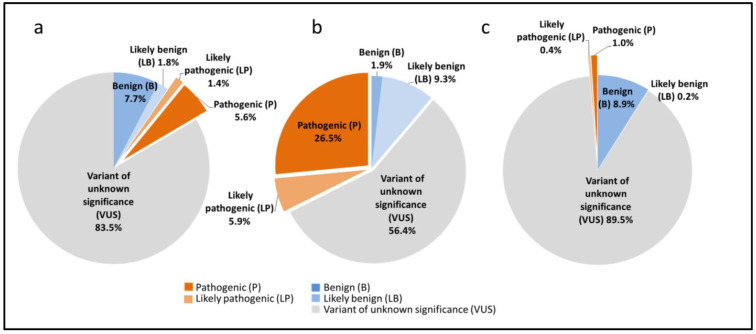
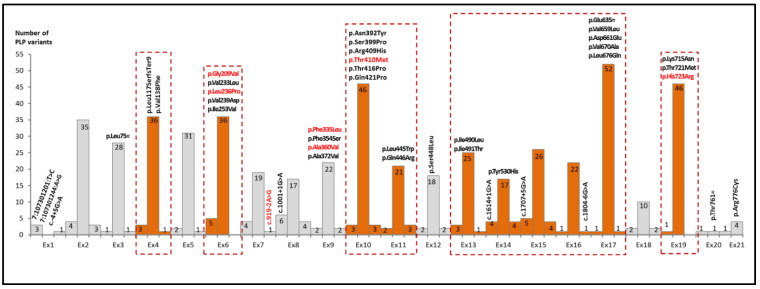
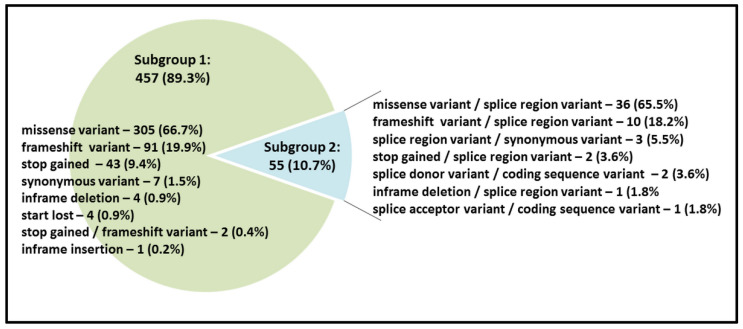
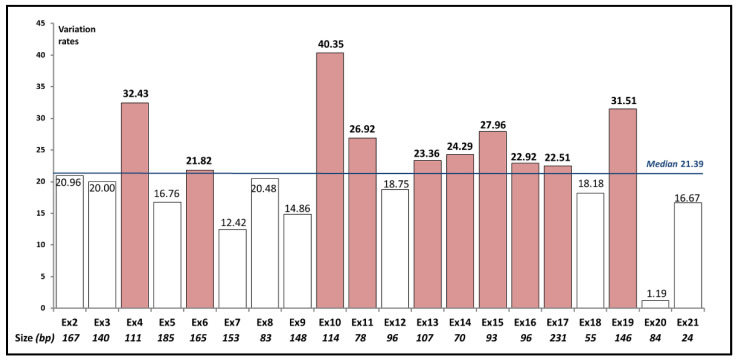
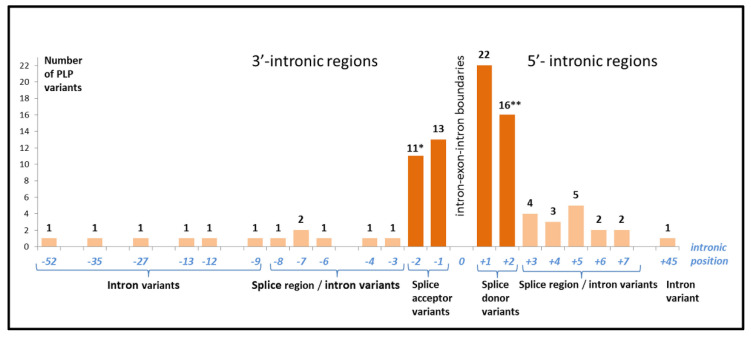
Screening pathogenic variants in the SLC26A4 gene is an important part of molecular genetic testing for hearing loss (HL) since they are one of the common causes of hereditary HL in many populations. However, a large size of the SLC26A4 gene (20 coding exons) predetermines the difficulties of its complete mutational analysis, especially in large samples of patients. In addition, the regional or ethno-specific prevalence of SLC26A4 pathogenic variants has not yet been fully elucidated, except variants c.919-2A>G and c.2168A>G (p.His723Arg), which have been proven to be most common in Asian populations. We explored the distribution of currently known pathogenic and likely pathogenic (PLP) variants across the SLC26A4 gene sequence presented in the Deafness Variation Database for the selection of potential diagnostically important parts of this gene. As a result of this bioinformatic analysis, we found that molecular testing ten SLC26A4 exons (4, 6, 10, 11, 13−17 and 19) with flanking intronic regions can provide a diagnostic rate of 61.9% for all PLP variants in the SLC26A4 gene. The primary sequencing of these SLC26A4 regions may be applied as an initial effective diagnostic testing in samples of patients of unknown ethnicity or as a subsequent step after the targeted testing of already-known ethno- or region-specific pathogenic SLC26A4 variants.
筛查 SLC26A4 基因中的致病变体是遗传性听力损失(HL)分子遗传学检测的重要组成部分,因为它们是许多人群中遗传性 HL 的常见原因之一。然而,SLC26A4 基因(20 个编码外显子)的较大大小决定了其完全突变分析的困难,尤其是在大量患者样本中。此外,SLC26A4 致病变体的区域或种族特异性流行率尚未完全阐明,除了 c.919-2A>G 和 c.2168A>G(p.His723Arg)变体已被证明在亚洲人群中最为常见。我们探索了目前已知的致病和可能致病(PLP)变体在 Deafness Variation Database 中呈现的 SLC26A4 基因序列中的分布,以便选择该基因中潜在具有诊断意义的部分。通过这种生物信息学分析,我们发现对 SLC26A4 基因的 10 个外显子(4、6、10、11、13-17 和 19)及其侧翼内含子区域进行分子检测,可以提供 SLC26A4 基因中所有 PLP 变体的 61.9%的诊断率。这些 SLC26A4 区域的直接测序可作为未知种族患者样本的初始有效诊断测试,或在针对已知的种族或区域特异性致病 SLC26A4 变体进行靶向测试之后作为后续步骤。