• 文献检索
  • 文档翻译
  • 深度研究
  • 学术资讯
  • Suppr Zotero 插件Zotero 插件
  • 邀请有礼
  • 套餐&价格
  • 历史记录
应用&插件
Suppr Zotero 插件Zotero 插件浏览器插件Mac 客户端Windows 客户端微信小程序
定价
高级版会员购买积分包购买API积分包
服务
文献检索文档翻译深度研究API 文档MCP 服务
关于我们
关于 Suppr公司介绍联系我们用户协议隐私条款
关注我们

Suppr 超能文献

核心技术专利:CN118964589B侵权必究
粤ICP备2023148730 号-1Suppr @ 2026

文献检索

告别复杂PubMed语法,用中文像聊天一样搜索,搜遍4000万医学文献。AI智能推荐,让科研检索更轻松。

立即免费搜索

文件翻译

保留排版,准确专业,支持PDF/Word/PPT等文件格式,支持 12+语言互译。

免费翻译文档

深度研究

AI帮你快速写综述,25分钟生成高质量综述,智能提取关键信息,辅助科研写作。

立即免费体验

蒙古人群聋相关突变的独特谱型为欧亚人群遗传关系提供了新视角。

Unique spectra of deafness-associated mutations in Mongolians provide insights into the genetic relationships among Eurasian populations.

机构信息

Department of Otolaryngology, Mongolian National University of Medical Sciences, Ulaanbaatar, Mongolia.

The EMJJ Otolaryngology Hospital, Ulaanbaatar, Mongolia.

出版信息

PLoS One. 2018 Dec 21;13(12):e0209797. doi: 10.1371/journal.pone.0209797. eCollection 2018.

DOI:10.1371/journal.pone.0209797
PMID:30576380
原文链接:https://pmc.ncbi.nlm.nih.gov/articles/PMC6303056/
Abstract

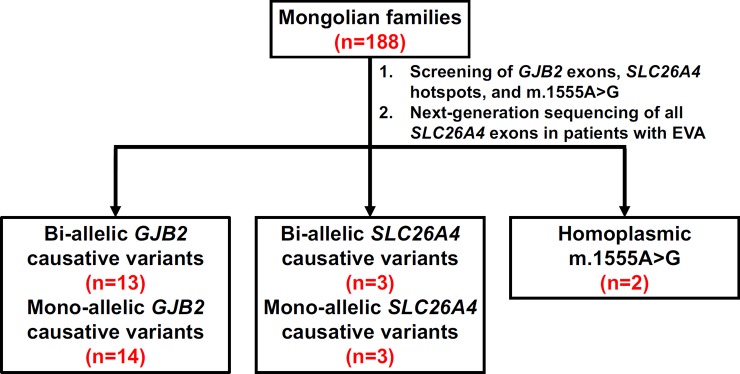
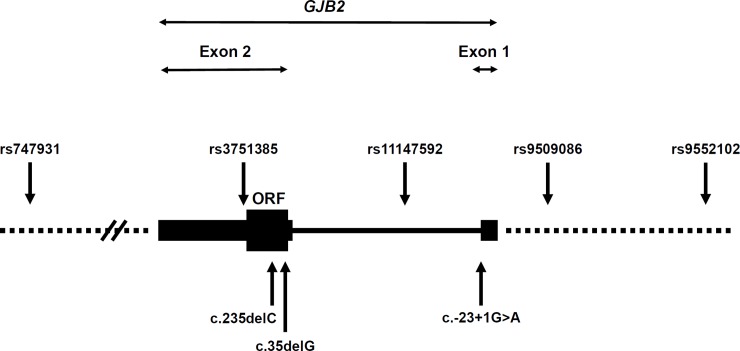
Genetic factors are an important cause of idiopathic sensorineural hearing impairment (SNHI). From the epidemiological perspective, mutations of three deafness genes: GJB2, SLC26A4, and MT-RNR1, are much more prevalent than those of other genes worldwide. However, mutation spectra of common deafness genes differ remarkably across different populations. Here, we performed comprehensive genetic examination and haplotype analyses in 188 unrelated Mongolian families with idiopathic SNHI, and compared their mutation spectra and haplotypes to those of other European and Asian cohorts. We confirmed genetic diagnoses in 18 (9.6%) of the 188 families, including 13 with bi-allelic GJB2 mutations, three with bi-allelic SLC26A4 mutations, and two with homoplasmic MT-RNR1 m.1555A>G mutation. Moreover, mono-allelic mutations were identified in 17 families (9.0%), including 14 with mono-allelic GJB2 mutations and three with mono-allelic SLC26A4 mutations. Interestingly, three GJB2 mutations prevalent in other populations, including c.35delG in Caucasians, c.235delC in East Asians, and c.-23+1G>A in Southwest and South Asians, were simultaneously detected in Mongolian patients. Haplotype analyses further confirmed founder effects for each of the three mutations, indicating that each mutation derived from its ancestral origin independently. By demonstrating the unique spectra of deafness-associated mutations, our findings may have important clinical and scientific implications for refining the molecular diagnostics of SNHI in Mongolian patients, and for elucidating the genetic relationships among Eurasian populations.

摘要

遗传因素是特发性感音神经性听力损失(ISNHI)的一个重要原因。从流行病学角度来看,全球范围内 GJB2、SLC26A4 和 MT-RNR1 这三个耳聋基因的突变比其他基因更为常见。然而,常见耳聋基因的突变谱在不同人群中存在显著差异。在这里,我们对 188 个无关的蒙古 ISNHI 家系进行了全面的遗传检查和单倍型分析,并将其突变谱和单倍型与其他欧洲和亚洲人群进行了比较。我们在 188 个家系中的 18 个(9.6%)家系中证实了遗传诊断,包括 13 个双等位基因 GJB2 突变,3 个双等位基因 SLC26A4 突变和 2 个同型质体 MT-RNR1 m.1555A>G 突变。此外,在 17 个家系(9.0%)中发现了单等位基因突变,包括 14 个单等位基因 GJB2 突变和 3 个单等位基因 SLC26A4 突变。有趣的是,三种在其他人群中常见的 GJB2 突变,包括在高加索人中的 c.35delG、在东亚人中的 c.235delC 和在西南亚和南亚人中的 c.-23+1G>A,同时也在蒙古患者中被检测到。单倍型分析进一步证实了这三种突变的起源效应,表明每种突变都是从其祖先起源中独立产生的。通过证明与耳聋相关的突变的独特谱,我们的发现可能对蒙古患者的 ISNHI 分子诊断的精细化以及欧亚人群之间的遗传关系的阐明具有重要的临床和科学意义。
https://cdn.ncbi.nlm.nih.gov/pmc/blobs/b2d3/6303056/f7f9c57059b6/pone.0209797.g002.jpg
https://cdn.ncbi.nlm.nih.gov/pmc/blobs/b2d3/6303056/786db29bb939/pone.0209797.g001.jpg
https://cdn.ncbi.nlm.nih.gov/pmc/blobs/b2d3/6303056/f7f9c57059b6/pone.0209797.g002.jpg
https://cdn.ncbi.nlm.nih.gov/pmc/blobs/b2d3/6303056/786db29bb939/pone.0209797.g001.jpg
https://cdn.ncbi.nlm.nih.gov/pmc/blobs/b2d3/6303056/f7f9c57059b6/pone.0209797.g002.jpg

相似文献

1
Unique spectra of deafness-associated mutations in Mongolians provide insights into the genetic relationships among Eurasian populations.蒙古人群聋相关突变的独特谱型为欧亚人群遗传关系提供了新视角。
PLoS One. 2018 Dec 21;13(12):e0209797. doi: 10.1371/journal.pone.0209797. eCollection 2018.
2
Mutation analysis of common deafness-causing genes among 506 patients with nonsyndromic hearing loss from Wenzhou city, China.中国温州市506例非综合征性听力损失患者常见致聋基因的突变分析
Int J Pediatr Otorhinolaryngol. 2019 Jul;122:185-190. doi: 10.1016/j.ijporl.2019.04.024. Epub 2019 Apr 21.
3
Comparative study of mutation spectrums of MT-RNR1 m.1555A>G, GJB2, and SLC26A4 between familial and sporadic patients with nonsyndromic sensorineural hearing loss in Chinese Han.中国汉族非综合征性感音神经性听力损失家族性和散发性患者中MT-RNR1 m.1555A>G、GJB2和SLC26A4突变谱的比较研究
Chin Med J (Engl). 2014;127(18):3233-7.
4
The mutation frequencies of GJB2, GJB3, SLC26A4 and MT-RNR1 of patients with severe to profound sensorineural hearing loss in northwest China.中国西北地区重度至极重度感音神经性听力损失患者的GJB2、GJB3、SLC26A4和MT-RNR1基因突变频率
Int J Pediatr Otorhinolaryngol. 2020 Sep;136:110143. doi: 10.1016/j.ijporl.2020.110143. Epub 2020 May 28.
5
[Screening of common deafness gene mutations in 17 000 Chinese newborns from Chengdu based on microarray analysis].[基于基因芯片分析对成都地区17000例新生儿常见耳聋基因突变的筛查]
Zhonghua Yi Xue Yi Chuan Xue Za Zhi. 2014 Oct;31(5):547-52. doi: 10.3760/cma.j.issn.1003-9406.2014.05.001.
6
Common molecular etiology of nonsyndromic hearing loss in 484 patients of 3 ethnicities in northwest China.中国西北三个民族484例非综合征性听力损失患者的常见分子病因
Acta Otolaryngol. 2015 Jun;135(6):586-91. doi: 10.3109/00016489.2015.1006334. Epub 2015 Mar 11.
7
Gene Screening for Non-Syndromic Deafness in Hainanese Patients.海南患者的非综合征性耳聋基因筛查。
J Int Adv Otol. 2023 Jul;19(4):283-287. doi: 10.5152/iao.2023.21582.
8
Identification of both MT-RNR1 m.1555A>G and bi-allelic GJB2 mutations in probands with non-syndromic hearing loss.非综合征性听力损失先证者中MT-RNR1基因m.1555A>G突变和双等位基因GJB2突变的鉴定。
Int J Pediatr Otorhinolaryngol. 2014 Apr;78(4):614-7. doi: 10.1016/j.ijporl.2014.01.011. Epub 2014 Jan 16.
9
Mutation analysis of common GJB2, SCL26A4 and 12S rRNA genes among 380 deafness patients in northern China.中国北方380例耳聋患者常见GJB2、SCL26A4和12S rRNA基因的突变分析
Int J Pediatr Otorhinolaryngol. 2017 Jul;98:39-42. doi: 10.1016/j.ijporl.2017.04.018. Epub 2017 Apr 12.
10
Prevalence of mutations in the GJB2, SLC26A4, GJB3, and MT-RNR1 genes in 103 children with sensorineural hearing loss in Shaoxing, China.中国绍兴103例感音神经性听力损失儿童中GJB2、SLC26A4、GJB3和MT-RNR1基因突变的发生率
Ear Nose Throat J. 2018 Jun;97(6):E33-E38. doi: 10.1177/014556131809700603.

引用本文的文献

1
The c.644 G > A p.(Trp215*) founder variant in the CLIC5 gene causes progressive autosomal recessive deafness 103 (DFNB103) in Eastern Siberia.CLIC5基因中c.644 G > A p.(Trp215*)的奠基者变异导致西伯利亚东部出现常染色体隐性进行性耳聋103型(DFNB103)。
J Hum Genet. 2025 Sep 16. doi: 10.1038/s10038-025-01406-1.
2
Low Efficiency of Homology-Independent Targeted Integration for CRISPR/Cas9 Correction in the Vicinity of the c.919-2A>G Variant.在c.919-2A>G变异位点附近,CRISPR/Cas9校正的同源性非依赖靶向整合效率低下。
Int J Mol Sci. 2025 May 22;26(11):4980. doi: 10.3390/ijms26114980.
3
Genetic Basis of Hearing Loss in Mongolian Patients: A Next-Generation Sequencing Study.

本文引用的文献

1
Targeted Next-Generation Sequencing Facilitates Genetic Diagnosis and Provides Novel Pathogenetic Insights into Deafness with Enlarged Vestibular Aqueduct.靶向下一代测序有助于遗传性耳聋并提供大前庭水管综合征的新的致病机制见解。
J Mol Diagn. 2019 Jan;21(1):138-148. doi: 10.1016/j.jmoldx.2018.08.007. Epub 2018 Sep 28.
2
Concurrent Hearing, Genetic, and Cytomegalovirus Screening in Newborns, Taiwan.台湾地区新生儿听力、遗传与巨细胞病毒联合筛查。
J Pediatr. 2018 Aug;199:144-150.e1. doi: 10.1016/j.jpeds.2018.02.064. Epub 2018 Apr 19.
3
Towards the Prevention of Aminoglycoside-Related Hearing Loss.
蒙古患者听力损失的遗传基础:下一代测序研究。
Genes (Basel). 2024 Sep 20;15(9):1227. doi: 10.3390/genes15091227.
4
High prevalence of m.1555A > G in patients with hearing loss in the Baikal Lake region of Russia as a result of founder effect.由于奠基者效应,俄罗斯贝加尔湖地区听力损失患者中 m.1555A > G 的高发率。
Sci Rep. 2024 Jul 3;14(1):15342. doi: 10.1038/s41598-024-66254-z.
5
Low frequency of SLC26A4 c.919-2A > G variant among patients with nonsyndromic hearing loss in Yunnan of Southwest China.在中国西南云南省的非综合征型听力损失患者中,SLC26A4 c.919-2A > G 变异的低频率。
BMC Med Genomics. 2024 Feb 20;17(1):55. doi: 10.1186/s12920-024-01829-3.
6
The (Cx26) Gene Variants in Patients with Hearing Impairment in the Baikal Lake Region (Russia).贝加尔湖地区(俄罗斯)听力障碍患者的(Cx26)基因突变。
Genes (Basel). 2023 Apr 28;14(5):1001. doi: 10.3390/genes14051001.
7
Insight into the Natural History of Pathogenic Variant c.919-2A>G in the Gene Involved in Hearing Loss: The Evidence for Its Common Origin in Southern Siberia (Russia).探讨耳聋相关基因中致病变异 c.919-2A>G 的自然史:其在南西伯利亚(俄罗斯)起源的证据。
Genes (Basel). 2023 Apr 17;14(4):928. doi: 10.3390/genes14040928.
8
Analysis of SLC26A4, FOXI1, and KCNJ10 Gene Variants in Patients with Incomplete Partition of the Cochlea and Enlarged Vestibular Aqueduct (EVA) Anomalies.分析不完全分隔耳蜗和扩大前庭水管(EVA)异常患者的 SLC26A4、FOXI1 和 KCNJ10 基因突变。
Int J Mol Sci. 2022 Dec 6;23(23):15372. doi: 10.3390/ijms232315372.
9
Selection of Diagnostically Significant Regions of the Gene Involved in Hearing Loss.听力损失相关基因中具有诊断意义的区域选择。
Int J Mol Sci. 2022 Nov 3;23(21):13453. doi: 10.3390/ijms232113453.
10
Different Rates of the -Related Hearing Loss in Two Indigenous Peoples of Southern Siberia (Russia).俄罗斯西伯利亚南部两个原住民群体中与-相关听力损失的不同发生率。
Diagnostics (Basel). 2021 Dec 17;11(12):2378. doi: 10.3390/diagnostics11122378.
预防氨基糖苷类药物相关听力损失
Front Cell Neurosci. 2017 Oct 18;11:325. doi: 10.3389/fncel.2017.00325. eCollection 2017.
4
A novel missense variant in the nuclear localization signal of POU4F3 causes autosomal dominant non-syndromic hearing loss.一个 POU4F3 核定位信号的新型错义变异导致常染色体显性非综合征性听力损失。
Sci Rep. 2017 Aug 8;7(1):7551. doi: 10.1038/s41598-017-08236-y.
5
Etiologic and Audiologic Characteristics of Patients With Pediatric-Onset Unilateral and Asymmetric Sensorineural Hearing Loss.儿童期起病的单侧及不对称感音神经性听力损失患者的病因学及听力学特征
JAMA Otolaryngol Head Neck Surg. 2017 Sep 1;143(9):912-919. doi: 10.1001/jamaoto.2017.0945.
6
Screening of deafness-causing DNA variants that are common in patients of European ancestry using a microarray-based approach.使用基于微阵列的方法筛查在欧洲血统患者中常见的致聋DNA变异。
PLoS One. 2017 Mar 8;12(3):e0169219. doi: 10.1371/journal.pone.0169219. eCollection 2017.
7
Genetic frequencies related to severe or profound sensorineural hearing loss in Inner Mongolia Autonomous Region.内蒙古自治区与重度或极重度感音神经性听力损失相关的基因频率。
Genet Mol Biol. 2016 Oct-Dec;39(4):567-572. doi: 10.1590/1678-4685-GMB-2015-0218. Epub 2016 Oct 10.
8
Prevalence of Hearing Loss Among a Representative Sample of Canadian Children and Adolescents, 3 to 19 Years of Age.3至19岁加拿大儿童和青少年代表性样本中的听力损失患病率
Ear Hear. 2017 Jan/Feb;38(1):7-20. doi: 10.1097/AUD.0000000000000345.
9
Newborn genetic screening for hearing impairment: a population-based longitudinal study.新生儿听力障碍基因筛查:一项基于人群的纵向研究。
Genet Med. 2017 Jan;19(1):6-12. doi: 10.1038/gim.2016.66. Epub 2016 Jun 16.
10
Unraveling of Enigmatic Hearing-Impaired GJB2 Single Heterozygotes by Massive Parallel Sequencing: DFNB1 or Not?通过大规模平行测序解析神秘的听力受损GJB2单杂合子:是否为DFNB1?
Medicine (Baltimore). 2016 Apr;95(14):e3029. doi: 10.1097/MD.0000000000003029.