Soto Beobide Amaia, Moschovi Anastasia M, Mathioudakis Georgios N, Kourtelesis Marios, Lada Zoi G, Andrikopoulos Konstantinos S, Sygellou Labrini, Dracopoulos Vassilios, Yakoumis Iakovos, Voyiatzis George A
Foundation for Research and Technology, Institute of Chemical Engineering Sciences FORTH/ICE-HT, 26504 Patras, Greece.
MONOLITHOS Catalysts & Recycling Ltd., 11476 Athens, Greece.
Molecules. 2022 Oct 31;27(21):7402. doi: 10.3390/molecules27217402.
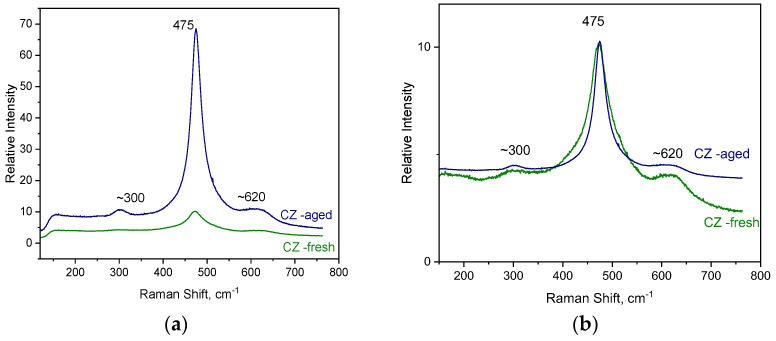
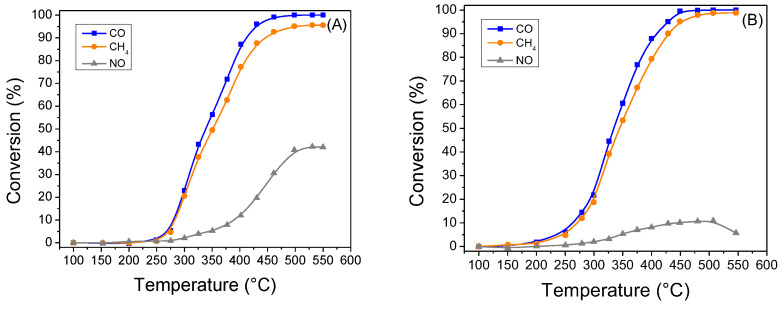
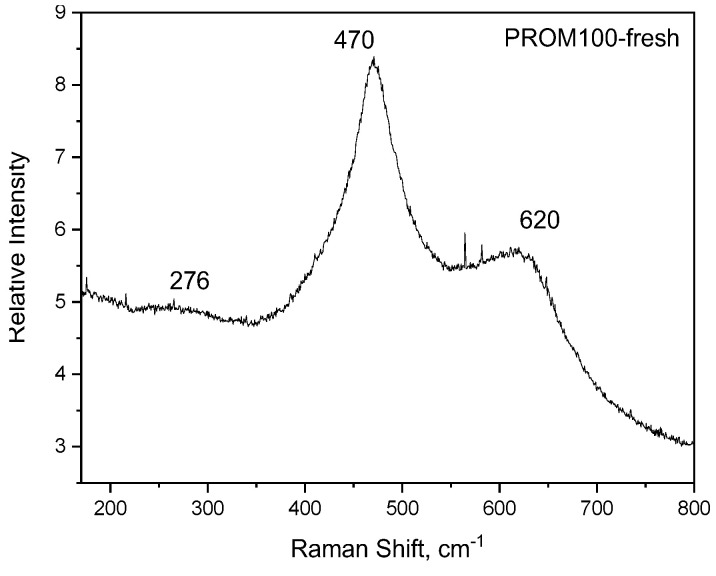
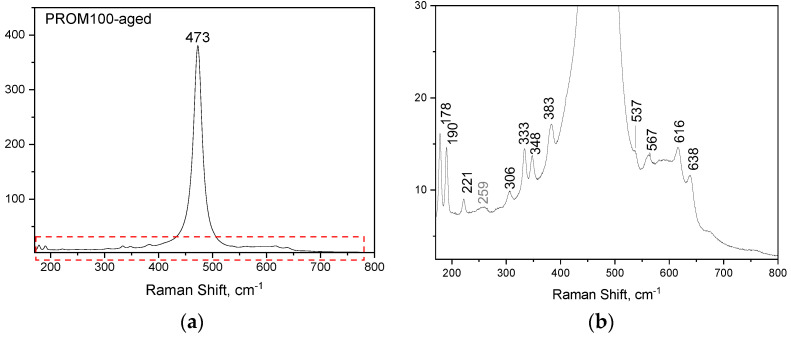
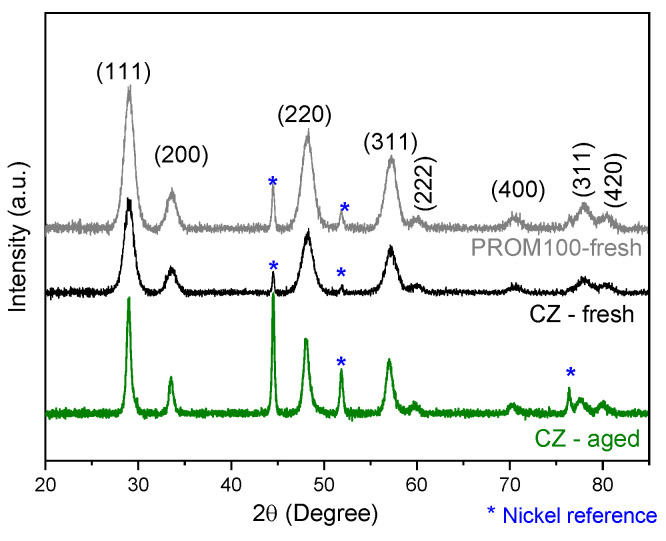
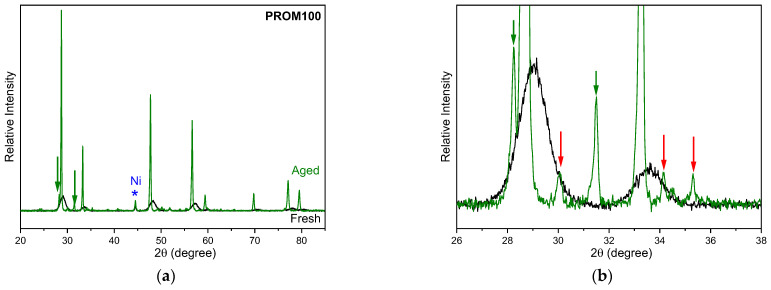
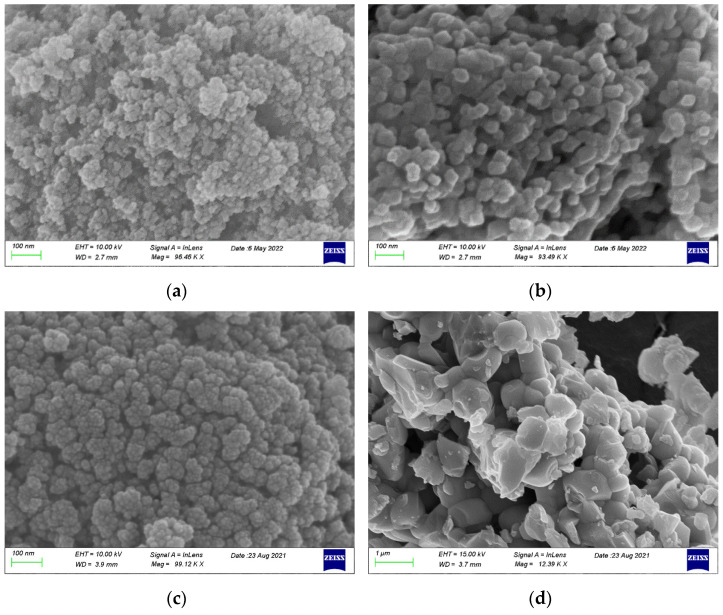
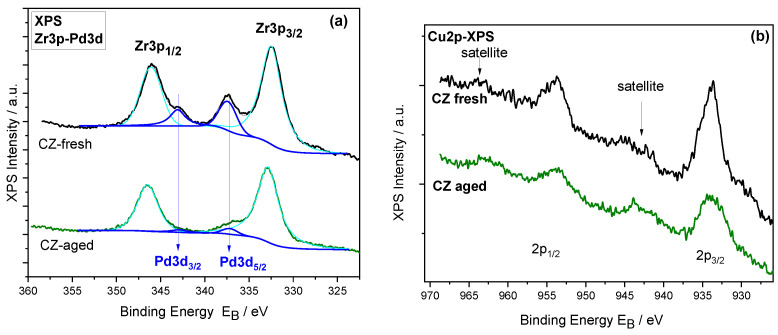
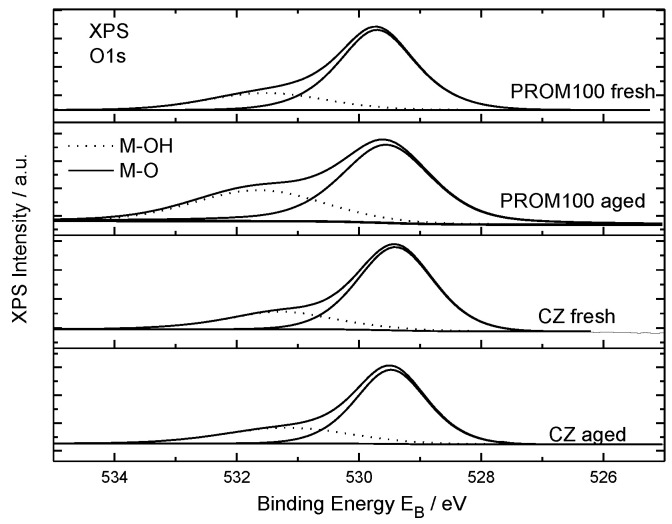
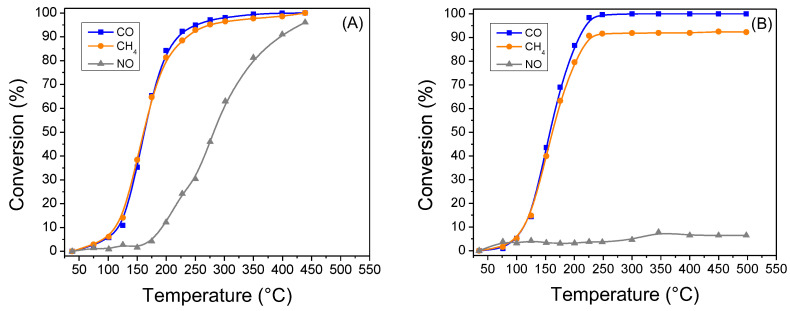
The global trend in restrictions on pollutant emissions requires the use of catalytic converters in the automotive industry. Noble metals belonging to the platinum group metals (PGMs, platinum, palladium, and rhodium) are currently used for autocatalysts. However, recent efforts focus on the development of new catalytic converters that combine high activity and reduced cost, attracting the interest of the automotive industry. Among them, the partial substitution of PGMs by abundant non-PGMs (transition metals such as copper) seems to be a promising alternative. The PROMETHEUS catalyst (PROM100) is a polymetallic nanosized copper-based catalyst for automotives prepared by a wet impregnation method, using as a carrier an inorganic mixed oxide (CeO-ZrO) exhibiting elevated oxygen storage capacity. On the other hand, catalyst deactivation or ageing is defined as the process in which the structure and state of the catalyst change, leading to the loss of the catalyst's active sites with a subsequent decrease in the catalyst's performance, significantly affecting the emissions of the catalyst. The main scope of this research is to investigate in detail the effect of ageing on this low-cost, effective catalyst. To that end, a detailed characterization has been performed with a train of methods, such as SEM, Raman, XRD, XRF, BET and XPS, to both ceria-zirconia mixed inorganic oxide support (CZ-fresh and -aged) and to the copper-based catalyst (PROM100-fresh and -aged), revealing the impact of ageing on catalytic efficiency. It was found that ageing affects the Ce-Zr mixed oxide structure by initiating the formation of distinct ZrO and CeO structures monitored by Raman and XRD. In addition, it crucially affects the morphology of the sample by reducing the surface area by a factor of nearly two orders of magnitude and increasing particle size as indicated by BET and SEM due to sintering. Finally, the Pd concentration was found to be considerably reduced from the material's surface as suggested by XPS data. The above-mentioned alterations observed after ageing increased the light-off temperatures by more than 175 °C, compared to the fresh sample, without affecting the overall efficiency of the catalyst for CO and CH oxidation reactions. Metal particle and CeZr carrier sintering, washcoat loss as well as partial metal encapsulation by Cu and/or CeZrO are identified as the main causes for the deactivation after hydrothermal ageing.
全球对污染物排放限制的趋势要求汽车行业使用催化转化器。目前,属于铂族金属(PGMs,铂、钯和铑)的贵金属用于汽车尾气净化催化剂。然而,最近的努力集中在开发兼具高活性和低成本的新型催化转化器上,这引起了汽车行业的关注。其中,用储量丰富的非PGMs(如铜等过渡金属)部分替代PGMs似乎是一个有前景的选择。PROMETHEUS催化剂(PROM100)是一种通过湿浸渍法制备的用于汽车的多金属纳米铜基催化剂,其载体为具有高储氧能力的无机混合氧化物(CeO-ZrO)。另一方面,催化剂失活或老化被定义为催化剂的结构和状态发生变化,导致催化剂活性位点丧失,随后催化剂性能下降,从而显著影响催化剂排放的过程。本研究的主要目的是详细研究老化对这种低成本高效催化剂的影响。为此,使用一系列方法,如扫描电子显微镜(SEM)、拉曼光谱、X射线衍射(XRD)、X射线荧光光谱(XRF)、比表面积分析仪(BET)和X射线光电子能谱(XPS),对二氧化铈 - 氧化锆混合无机氧化物载体(新鲜和老化的CZ)以及铜基催化剂(新鲜和老化的PROM100)进行了详细表征,揭示了老化对催化效率的影响。研究发现,老化通过引发由拉曼光谱和XRD监测到的不同ZrO和CeO结构的形成,影响Ce-Zr混合氧化物结构。此外,老化通过烧结使比表面积降低近两个数量级并增加颗粒尺寸,如BET和SEM所示,从而严重影响样品的形态。最后,XPS数据表明,材料表面的钯浓度显著降低。与新鲜样品相比,老化后观察到的上述变化使起燃温度提高了175℃以上,但不影响催化剂对CO和CH氧化反应的整体效率。金属颗粒和CeZr载体烧结、涂层损失以及Cu和/或CeZrO对部分金属的包裹被确定为水热老化后失活的主要原因。