Jeong Eui-Kwon, Lee Hyo-Ji, Jung Yu-Jin
BIT Medical Convergence Graduate Program, Kangwon National University, Chuncheon 24341, Korea.
Department of Biological Sciences, Kangwon National University, Chuncheon 24341, Korea.
Pathogens. 2022 Nov 3;11(11):1291. doi: 10.3390/pathogens11111291.
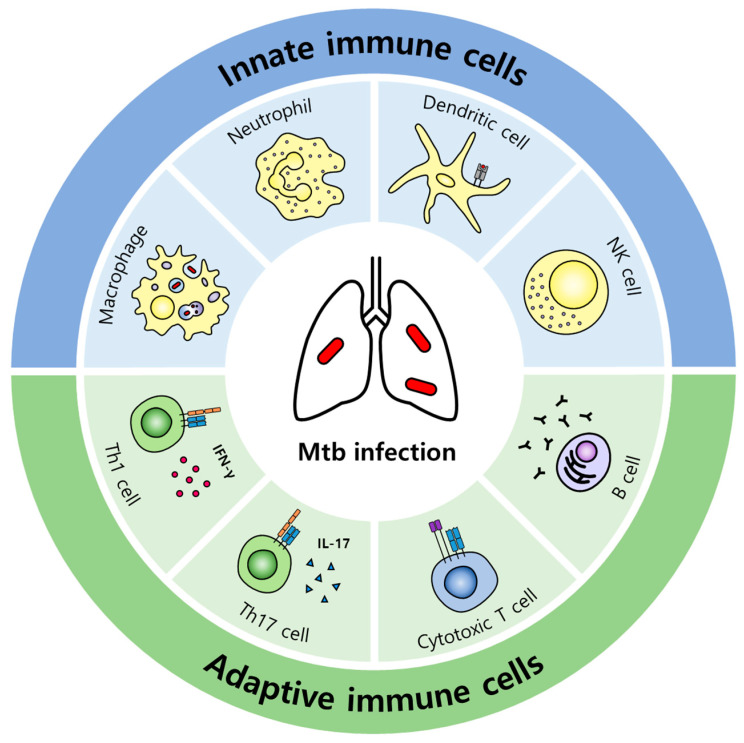
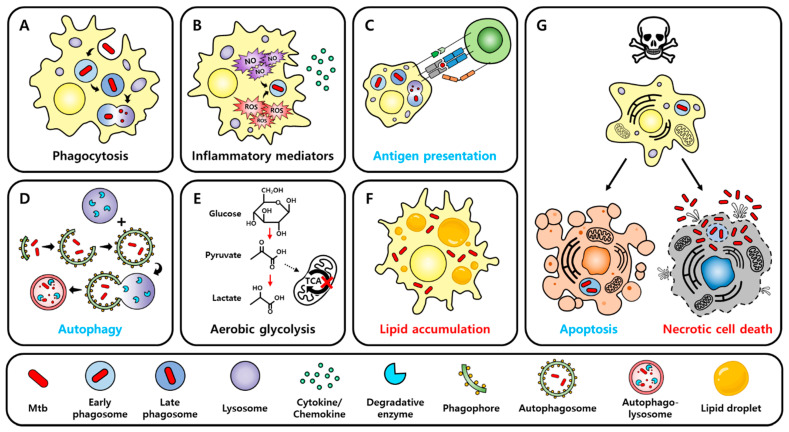
Tuberculosis (TB) is one of the leading causes of death worldwide, consistently threatening public health. Conventional tuberculosis treatment requires a long-term treatment regimen and is associated with side effects. The efficacy of antitubercular drugs has decreased with the emergence of drug-resistant TB; therefore, the development of new TB treatment strategies is urgently needed. In this context, we present host-directed therapy (HDT) as an alternative to current tuberculosis therapy. Unlike antitubercular drugs that directly target (Mtb), the causative agent of TB, HDT is an approach for treating TB that appropriately modulates host immune responses. HDT primarily aims to enhance the antimicrobial activity of the host in order to control Mtb infection and attenuate excessive inflammation in order to minimize tissue damage. Recently, research based on the repositioning of drugs for use in HDT has been in progress. Based on the overall immune responses against Mtb infection and the immune-evasion mechanisms of Mtb, this review examines the repositioned drugs available for HDT and their mechanisms of action.
结核病(TB)是全球主要死因之一,持续威胁着公众健康。传统的结核病治疗需要长期治疗方案,且伴有副作用。随着耐多药结核病的出现,抗结核药物的疗效有所下降;因此,迫切需要开发新的结核病治疗策略。在此背景下,我们提出宿主导向疗法(HDT)作为当前结核病治疗的替代方法。与直接靶向结核病病原体结核分枝杆菌(Mtb)的抗结核药物不同,HDT是一种治疗结核病的方法,可适当调节宿主免疫反应。HDT的主要目的是增强宿主的抗菌活性,以控制Mtb感染,并减轻过度炎症,以尽量减少组织损伤。最近,基于药物重新定位用于HDT的研究正在进行中。基于针对Mtb感染的整体免疫反应和Mtb的免疫逃避机制,本综述研究了可用于HDT的重新定位药物及其作用机制。