Esposito Fabrizio, Matthes Harald, Schad Friedemann
Intensiv-Notfallmedizin und Kardiologie, Gemeinschaftskrankenhaus Havelhöhe, 14089 Berlin, Germany.
Gastroenterologie, Gemeinschaftskrankenhaus Havelhöhe, 14089 Berlin, Germany.
J Clin Med. 2022 Apr 1;11(7):1956. doi: 10.3390/jcm11071956.
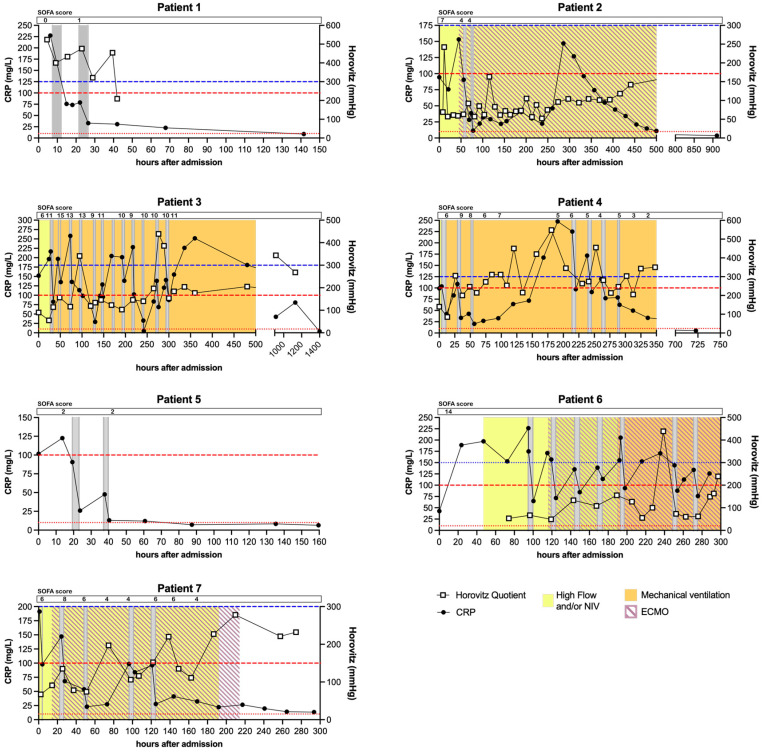
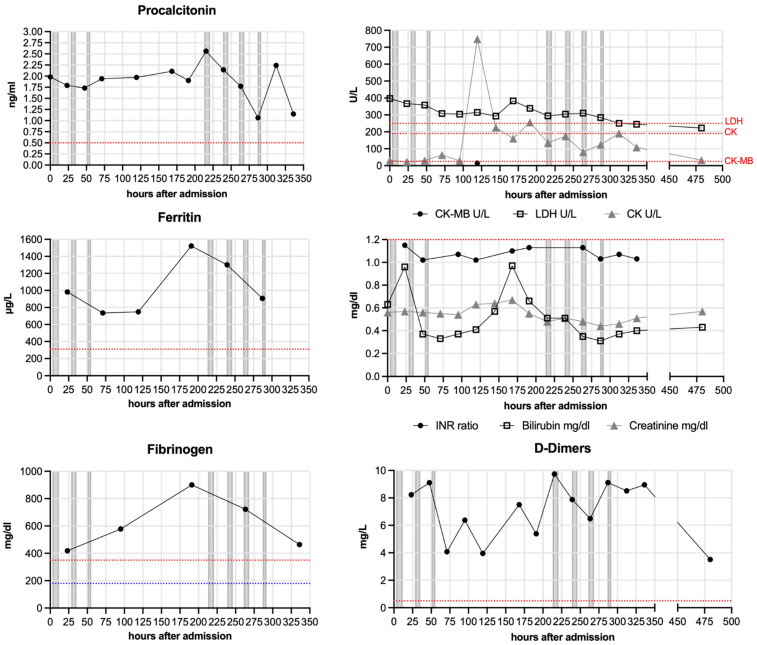
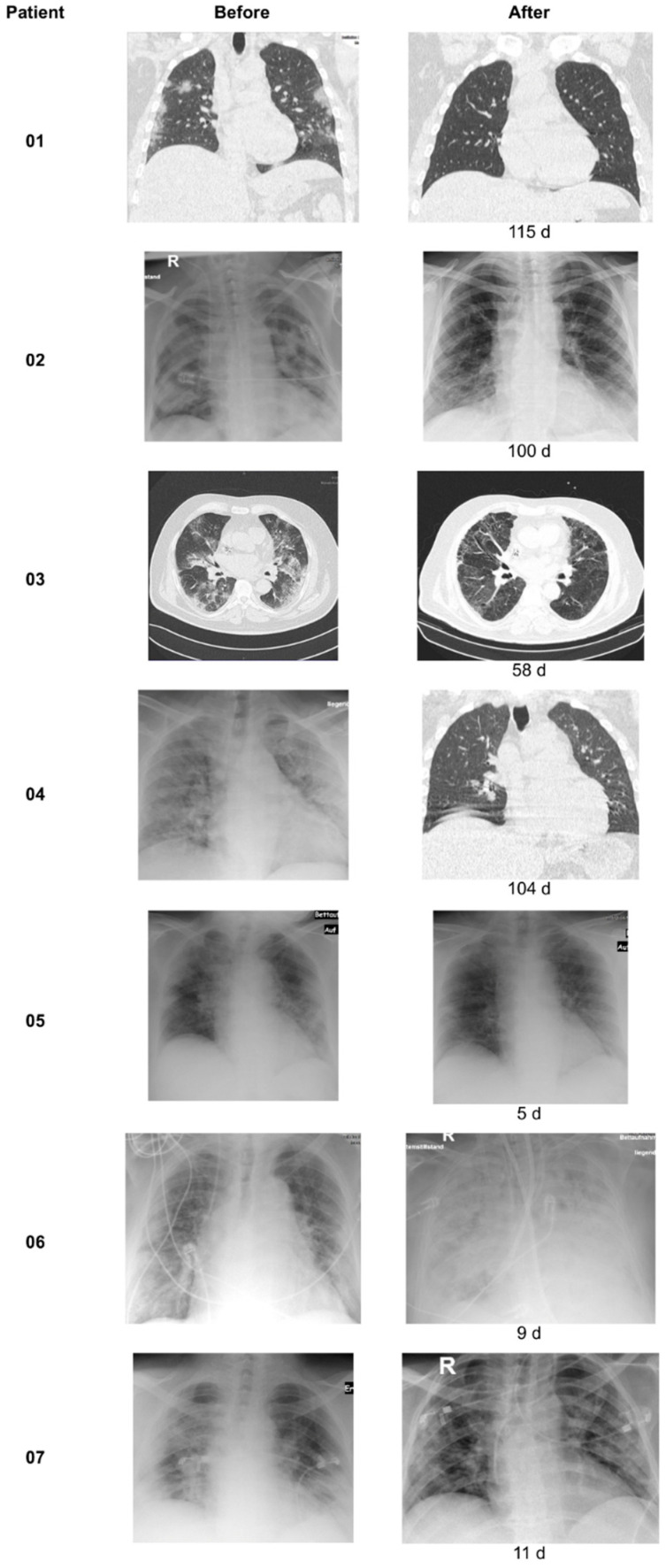
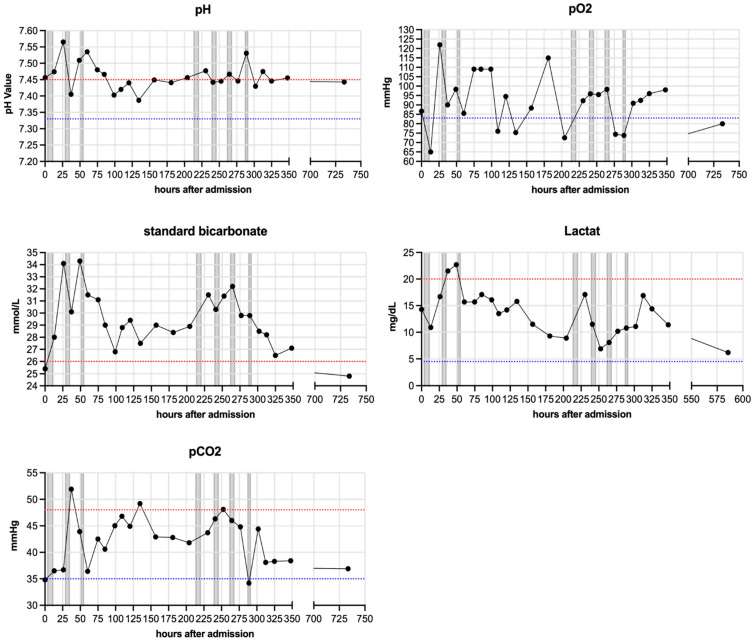
Background: The fulminant course of COVID-19, triggered by severe acute respiratory syndrome coronavirus 2 (SARS-CoV-2), presents with a high mortality rate and still lacks a causative treatment. C-reactive protein (CRP) has been shown to increase dramatically during the disease progression and correlates with deleterious outcomes. Selective CRP apheresis can reduce circulating CRP levels fast and effective. Methods: Seven hospitalized patients with documented severe COVID-19 progression, elevated CRP plasma levels (>100 mg/L) and signs of respiratory failure were treated with CRP apheresis. Two to twelve CRP apheresis sessions were performed generally in 24 h time intervals and depending on CRP plasma levels. Results: All patients had comorbidities. CRP apheresis reduced CRP plasma levels by up to 84% within a few hours, without exhibiting side effects in any patient. Despite signs of severe lung infiltration in all patients, only one patient died. The other patients showed improvements within the chest X-ray after CRP apheresis and were able to recover regardless of intubation and/or ECMO (4 patients). All remaining six patients were discharged from the hospital in good clinical condition. Conclusions: This case series presents a mortality rate of only 14%, which is dramatically lower than expected from the presented CRP levels as well as comorbidities and ventilation requirements. Our clinical observations regarding the here presented seven patients support the hypothesis that CRP is a candidate to be therapeutically targeted in the early stage of severe COVID-19.
由严重急性呼吸综合征冠状病毒2(SARS-CoV-2)引发的COVID-19病情发展迅猛,死亡率高,且仍缺乏针对性治疗方法。C反应蛋白(CRP)在疾病进展过程中会显著升高,并与不良预后相关。选择性CRP血液滤过能快速有效地降低循环中的CRP水平。方法:对7例住院的COVID-19重症患者进行治疗,这些患者CRP血浆水平升高(>100mg/L)且有呼吸衰竭迹象,接受了CRP血液滤过治疗。一般每隔24小时进行2至12次CRP血液滤过治疗,具体次数取决于CRP血浆水平。结果:所有患者都有合并症。CRP血液滤过在数小时内可使CRP血浆水平降低多达84%,且所有患者均未出现副作用。尽管所有患者都有严重肺部浸润迹象,但仅有1例患者死亡。其他患者在接受CRP血液滤过后胸部X光显示有所改善,且无论是否进行插管和/或体外膜肺氧合(ECMO)(4例患者)均得以康复。其余6例患者均临床状况良好出院。结论:该病例系列的死亡率仅为14%,远低于根据所呈现的CRP水平、合并症及通气需求所预期的死亡率。我们对这7例患者的临床观察支持以下假设,即CRP是重症COVID-19早期阶段的一个治疗靶点。