Cozzolino Federico, Marra Fabrizio, Fortunato Marco, Bellagamba Irene, Pesce Nicola, Tamburrano Alessio, Sarto Maria Sabrina
Department of Astronautical, Electrical and Energy Engineering, Sapienza University of Rome, 00184 Rome, Italy.
Research Center for Nanotechnology Applied to Engineering, Sapienza University of Rome, 00185 Rome, Italy.
Sensors (Basel). 2022 Nov 3;22(21):8470. doi: 10.3390/s22218470.
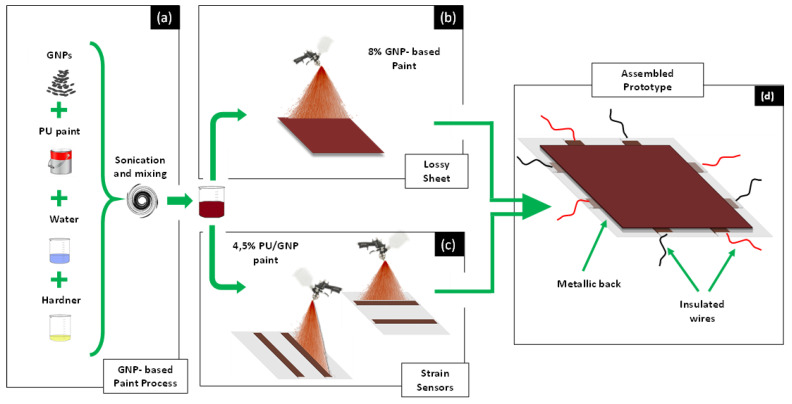
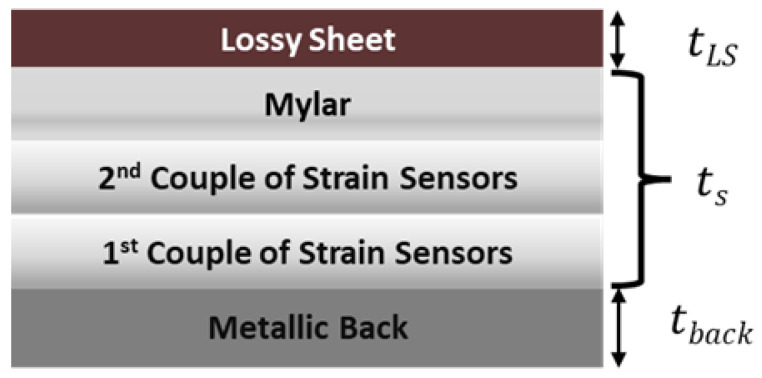
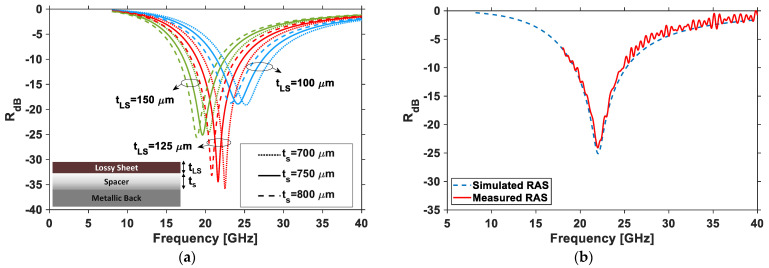
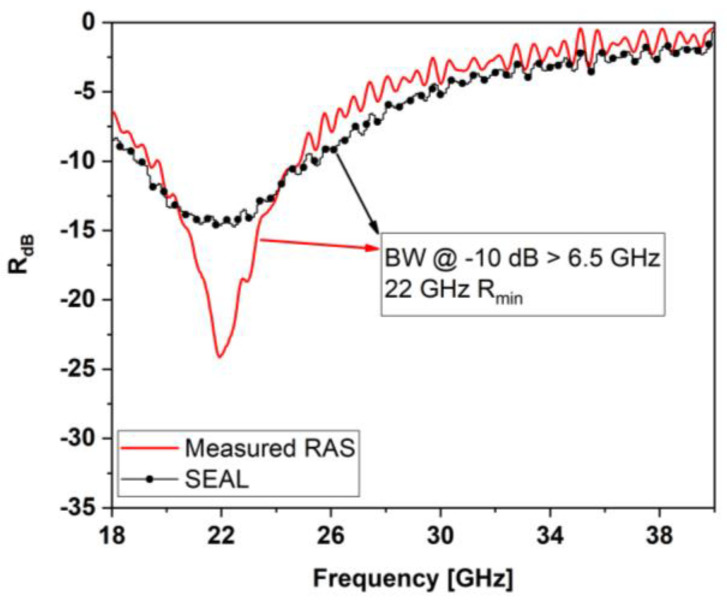
Within the paradigm of smart mobility, the development of innovative materials aimed at improving resilience against structural failure in lightweight vehicles and electromagnetic interferences (EMI) due to wireless communications in guidance systems is of crucial relevance to improve safety, sustainability, and reliability in both aeronautical and automotive applications. In particular, the integration of intelligent structural health monitoring and electromagnetic (EM) shielding systems with radio frequency absorbing properties into a polymer composite laminate is still a challenge. In this paper, we present an innovative system consisting of a multi-layered thin panel which integrates nanostructured coatings to combine EM disturbance suppression and low-energy impact monitoring ability. Specifically, it is composed of a stack of dielectric and conductive layers constituting the sensing and EM-absorbing laminate (SEAL). The conductive layers are made of a polyurethane paint filled with graphene nanoplatelets (GNPs) at different concentrations to tailor the effective electrical conductivity and the functionality of the material. Basically, the panel includes a piezoresistive grid, obtained by selectively spraying onto mylar a low-conductive paint with 4.5 wt.% of GNPs and an EM-absorbing lossy sheet made of the same polyurethane paint but properly modified with a higher weight fraction (8 wt.%) of graphene. The responses of the grid's strain sensors were analyzed through quasi-static mechanical bending tests, whereas the absorbing properties were evaluated through free-space and waveguide-based measurement techniques in the X, Ku, K, and Ka bands. The experimental results were also validated by numerical simulations.
在智能移动性范式下,开发旨在提高轻型车辆抗结构故障能力以及抑制制导系统中无线通信产生的电磁干扰(EMI)的创新材料,对于提高航空和汽车应用的安全性、可持续性和可靠性至关重要。特别是,将具有射频吸收特性的智能结构健康监测和电磁(EM)屏蔽系统集成到聚合物复合层压板中仍然是一项挑战。在本文中,我们提出了一种创新系统,该系统由一个多层薄板组成,该薄板集成了纳米结构涂层,以结合电磁干扰抑制和低能量冲击监测能力。具体而言,它由一堆介电层和导电层组成,构成传感和电磁吸收层压板(SEAL)。导电层由填充有不同浓度石墨烯纳米片(GNPs)的聚氨酯涂料制成,以调整材料的有效电导率和功能。基本上,该面板包括一个压阻式网格,通过将含有4.5 wt.% GNPs的低导电涂料选择性地喷涂到聚酯薄膜上获得,以及一个由相同聚氨酯涂料制成但用更高重量分数(8 wt.%)的石墨烯适当改性的电磁吸收损耗片。通过准静态机械弯曲试验分析了网格应变传感器的响应,而通过X、Ku、K和Ka波段的自由空间和基于波导的测量技术评估了吸收特性。实验结果也通过数值模拟得到了验证。