Salod Zakia, Mahomed Ozayr
Discipline of Public Health Medicine, University of KwaZulu-Natal, Durban 4051, South Africa.
Vaccines (Basel). 2022 Oct 24;10(11):1785. doi: 10.3390/vaccines10111785.
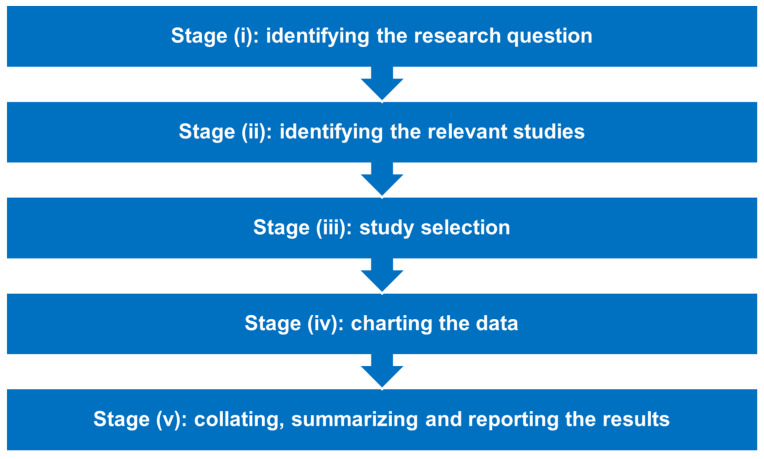
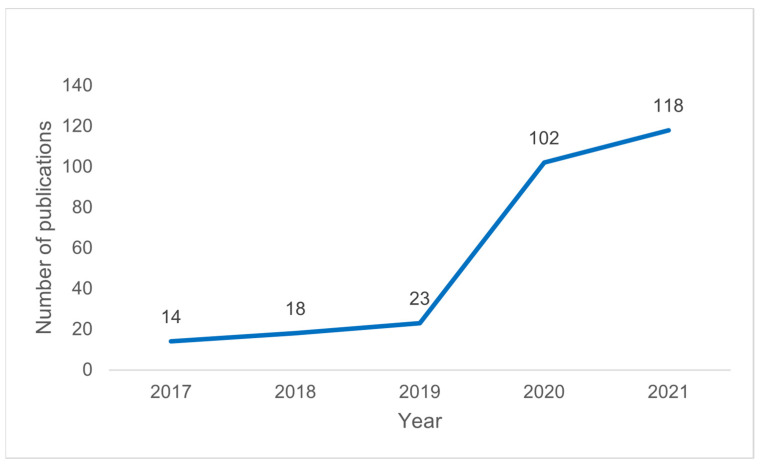
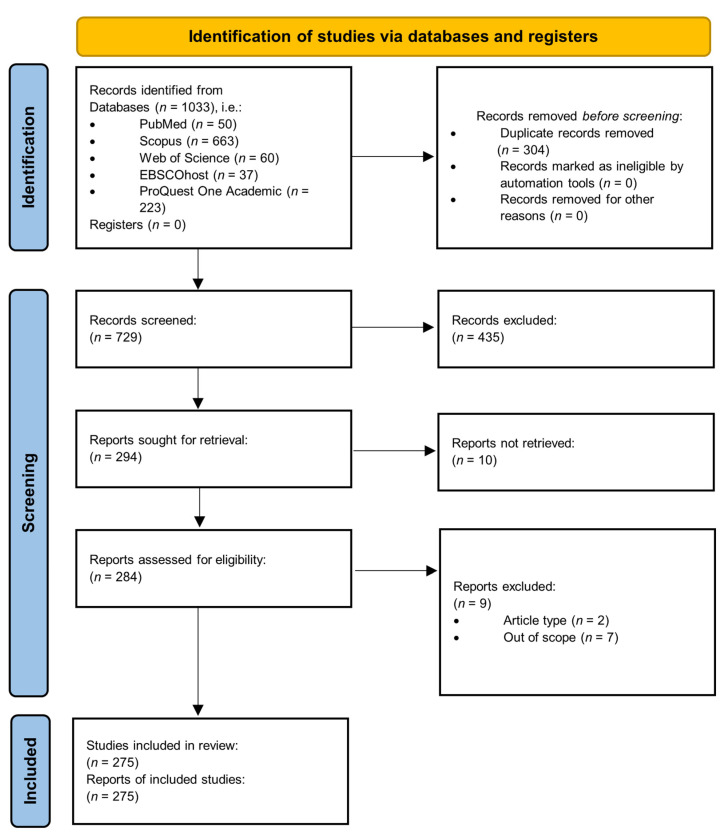
Reverse vaccinology (RV) is a promising alternative to traditional vaccinology. RV focuses on in silico methods to identify antigens or potential vaccine candidates (PVCs) from a pathogen's proteome. Researchers use VaxiJen, the most well-known RV tool, to predict PVCs for various pathogens. The purpose of this scoping review is to provide an overview of PVCs predicted by VaxiJen for different viruses between 2017 and 2021 using Arksey and O'Malley's framework and the Preferred Reporting Items for Systematic Reviews extension for Scoping Reviews (PRISMA-ScR) guidelines. We used the term 'vaxijen' to search PubMed, Scopus, Web of Science, EBSCOhost, and ProQuest One Academic. The protocol was registered at the Open Science Framework (OSF). We identified articles on this topic, charted them, and discussed the key findings. The database searches yielded 1033 articles, of which 275 were eligible. Most studies focused on severe acute respiratory syndrome coronavirus 2 (SARS-CoV-2), published between 2020 and 2021. Only a few articles (8/275; 2.9%) conducted experimental validations to confirm the predictions as vaccine candidates, with 2.2% (6/275) articles mentioning recombinant protein expression. Researchers commonly targeted parts of the SARS-CoV-2 spike (S) protein, with the frequently predicted epitopes as PVCs being major histocompatibility complex (MHC) class I T cell epitopes WTAGAAAYY, RQIAPGQTG, IAIVMVTIM, and B cell epitope IAPGQTGKIADY, among others. The findings of this review are promising for the development of novel vaccines. We recommend that vaccinologists use these findings as a guide to performing experimental validation for various viruses, with SARS-CoV-2 as a priority, because better vaccines are needed, especially to stay ahead of the emergence of new variants. If successful, these vaccines could provide broader protection than traditional vaccines.
反向疫苗学(RV)是传统疫苗学的一种有前景的替代方法。RV专注于利用计算机方法从病原体的蛋白质组中识别抗原或潜在疫苗候选物(PVC)。研究人员使用最著名的RV工具VaxiJen来预测各种病原体的PVC。本综述的目的是使用Arksey和O'Malley的框架以及系统评价扩展版的首选报告项目(PRISMA-ScR)指南,概述2017年至2021年间VaxiJen预测的不同病毒的PVC。我们使用“vaxijen”一词在PubMed、Scopus、科学网、EBSCOhost和ProQuest One Academic中进行搜索。该方案已在开放科学框架(OSF)注册。我们识别了关于该主题的文章,绘制了图表,并讨论了关键发现。数据库搜索产生了1033篇文章,其中275篇符合条件。大多数研究集中在2020年至2021年间发表的严重急性呼吸综合征冠状病毒2(SARS-CoV-2)上。只有少数文章(8/275;2.9%)进行了实验验证以确认预测的候选疫苗,有2.2%(6/275)的文章提到了重组蛋白表达。研究人员通常针对SARS-CoV-2刺突(S)蛋白的部分区域,常见的作为PVC预测的表位有主要组织相容性复合体(MHC)I类T细胞表位WTAGAAAYY、RQIAPGQTG、IAIVMVTIM以及B细胞表位IAPGQTGKIADY等。本综述的结果对新型疫苗的开发很有前景。我们建议疫苗学家将这些结果作为对各种病毒进行实验验证的指导,优先以SARS-CoV-2为重点,因为需要更好的疫苗,特别是要领先于新变种的出现。如果成功,这些疫苗可能比传统疫苗提供更广泛的保护。