Ripepi Davide, Izelaar Boaz, van Noordenne Dylan D, Jungbacker Peter, Kolen Martin, Karanth Pranav, Cruz Daniel, Zeller Patrick, Pérez-Dieste Virginia, Villar-Garcia Ignacio J, Smith Wilson A, Mulder Fokko M
Materials for Energy Conversion and Storage (MECS), Chemical Engineering Department, Faculty of Applied Sciences, Delft University of Technology, 2629 HZDelft, The Netherlands.
Department of Process and Energy, Mechanical, Maritime and Materials Engineering, Delft University of Technology, 2628 CBDelft, The Netherlands.
ACS Catal. 2022 Nov 4;12(21):13781-13791. doi: 10.1021/acscatal.2c03609. Epub 2022 Oct 27.
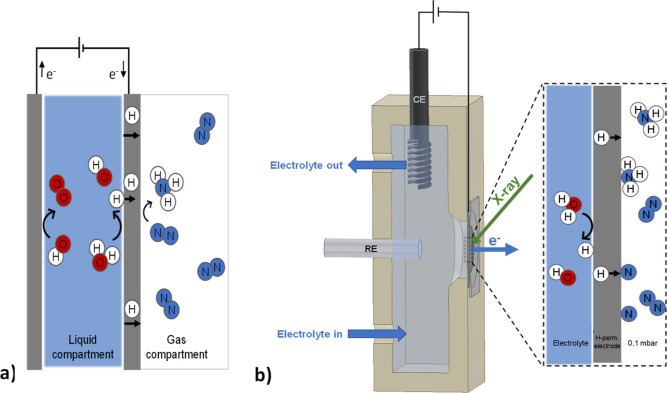
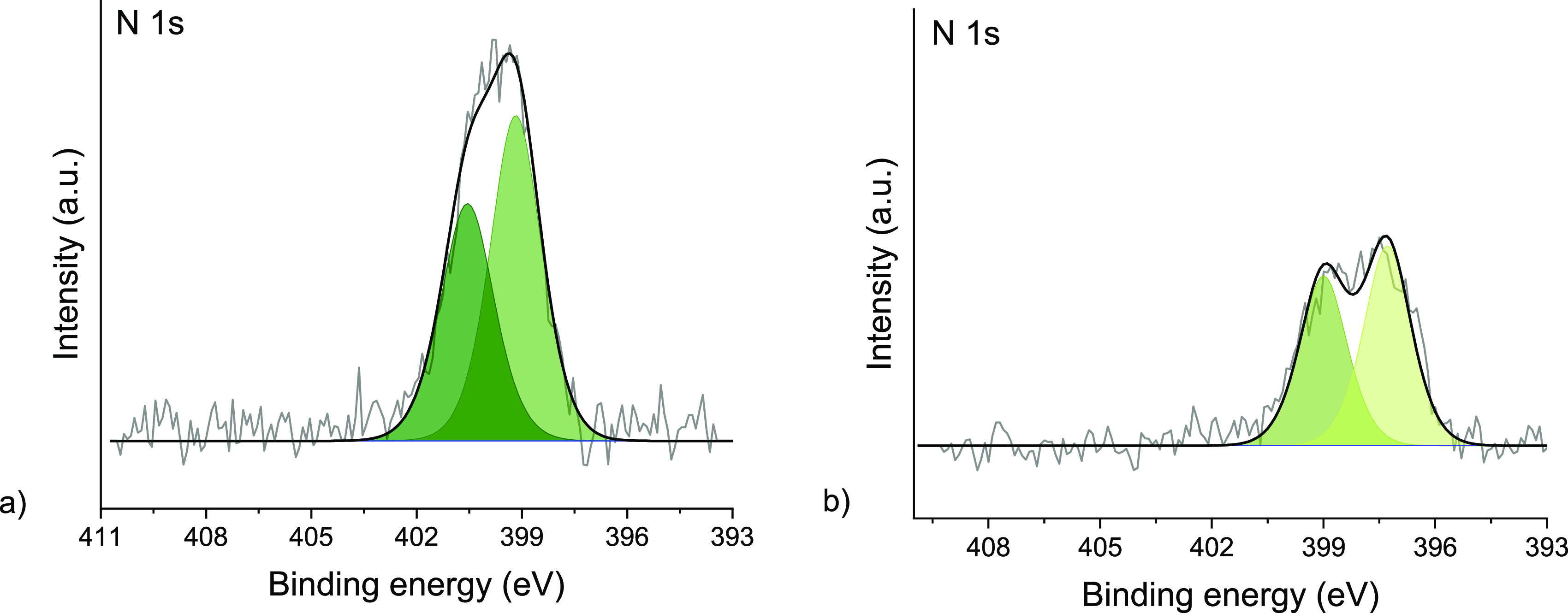
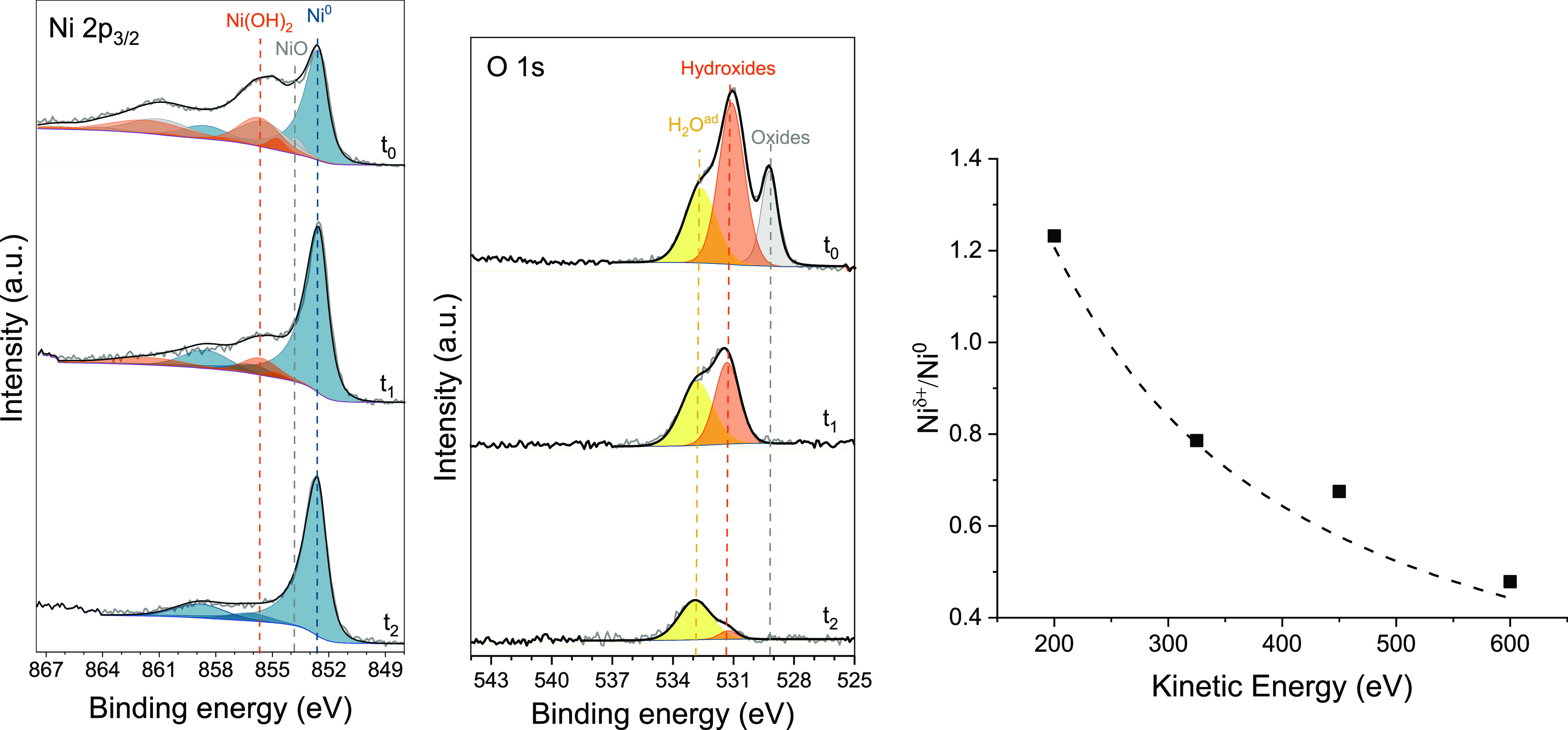
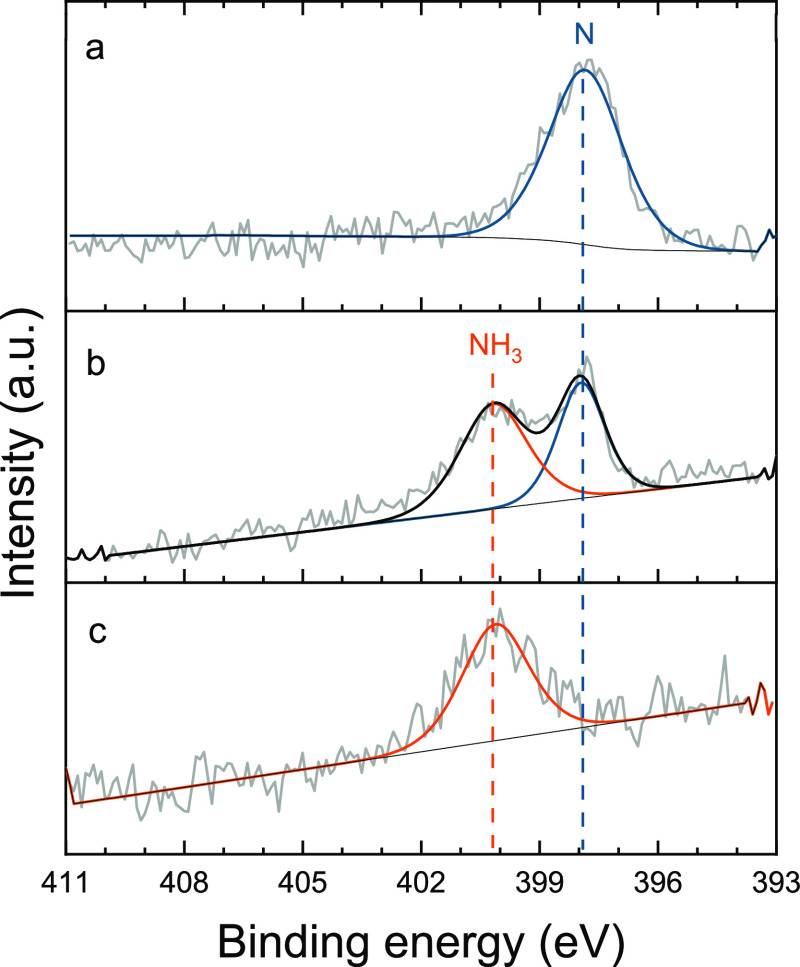
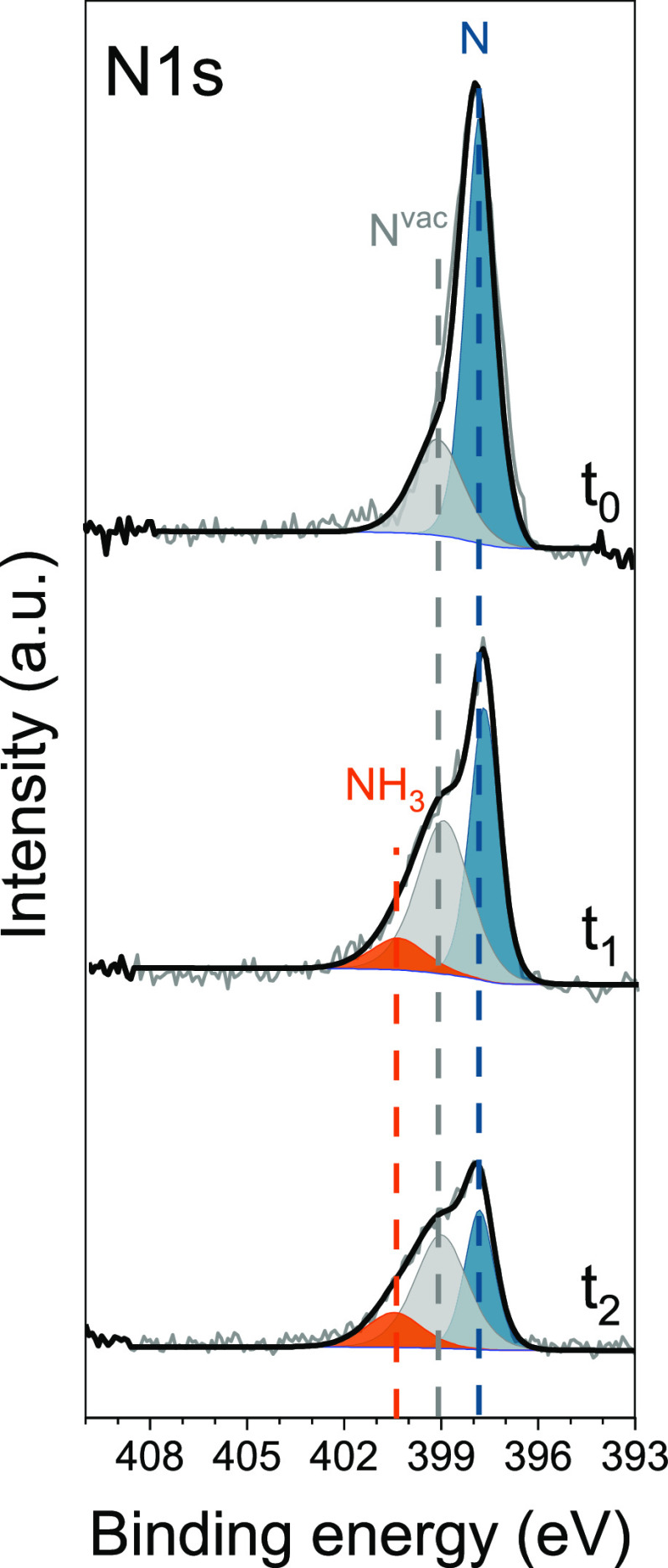
Hydrogen permeable electrodes can be utilized for electrolytic ammonia synthesis from dinitrogen, water, and renewable electricity under ambient conditions, providing a promising route toward sustainable ammonia. The understanding of the interactions of adsorbing N and permeating H at the catalytic interface is a critical step toward the optimization of this NH synthesis process. In this study, we conducted a unique in situ near ambient pressure X-ray photoelectron spectroscopy experiment to investigate the solid-gas interface of a Ni hydrogen permeable electrode under conditions relevant for ammonia synthesis. Here, we show that the formation of a Ni oxide surface layer blocks the chemisorption of gaseous dinitrogen. However, the Ni 2p and O 1s XPS spectra reveal that electrochemically driven permeating atomic hydrogen effectively reduces the Ni surface at ambient temperature, while H does not. Nitrogen gas chemisorbs on the generated metallic sites, followed by hydrogenation via permeating H, as adsorbed N and NH are found on the Ni surface. Our findings suggest that the first hydrogenation step to NH and the NH desorption might be limiting under the operating conditions. The study was then extended to Fe and Ru surfaces. The formation of surface oxide and nitride species on iron blocks the H permeation and prevents the reaction to advance; while on ruthenium, the stronger Ru-N bond might favor the recombination of permeating hydrogen to H over the hydrogenation of adsorbed nitrogen. This work provides insightful results to aid the rational design of efficient electrolytic NH synthesis processes based on but not limited to hydrogen permeable electrodes.
在环境条件下,氢渗透电极可用于由氮气、水和可再生电力进行电解氨合成,为可持续氨合成提供了一条有前景的途径。了解催化界面处吸附的氮和渗透的氢之间的相互作用是优化该氨合成过程的关键一步。在本研究中,我们进行了一项独特的原位近常压X射线光电子能谱实验,以研究与氨合成相关条件下镍氢渗透电极的固-气界面。在此,我们表明氧化镍表面层的形成会阻碍气态氮的化学吸附。然而,镍2p和氧1s的XPS光谱表明,在环境温度下,电化学驱动的渗透原子氢能有效还原镍表面,而氢气则不能。氮气化学吸附在生成的金属位点上,随后通过渗透的氢进行氢化,因为在镍表面发现了吸附的氮和氨。我们的研究结果表明,在操作条件下,第一步氢化生成氨以及氨的解吸可能是限制因素。该研究随后扩展到铁和钌表面。铁表面形成的氧化物和氮化物物种会阻碍氢的渗透并阻止反应进行;而在钌表面,更强的Ru-N键可能有利于渗透的氢重新结合成氢气,而不是吸附氮的氢化。这项工作提供了有深刻见解的结果,有助于合理设计基于但不限于氢渗透电极的高效电解氨合成工艺。