Department of Pharmacology, Basic Medicine College, Key Laboratory of Anti‑inflammatory and Immunopharmacology, Ministry of Education, Anhui Medical University, Hefei, Anhui 230032, P.R. China.
Department of Pharmacy, The First Affiliated Hospital of Anhui Medical University, Hefei, Anhui 230032, P.R. China.
Mol Med Rep. 2023 Jan;27(1). doi: 10.3892/mmr.2022.12893. Epub 2022 Nov 11.
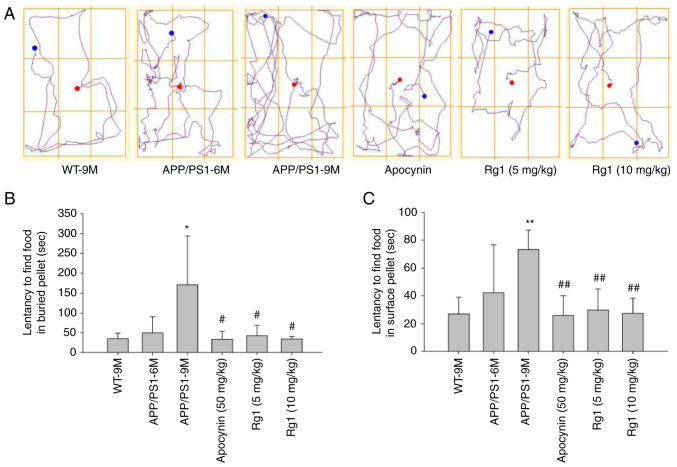
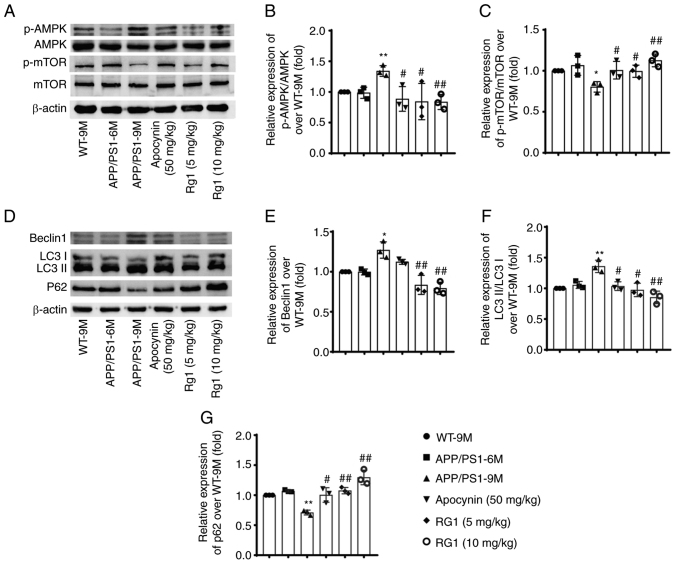
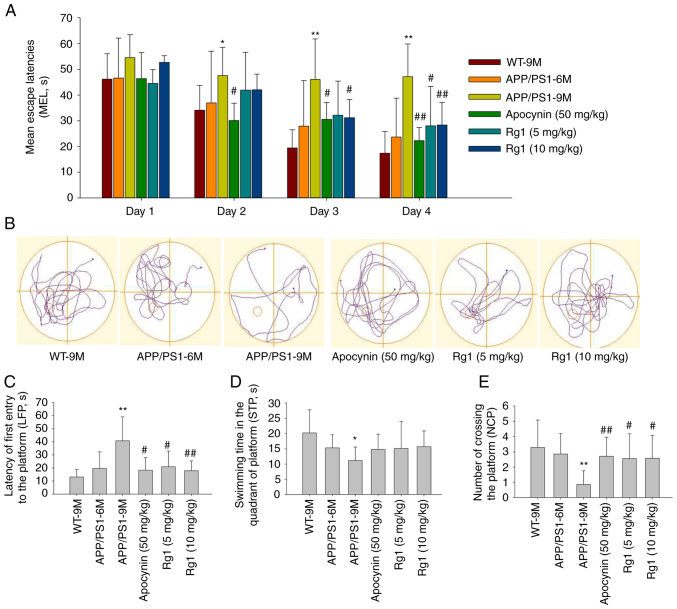
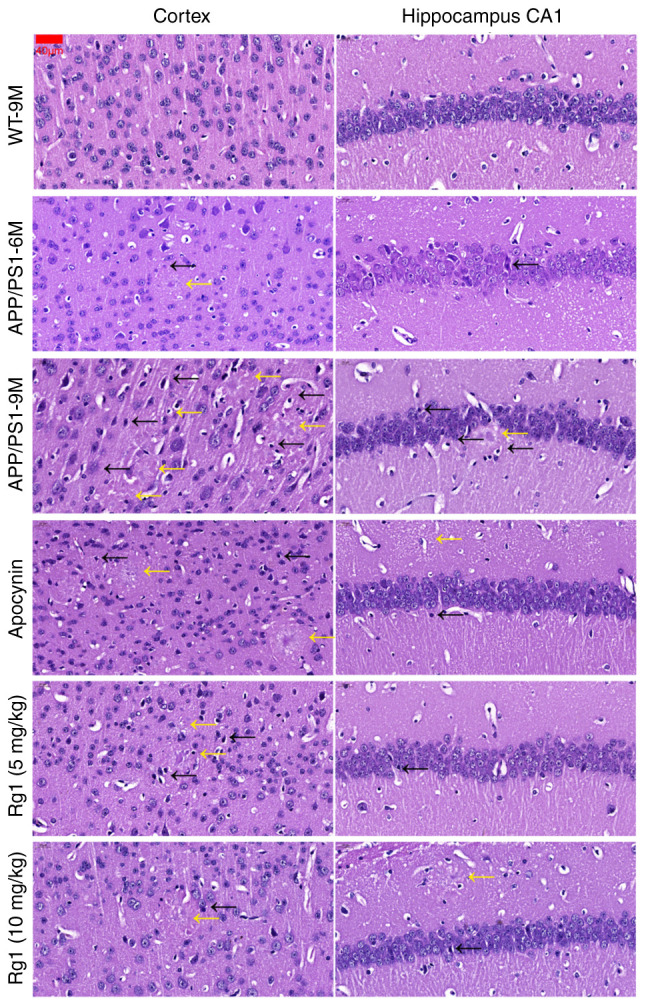
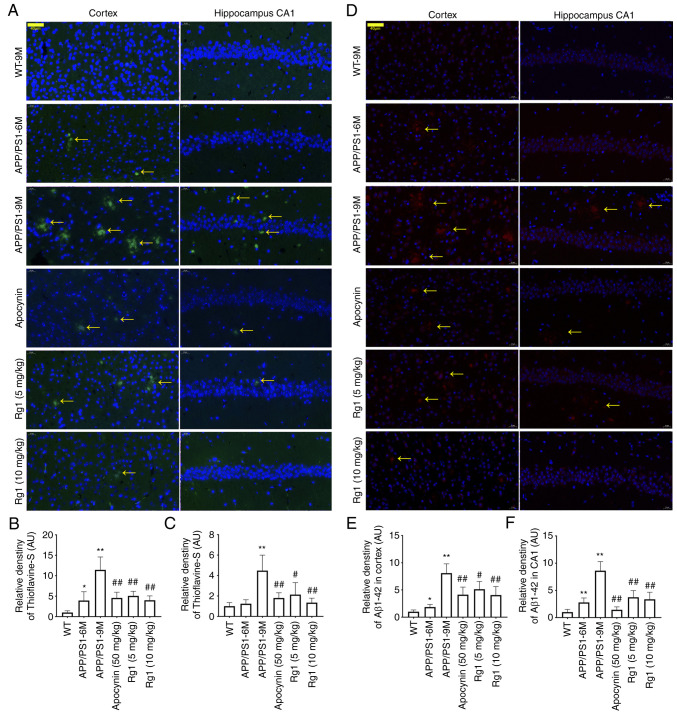
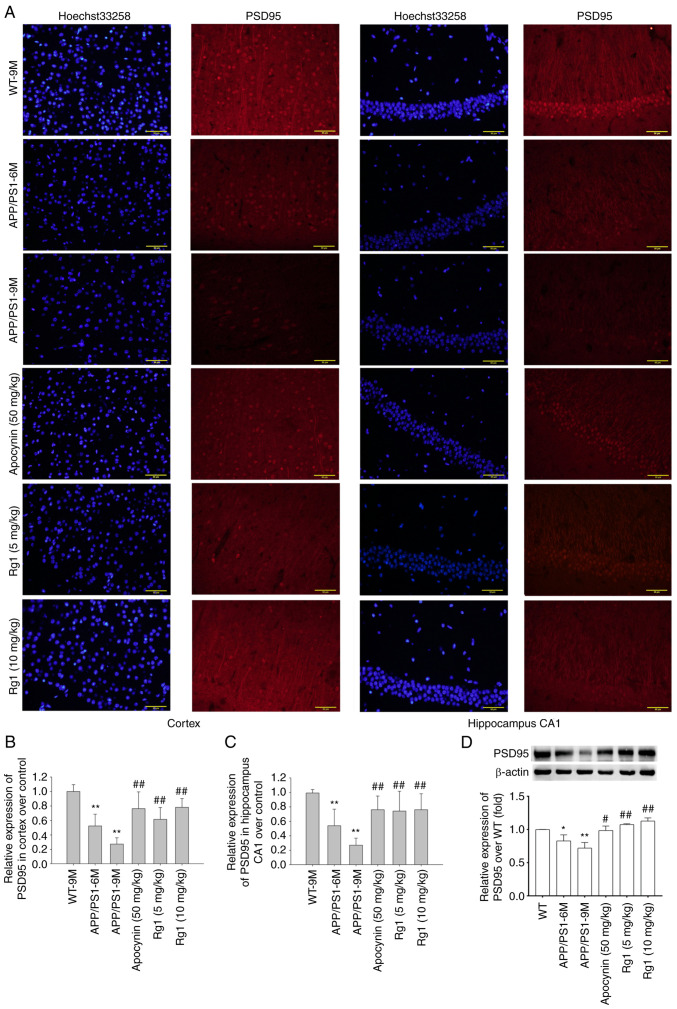
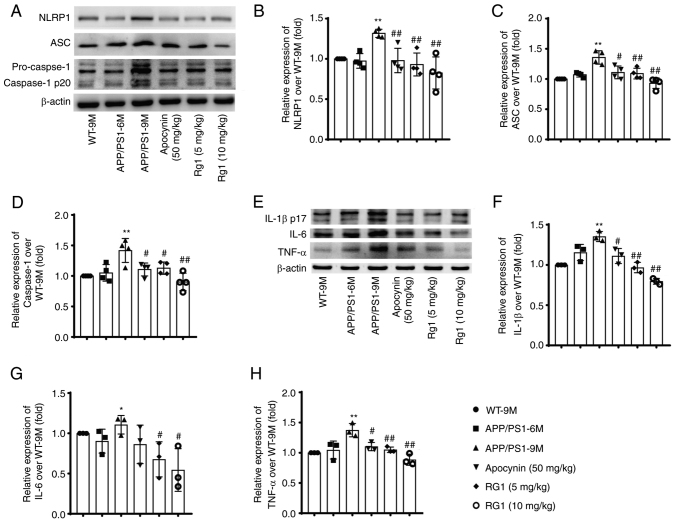
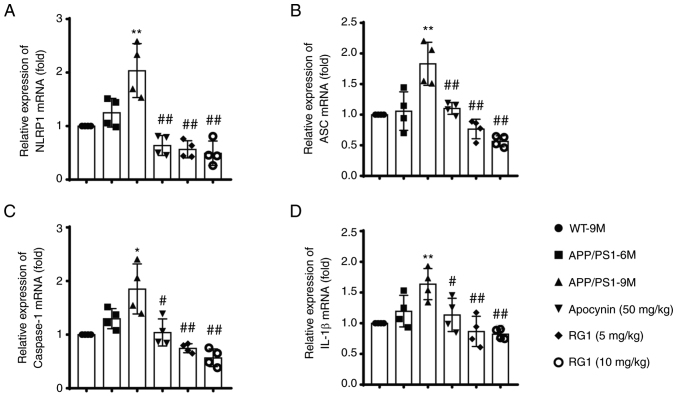
Alzheimer's disease (AD) is a common neurodegenerative disorder. Amyloid β (Aβ) deposition is considered an important pathological feature of AD. Growing evidence has linked neuroinflammation and autophagy to Aβ deposition in the progression of AD. However, there are few drug options for inhibiting neuroinflammation and autophagy to prevent AD. Ginsenoside Rg1 (Rg1), a steroidal saponin extracted from ginseng, has been reported to possess multiple neuroprotective effects. The present study aimed to evaluate whether Rg1 treatment could attenuate cognitive disorders and neuronal injuries by inhibiting NLRP1 inflammasome and autophagy dysfunction in an AD model of APP/PS1 mice. The results of behavioral tests indicated that Rg1 treatment for 12 weeks could significantly improve olfactory dysfunction as well as learning and memory impairments. The results of histopathological tests indicated that Rg1 treatment could reduce Aβ deposition and neuronal damages in APP/PS1‑9M mice. Additionally, the results of immunoblot, reverse transcription‑quantitative PCR or immunohistochemistry demonstrated that Rg1 treatment significantly downregulated the expression levels of inflammation‑related proteins of NLRP1, caspase1, IL‑1β and TNF‑α, as well as autophagy‑related proteins of p‑AMPK/AMPK, Beclin1 and LC3 II/LC3 I, and increased the expression levels of p‑mTOR/mTOR and P62 in APP/PS1‑9M mice. In addition, the molecular docking analysis showed that there was favorable binding result between Rg1 and NLRP1. The present study suggested that Rg1 may alleviate learning and memory impairments and Aβ disposition by inhibiting NLRP1 inflammasome and improving autophagy dysfunction, suggesting that Rg1 may be a potential therapeutic agent for delaying AD.
阿尔茨海默病(AD)是一种常见的神经退行性疾病。淀粉样蛋白β(Aβ)沉积被认为是 AD 的重要病理特征。越来越多的证据表明,神经炎症和自噬与 AD 进展中的 Aβ沉积有关。然而,抑制神经炎症和自噬以预防 AD 的药物选择很少。人参皂苷 Rg1(Rg1)是从人参中提取的一种甾体皂苷,已被报道具有多种神经保护作用。本研究旨在评估 Rg1 治疗是否通过抑制 NLRP1 炎性小体和自噬功能障碍来减轻 APP/PS1 小鼠 AD 模型中的认知障碍和神经元损伤。行为测试结果表明,Rg1 治疗 12 周可显著改善嗅觉功能障碍以及学习和记忆障碍。组织病理学测试结果表明,Rg1 治疗可减少 APP/PS1-9M 小鼠中的 Aβ 沉积和神经元损伤。此外,免疫印迹、逆转录-定量 PCR 或免疫组织化学结果表明,Rg1 治疗可显著下调 NLRP1、caspase1、IL-1β 和 TNF-α 等炎症相关蛋白以及 p-AMPK/AMPK、Beclin1 和 LC3 II/LC3 I 等自噬相关蛋白的表达水平,并增加 APP/PS1-9M 小鼠中 p-mTOR/mTOR 和 P62 的表达水平。此外,分子对接分析表明,Rg1 与 NLRP1 之间存在良好的结合效果。本研究表明,Rg1 可能通过抑制 NLRP1 炎性小体和改善自噬功能障碍来缓解学习和记忆障碍和 Aβ 分布,表明 Rg1 可能是一种潜在的治疗 AD 的药物。