Department of Nephrology, All India Institute of Medical Sciences, New Delhi, 110029, India.
J Nephrol. 2022 Dec;35(9):2325-2331. doi: 10.1007/s40620-022-01471-1. Epub 2022 Nov 11.
There is an increasing burden of kidney diseases worldwide and access to specialist care is limited. Telemedicine, has been relatively less used in developing countries like India. The current study aims to assess the feasibility and acceptance of telenephrology services at our institute, a public hospital.
A total of 150 patients were selected by stratified random sampling from the list of attendees who had undergone both in-person outpatient consultation and telenephrology consultation. Patient's attitude towards, and knowledge and acceptance of telenephrology services were evaluated.
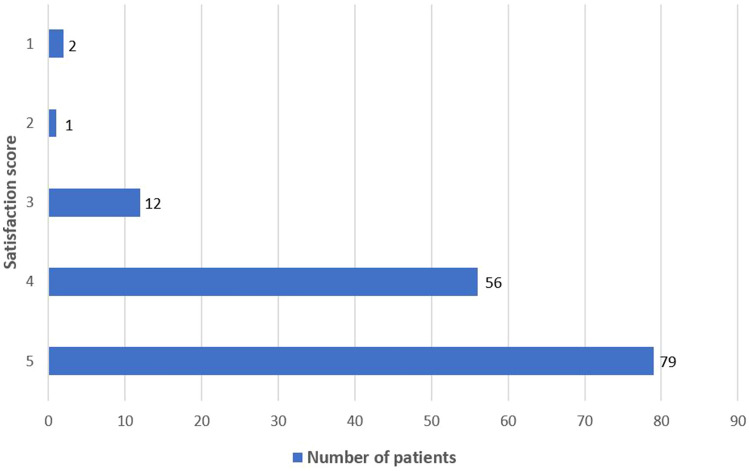
The average age of the study cohort was 42.52 ± 15.1 years. More than one-third (39.3%) of our patients belonged to the lower middle socioeconomic class. The median distance traveled to reach our outpatient clinic was 113.5 km (3-2249 km). Patients reported lost workdays in 54.7% cases. The majority (95%) of patients managed to consult through teleservices successfully. Ninety percent of the patients gave a satisfaction score of 4 (out of 5) or above for their tele-consultation experience. The most important perceived benefit of teleconsultation was the reduced risk of infection (40.6%) followed by economic benefits (32%). The major disadvantage (36%) was the absence of physical examination. A combination of physical and telenephrology services was the option preferred by 84% of the patients.
In developing countries like India, with the majority of the population residing outside major cities and with limited medical access, telenephrology has a huge potential to provide quality nephrology care to the remotest parts of the country.
全球范围内肾脏疾病的负担日益加重,而获得专科医疗的机会有限。在印度等发展中国家,远程医疗的应用相对较少。本研究旨在评估我们所在的公立医院开展远程肾脏病服务的可行性和可接受性。
通过分层随机抽样,从接受过现场门诊和远程肾脏病咨询的就诊者名单中选择了 150 名患者。评估患者对远程肾脏病服务的态度、知识和接受程度。
研究队列的平均年龄为 42.52±15.1 岁。超过三分之一(39.3%)的患者来自中下社会经济阶层。到达我们门诊的中位数距离为 113.5 公里(3-2249 公里)。54.7%的患者报告因就诊而损失工作日。大多数(95%)患者成功通过远程服务进行了咨询。90%的患者对他们的远程咨询体验给予了 4 分(满分 5 分)或更高的满意度评分。远程咨询最重要的感知益处是降低感染风险(40.6%),其次是经济效益(32%)。主要缺点(36%)是缺乏体检。84%的患者更喜欢将物理检查和远程肾脏病服务结合起来。
在印度等发展中国家,由于大多数人口居住在大城市以外,医疗资源有限,远程肾脏病服务具有为该国偏远地区提供优质肾脏病护理的巨大潜力。