Institute of Aquaculture, University of Stirlinggrid.11918.30, Stirling, United Kingdom.
Faculty of Aquatic and Fisheries Sciences, Kafrelsheikh University, Kafr El Sheikh City, Egypt.
Microbiol Spectr. 2022 Dec 21;10(6):e0225522. doi: 10.1128/spectrum.02255-22. Epub 2022 Nov 15.
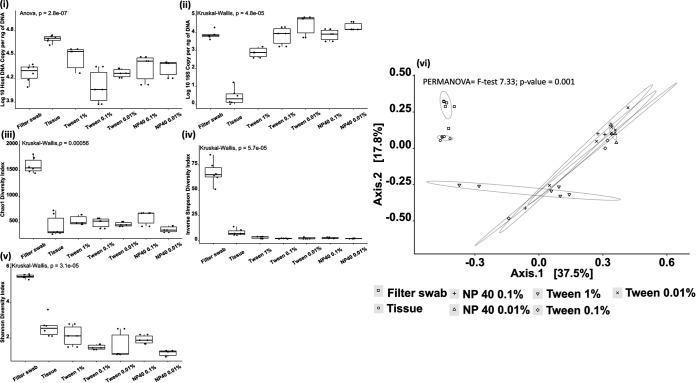
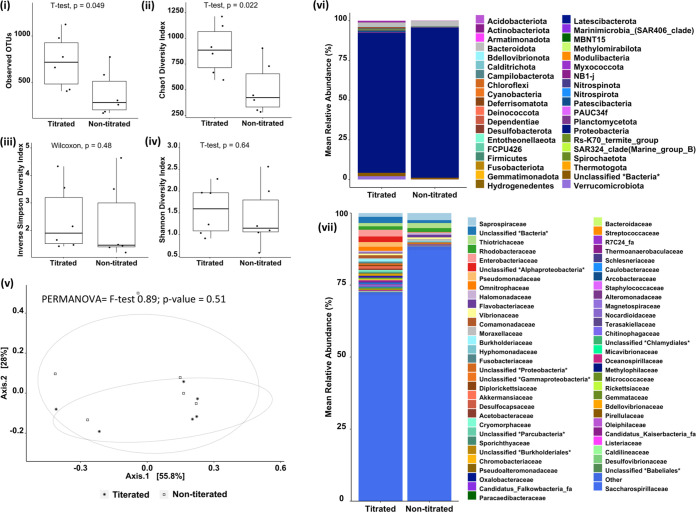
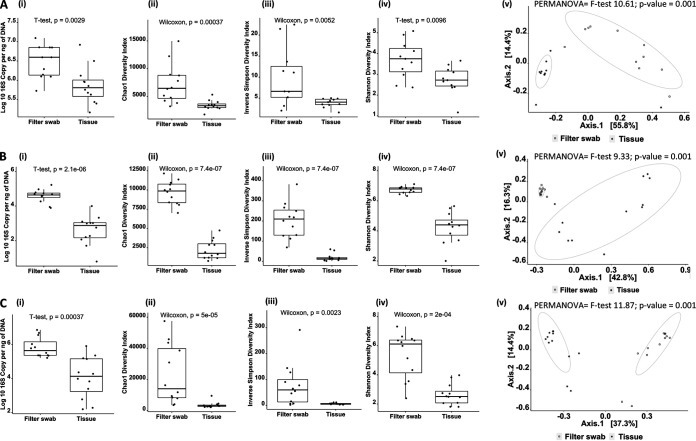
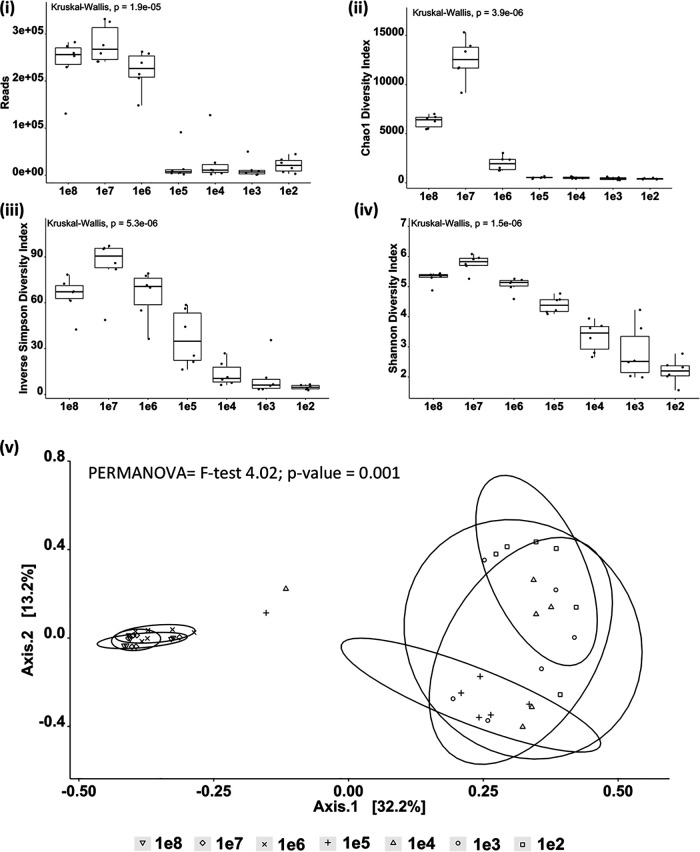
The major aquatic interface between host and environment in teleost finfish species is the gill. The diversity of this infraclass, high complexity of the organ, and its direct exposure to the surrounding environment make it an ideal candidate for furthering our understanding of the intertwined relationships between host and microbiome. Capturing the structure and diversity of bacterial communities from this low-biomass, inhibitor-rich tissue can, however, prove challenging. Lessons learned in doing so are directly applicable to similar sample types in other areas of microbiology. Through the development of a quantitative PCR assay for both host material and 16S rRNA genes, we tested and developed a robust method for low-biomass sample collection which minimized host DNA contamination. Quantification of 16S rRNA facilitated not only the screening of samples prior to costly library construction and sequencing but also the production of equicopy libraries based on 16S rRNA gene copies. A significant increase in diversity of bacteria captured was achieved, providing greater information on the true structure of the microbial community. Such findings offer important information for determining functional processes. Results were confirmed across fresh, brackish, and marine environs with four different fish species, with results showing broad homology between samples, demonstrating the robustness of the approach. Evidence presented is widely applicable to samples similar in composition, such as sputum or mucus, or those that are challenging due to the inherent inclusion of inhibitors. The interaction between the fish gill and surrounding bacteria-rich water provides an intriguing model for examining the interaction between the fish, free-floating bacteria, and the bacterial microbiome on the gill surface. Samples that are inherently low in bacteria, or that have components that inhibit the ability to produce libraries that identify the components of microbial communities, present significant challenges. Gill samples present both of these types of challenges. We developed methods for quantifying both the bacterial and host DNA material and established a sampling method which both reduced inhibitor content and maximized bacterial diversity. By quantifying and normalizing bacteria prior to library construction, we showed significant improvements with regards to the fidelity of the final data. Our results support wide-ranging applications for analyzing samples of similar composition, such as mucus and sputum, in other microbiological spheres.
硬骨鱼类的主要水生宿主-环境界面是鳃。该亚纲物种多样性高,器官结构复杂,并且直接暴露于周围环境中,使其成为深入了解宿主与微生物组之间相互关系的理想候选对象。然而,从这种低生物量、抑制剂丰富的组织中捕获细菌群落的结构和多样性可能具有挑战性。在这方面所学到的经验教训直接适用于微生物学其他领域的类似样本类型。通过为宿主材料和 16S rRNA 基因开发定量 PCR 检测,我们测试并开发了一种稳健的方法,用于采集低生物量样本,最大限度地减少宿主 DNA 污染。16S rRNA 的定量不仅可以在昂贵的文库构建和测序之前筛选样本,还可以根据 16S rRNA 基因拷贝数生成等拷贝数文库。通过这种方法,捕获的细菌多样性显著增加,从而提供了有关微生物群落真实结构的更多信息。此类发现为确定功能过程提供了重要信息。该方法在四种不同鱼类的新鲜、半咸水和海水环境中得到了验证,结果表明样本之间具有广泛的同源性,证明了该方法的稳健性。所提出的证据广泛适用于组成相似的样本,例如痰或粘液,或由于固有抑制剂的存在而具有挑战性的样本。鱼类鳃与富含细菌的周围水之间的相互作用为研究鱼类、自由漂浮细菌和鳃表面细菌微生物组之间的相互作用提供了一个有趣的模型。本身细菌含量低的样本,或具有抑制产生鉴定微生物群落组成成分的文库能力的成分的样本,带来了重大挑战。鳃样本同时具有这两种类型的挑战。我们开发了用于定量细菌和宿主 DNA 材料的方法,并建立了一种既能降低抑制剂含量又能最大限度提高细菌多样性的采样方法。通过在文库构建之前对细菌进行定量和归一化,我们显示出最终数据的保真度有了显著提高。我们的研究结果支持在其他微生物领域广泛应用于分析类似组成的样本,例如粘液和痰。