• 文献检索
  • 文档翻译
  • 深度研究
  • 学术资讯
  • Suppr Zotero 插件Zotero 插件
  • 邀请有礼
  • 套餐&价格
  • 历史记录
应用&插件
Suppr Zotero 插件Zotero 插件浏览器插件Mac 客户端Windows 客户端微信小程序
定价
高级版会员购买积分包购买API积分包
服务
文献检索文档翻译深度研究API 文档MCP 服务
关于我们
关于 Suppr公司介绍联系我们用户协议隐私条款
关注我们

Suppr 超能文献

核心技术专利:CN118964589B侵权必究
粤ICP备2023148730 号-1Suppr @ 2026

文献检索

告别复杂PubMed语法,用中文像聊天一样搜索,搜遍4000万医学文献。AI智能推荐,让科研检索更轻松。

立即免费搜索

文件翻译

保留排版,准确专业,支持PDF/Word/PPT等文件格式,支持 12+语言互译。

免费翻译文档

深度研究

AI帮你快速写综述,25分钟生成高质量综述,智能提取关键信息,辅助科研写作。

立即免费体验

低收入和中等收入国家-预测急性疾病严重程度的临床评分工具:针对中等收入环境下疑似新冠肺炎成年急性病患者的临床严重程度评分的推导与验证

LMIC-PRIEST: Derivation and validation of a clinical severity score for acutely ill adults with suspected COVID-19 in a middle-income setting.

作者信息

Marincowitz Carl, Hodkinson Peter, McAlpine David, Fuller Gordon, Goodacre Steve, Bath Peter A, Sbaffi Laura, Hasan Madina, Omer Yasein, Wallis Lee

机构信息

Centre for Urgent and Emergency Care Research (CURE), Health Services Research School of Health and Related Research, University of Sheffield, Regent Court, 30 Regent Street, Sheffield, S1 4DA, UK.

Division of Emergency Medicine, University of Cape Town, F51 Old Main Building, Groote Schuur Hospital, Observatory, Cape Town.

出版信息

medRxiv. 2022 Nov 7:2022.11.06.22281986. doi: 10.1101/2022.11.06.22281986.

DOI:10.1101/2022.11.06.22281986
PMID:36380752
原文链接:https://pmc.ncbi.nlm.nih.gov/articles/PMC9665341/
Abstract

BACKGROUND

Uneven vaccination and less resilient health care systems mean hospitals in LMICs are at risk of being overwhelmed during periods of increased COVID-19 infection. Risk-scores proposed for rapid triage of need for admission from the emergency department (ED) have been developed in higher-income settings during initial waves of the pandemic.

METHODS

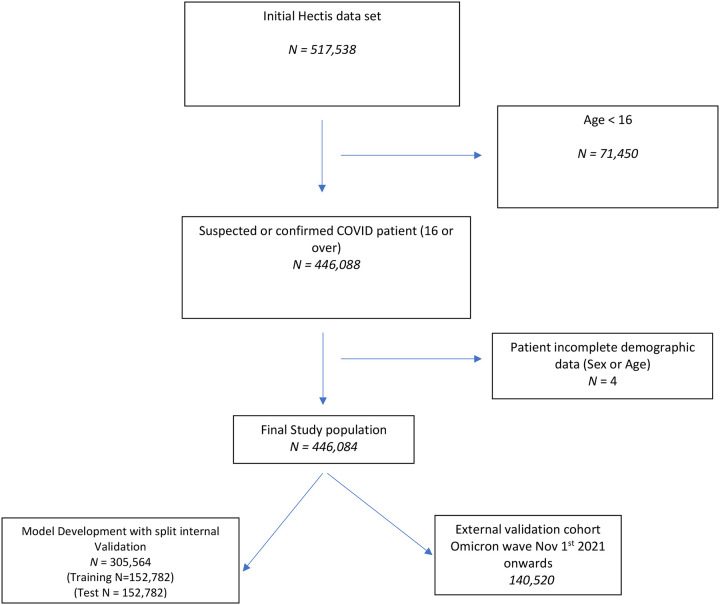
Routinely collected data for public hospitals in the Western Cape, South Africa from the 27 August 2020 to 11 March 2022 were used to derive a cohort of 446,084 ED patients with suspected COVID-19. The primary outcome was death or ICU admission at 30 days. The cohort was divided into derivation and Omicron variant validation sets. We developed the LMIC-PRIEST score based on the coefficients from multivariable analysis in the derivation cohort and existing triage practices. We externally validated accuracy in the Omicron period and a UK cohort.

RESULTS

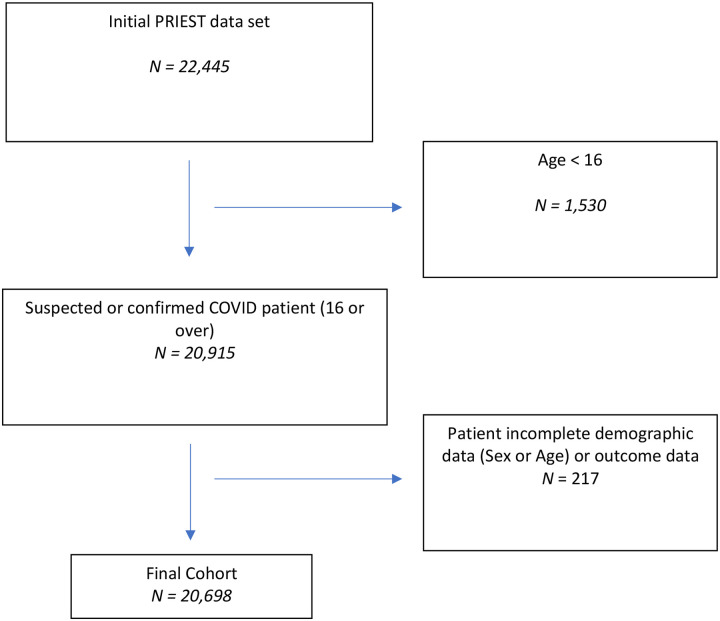
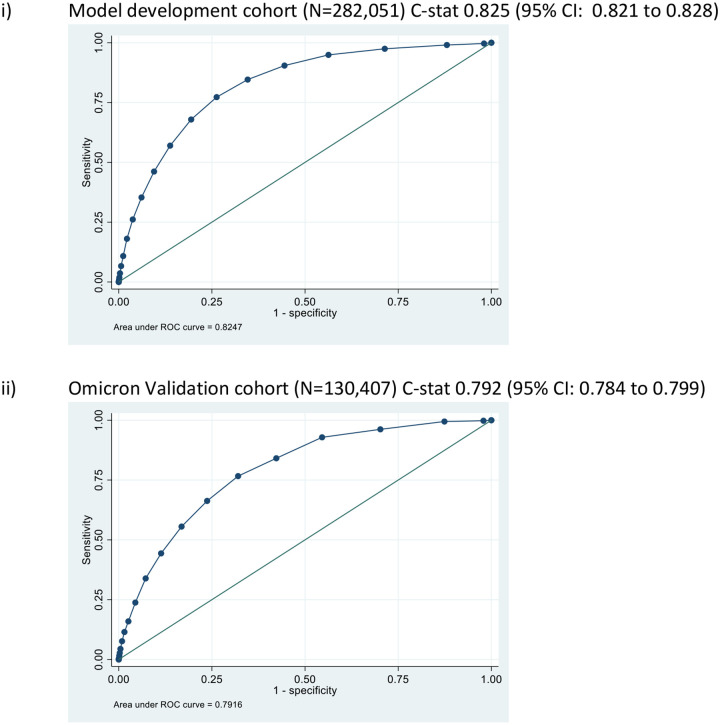
We analysed 305,564, derivation 140,520 Omicron and 12,610 UK validation cases. Over 100 events per predictor parameter were modelled. Multivariable analyses identified eight predictor variables retained across models. We used these findings and clinical judgement to develop a score based on South African Triage Early Warning Scores and also included age, sex, oxygen saturation, inspired oxygen, diabetes and heart disease. The LMIC-PRIEST score achieved C-statistics: 0.82 (95% CI: 0.82 to 0.83) development cohort; 0.79 (95% CI: 0.78 to 0.80) Omicron cohort; and 0.79 (95% CI: 0.79 to 0.80) UK cohort. Differences in prevalence of outcomes led to imperfect calibration in external validation. However, use of the score at thresholds of three or less would allow identification of very low-risk patients (NPV ≥0.99) who could be rapidly discharged using information collected at initial assessment.

CONCLUSION

The LMIC-PRIEST score shows good discrimination and high sensitivity at lower thresholds and can be used to rapidly identify low-risk patients in LMIC ED settings.

WHAT IS ALREADY KNOWN ON THIS SUBJECT

Uneven vaccination in low- and middle-income countries (LMICs) coupled with less resilient health care provision mean that emergency health care systems in LMICs may still be at risk of being overwhelmed during periods of increased COVID-19 infection.Risk-stratification scores may help rapidly triage need for hospitalisation. However, those proposed for use in the ED for patients with suspected COVID-19 have been developed and validated in high-income settings.

WHAT THIS STUDY ADDS

The LMIC-PRIEST score has been robustly developed using a large routine dataset from the Western Cape, South Africa and is directly applicable to existing triage practices in LMICs.External validation across both income settings and COVID-19 variants showed good discrimination and high sensitivity (at lower thresholds) to a composite outcome indicating need for inpatient admission from the ED.

HOW THIS STUDY MIGHT AFFECT RESEARCH PRACTICE OR POLICY

Use of the LMIC-PRIEST score at thresholds of three or less would allow identification of very low-risk patients (negative predictive value ≥0.99) across all settings assessedDuring periods of increased demand, this could allow the rapid identification and discharge of patients from the ED using information collected at initial assessment.

摘要

背景

疫苗接种不均衡以及医疗保健系统韧性不足意味着,在低收入和中等收入国家(LMIC),医院在新冠病毒感染增加期间有不堪重负的风险。在疫情初期,高收入地区已制定了用于急诊科(ED)快速分诊入院需求的风险评分。

方法

利用2020年8月27日至2022年3月11日南非西开普省公立医院的常规收集数据,得出一个包含446,084例疑似新冠病毒感染的急诊科患者队列。主要结局为30天时死亡或入住重症监护病房(ICU)。该队列被分为推导集和奥密克戎变异株验证集。我们根据推导队列中的多变量分析系数和现有的分诊方法制定了LMIC-PRIEST评分。我们在奥密克戎时期队列和一个英国队列中对其准确性进行了外部验证。

结果

我们分析了305,564例病例,其中推导集140,520例,奥密克戎时期队列12,610例,英国验证队列12,610例。对每个预测参数建模的事件超过100个。多变量分析确定了八个在各模型中均保留的预测变量。我们利用这些结果和临床判断,基于南非分诊早期预警评分制定了一个评分,还纳入了年龄、性别、血氧饱和度、吸入氧、糖尿病和心脏病。LMIC-PRIEST评分的C统计量为:推导队列0.82(95%置信区间:0.82至0.83);奥密克戎时期队列0.79(95%置信区间:0.78至0.80);英国队列0.79(95%置信区间:0.79至0.80)。结局患病率的差异导致外部验证中的校准不完善。然而,在三分或更低的阈值使用该评分,将能够识别极低风险患者(阴性预测值≥0.99),这些患者可以根据初始评估收集的信息迅速出院。

结论

LMIC-PRIEST评分在较低阈值下显示出良好的区分度和高灵敏度,可用于在LMIC急诊科环境中快速识别低风险患者。

关于该主题已知的信息

低收入和中等收入国家(LMIC)疫苗接种不均衡,加上医疗保健供应韧性不足,意味着LMIC的紧急医疗保健系统在新冠病毒感染增加期间仍可能有不堪重负的风险。风险分层评分可能有助于快速分诊住院需求。然而,那些提议用于疑似新冠病毒感染患者急诊科的评分是在高收入地区制定和验证的。

本研究的新增内容

LMIC-PRIEST评分是利用南非西开普省的一个大型常规数据集稳健地制定的,并且直接适用于LMIC现有的分诊方法。在不同收入环境和新冠病毒变异株中的外部验证表明,该评分对表明需要从急诊科住院的综合结局具有良好的区分度和高灵敏度(在较低阈值下)。

本研究可能对研究实践或政策产生的影响

在三分或更低的阈值使用LMIC-PRIEST评分,将能够在所有评估环境中识别极低风险患者(阴性预测值≥0.99)。在需求增加期间,这可以利用初始评估收集的信息,快速识别急诊科患者并使其出院。
https://cdn.ncbi.nlm.nih.gov/pmc/blobs/dc47/9665341/d11586cbc64a/nihpp-2022.11.06.22281986v1-f0005.jpg
https://cdn.ncbi.nlm.nih.gov/pmc/blobs/dc47/9665341/2ce5f967c97c/nihpp-2022.11.06.22281986v1-f0001.jpg
https://cdn.ncbi.nlm.nih.gov/pmc/blobs/dc47/9665341/fac23e82242f/nihpp-2022.11.06.22281986v1-f0002.jpg
https://cdn.ncbi.nlm.nih.gov/pmc/blobs/dc47/9665341/1e9c4060bdc2/nihpp-2022.11.06.22281986v1-f0003.jpg
https://cdn.ncbi.nlm.nih.gov/pmc/blobs/dc47/9665341/d11586cbc64a/nihpp-2022.11.06.22281986v1-f0005.jpg
https://cdn.ncbi.nlm.nih.gov/pmc/blobs/dc47/9665341/2ce5f967c97c/nihpp-2022.11.06.22281986v1-f0001.jpg
https://cdn.ncbi.nlm.nih.gov/pmc/blobs/dc47/9665341/fac23e82242f/nihpp-2022.11.06.22281986v1-f0002.jpg
https://cdn.ncbi.nlm.nih.gov/pmc/blobs/dc47/9665341/1e9c4060bdc2/nihpp-2022.11.06.22281986v1-f0003.jpg
https://cdn.ncbi.nlm.nih.gov/pmc/blobs/dc47/9665341/d11586cbc64a/nihpp-2022.11.06.22281986v1-f0005.jpg

相似文献

1
LMIC-PRIEST: Derivation and validation of a clinical severity score for acutely ill adults with suspected COVID-19 in a middle-income setting.低收入和中等收入国家-预测急性疾病严重程度的临床评分工具:针对中等收入环境下疑似新冠肺炎成年急性病患者的临床严重程度评分的推导与验证
medRxiv. 2022 Nov 7:2022.11.06.22281986. doi: 10.1101/2022.11.06.22281986.
2
LMIC-PRIEST: Derivation and validation of a clinical severity score for acutely ill adults with suspected COVID-19 in a middle-income setting.中低收入国家急性 COVID-19 疑似成人患者临床严重程度评分的推导和验证
PLoS One. 2023 Jun 14;18(6):e0287091. doi: 10.1371/journal.pone.0287091. eCollection 2023.
3
External validation of triage tools for adults with suspected COVID-19 in a middle-income setting: an observational cohort study.在中等收入环境中对疑似 COVID-19 的成年人使用分诊工具进行外部验证:一项观察性队列研究。
Emerg Med J. 2023 Jul;40(7):509-517. doi: 10.1136/emermed-2022-212827. Epub 2023 May 22.
4
Prognostic accuracy of eight triage scores in suspected COVID-19 in an Emergency Department low-income setting: An observational cohort study.急诊科低收入环境下疑似新型冠状病毒肺炎患者八种分诊评分的预后准确性:一项观察性队列研究
Afr J Emerg Med. 2024 Mar;14(1):51-57. doi: 10.1016/j.afjem.2023.12.004. Epub 2024 Jan 26.
5
Derivation and validation of a clinical severity score for acutely ill adults with suspected COVID-19: The PRIEST observational cohort study.一项针对疑似 COVID-19 的急性病成年人的临床严重程度评分的推导和验证:PRIEST 观察性队列研究。
PLoS One. 2021 Jan 22;16(1):e0245840. doi: 10.1371/journal.pone.0245840. eCollection 2021.
6
Training and testing of a gradient boosted machine learning model to predict adverse outcome in patients presenting to emergency departments with suspected covid-19 infection in a middle-income setting.在中等收入环境下,对一种梯度提升机器学习模型进行训练和测试,以预测疑似新型冠状病毒肺炎感染并前往急诊科就诊患者的不良结局。
PLOS Digit Health. 2023 Sep 20;2(9):e0000309. doi: 10.1371/journal.pdig.0000309. eCollection 2023 Sep.
7
Prognostic accuracy of triage tools for adults with suspected COVID-19 in a prehospital setting: an observational cohort study.在院前环境中,用于疑似 COVID-19 成人的分诊工具的预后准确性:一项观察性队列研究。
Emerg Med J. 2022 Apr;39(4):317-324. doi: 10.1136/emermed-2021-211934. Epub 2022 Feb 9.
8
Rapid triage for COVID-19 using routine clinical data for patients attending hospital: development and prospective validation of an artificial intelligence screening test.利用常规临床数据对就诊患者进行 COVID-19 的快速分诊:人工智能筛查测试的开发和前瞻性验证。
Lancet Digit Health. 2021 Feb;3(2):e78-e87. doi: 10.1016/S2589-7500(20)30274-0. Epub 2020 Dec 11.
9
Development and Validation of a Robust and Interpretable Early Triaging Support System for Patients Hospitalized With COVID-19: Predictive Algorithm Modeling and Interpretation Study.开发和验证用于 COVID-19 住院患者的强大且可解释的早期分诊支持系统:预测算法建模和解释研究。
J Med Internet Res. 2024 Jan 11;26:e52134. doi: 10.2196/52134.
10
Prognostic accuracy of emergency department triage tools for adults with suspected COVID-19: the PRIEST observational cohort study.成人疑似 COVID-19 患者的急诊科分诊工具的预后准确性:PRIEST 观察性队列研究。
Emerg Med J. 2021 Aug;38(8):587-593. doi: 10.1136/emermed-2020-210783. Epub 2021 Jun 3.

本文引用的文献

1
External validation of triage tools for adults with suspected COVID-19 in a middle-income setting: an observational cohort study.在中等收入环境中对疑似 COVID-19 的成年人使用分诊工具进行外部验证:一项观察性队列研究。
Emerg Med J. 2023 Jul;40(7):509-517. doi: 10.1136/emermed-2022-212827. Epub 2023 May 22.
2
Research priorities to reduce the impact of COVID-19 in low- and middle-income countries.降低新冠疫情在低收入和中等收入国家影响的研究重点。
J Glob Health. 2022 Apr 15;12:09003. doi: 10.7189/jogh.12.09003. eCollection 2022.
3
Accuracy of telephone triage for predicting adverse outcomes in suspected COVID-19: an observational cohort study.
电话分诊预测疑似 COVID-19 不良结局的准确性:一项观察性队列研究。
BMJ Qual Saf. 2024 May 17;33(6):375-385. doi: 10.1136/bmjqs-2021-014382.
4
Composite Outcomes in Clinical Prediction Modeling: Are We Trying to Predict Apples and Oranges?临床预测建模中的综合结局:我们是否试图预测苹果和橙子?
Ann Emerg Med. 2022 Jul;80(1):12-19. doi: 10.1016/j.annemergmed.2022.01.046. Epub 2022 Mar 24.
5
Estimating excess mortality due to the COVID-19 pandemic: a systematic analysis of COVID-19-related mortality, 2020-21.估算2019冠状病毒病大流行造成的超额死亡率:2020 - 2021年与2019冠状病毒病相关死亡率的系统分析
Lancet. 2022 Apr 16;399(10334):1513-1536. doi: 10.1016/S0140-6736(21)02796-3. Epub 2022 Mar 10.
6
COVID-19 wave 4 in Western Cape Province, South Africa: Fewer hospitalisations, but new challenges for a depleted workforce.南非西开普省的第四波新冠疫情:住院人数减少,但劳动力短缺带来新挑战。
S Afr Med J. 2022 Feb 1;112(2):13496.
7
Using the South African Triage Scale for prehospital triage: a qualitative study.使用南非分诊量表进行院前分诊:一项定性研究。
BMC Emerg Med. 2021 Oct 30;21(1):125. doi: 10.1186/s12873-021-00522-3.
8
Prospective predictive performance comparison between clinical gestalt and validated COVID-19 mortality scores.临床 gestalt 与经过验证的 COVID-19 死亡率评分的前瞻性预测性能比较。
J Investig Med. 2022 Feb;70(2):415-420. doi: 10.1136/jim-2021-002037. Epub 2021 Oct 7.
9
Potential solutions for screening, triage, and severity scoring of suspected COVID-19 positive patients in low-resource settings: a scoping review.资源匮乏环境下疑似 COVID-19 阳性患者的筛查、分诊和严重程度评分的潜在解决方案:范围综述。
BMJ Open. 2021 Sep 15;11(9):e046130. doi: 10.1136/bmjopen-2020-046130.
10
Prognostic accuracy of emergency department triage tools for adults with suspected COVID-19: the PRIEST observational cohort study.成人疑似 COVID-19 患者的急诊科分诊工具的预后准确性:PRIEST 观察性队列研究。
Emerg Med J. 2021 Aug;38(8):587-593. doi: 10.1136/emermed-2020-210783. Epub 2021 Jun 3.