Asberry Andrew Michael, Liu Sheng, Nam Hye Seung, Deng Xuehong, Wan Jun, Hu Chang-Deng
Department of Medicinal Chemistry and Molecular Pharmacology, Purdue University, West Lafayette, IN, USA.
Department of Medical and Molecular Genetics, Indiana University School of Medicine, Indianapolis, IN, USA.
Comput Struct Biotechnol J. 2022 Oct 27;20:5873-5885. doi: 10.1016/j.csbj.2022.10.031. eCollection 2022.
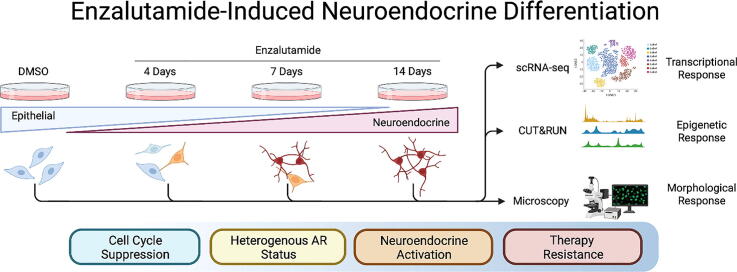
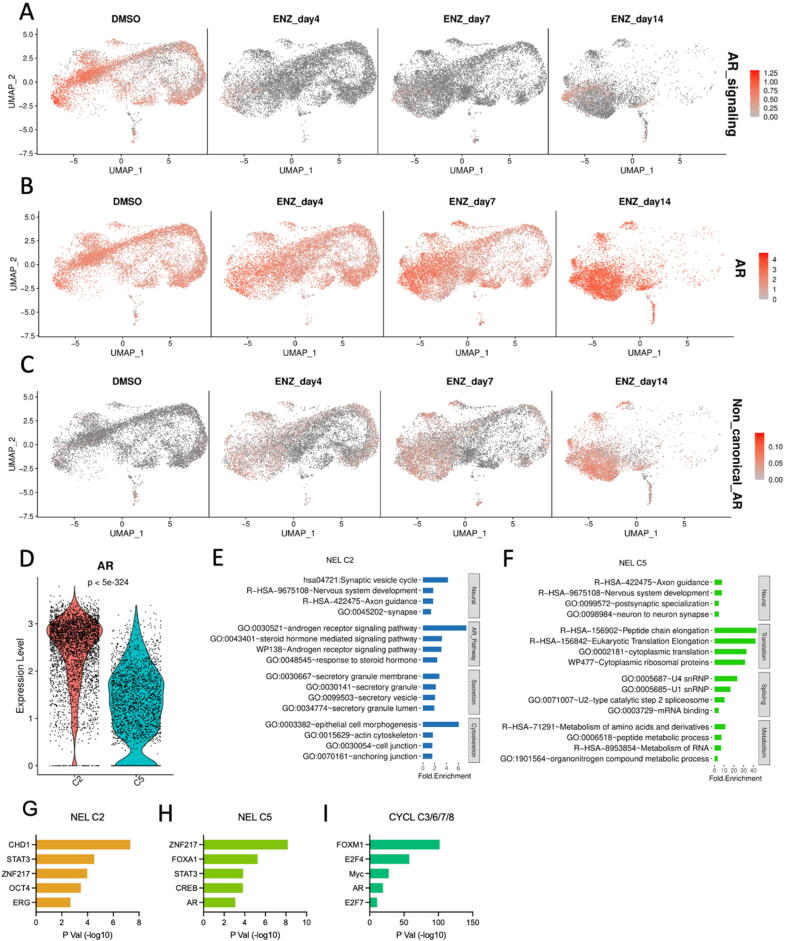
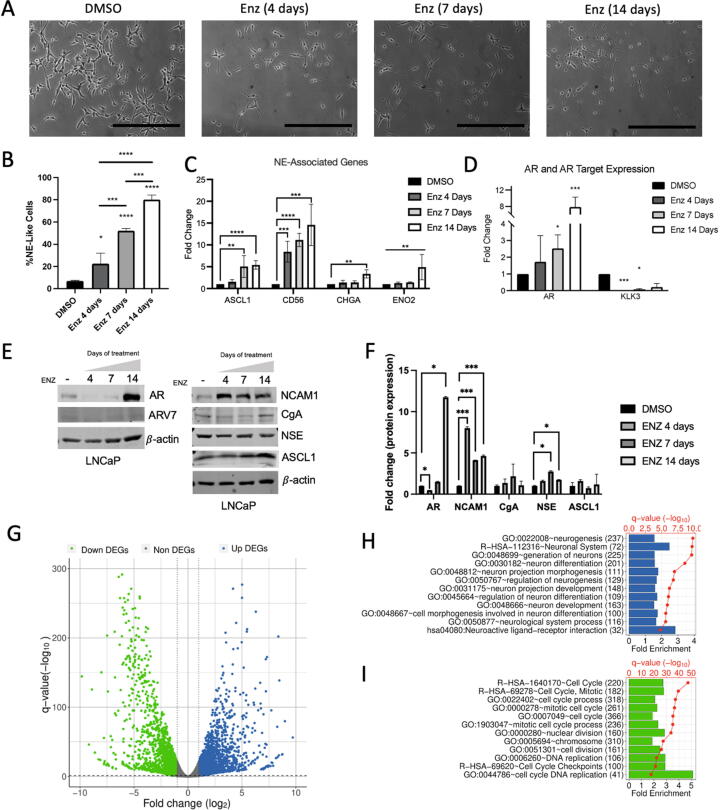
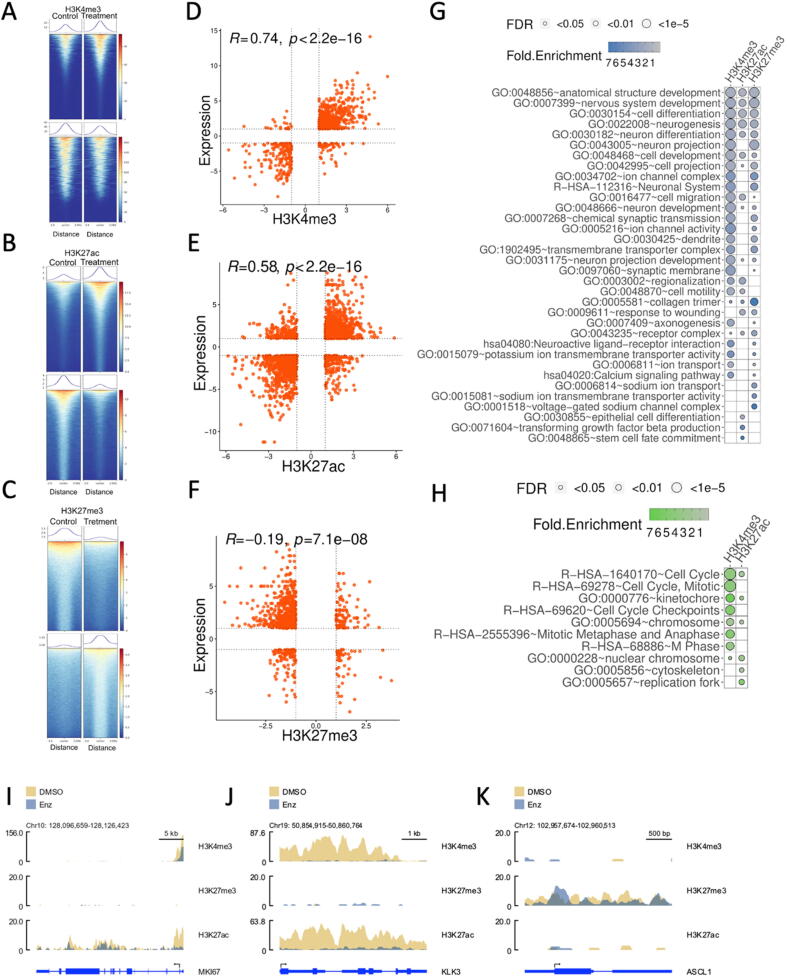
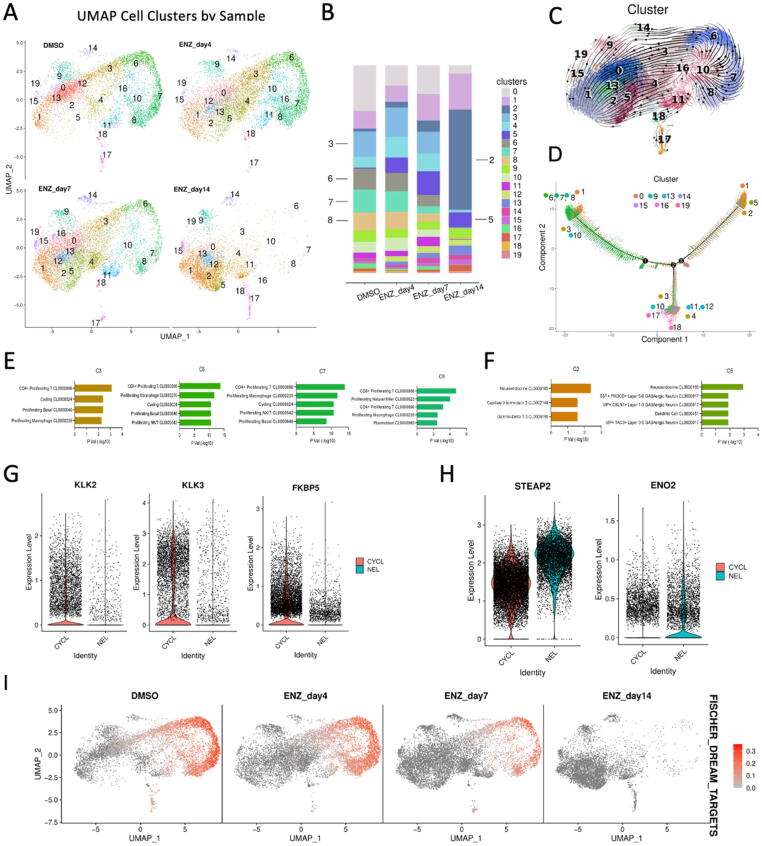
Metastatic and locally advanced prostate cancer is treated by pharmacological targeting of androgen synthesis and androgen response via androgen signaling inhibitors (ASI), most of which target the androgen receptor (AR). However, ASI therapy invariably fails after 1-2 years. Emerging clinical evidence indicates that in response to ASI therapy, the AR-positive prostatic adenocarcinoma can transdifferentiate into AR-negative neuroendocrine prostate cancer (NEPC) in 17-25 % treated patients, likely through a process called neuroendocrine differentiation (NED). Despite high clinical incidence, the epigenetic pathways underlying NED and ASI therapy-induced NED remain unclear. By utilizing a combinatorial single cell and bulk mRNA sequencing workflow, we demonstrate in a time-resolved manner that following AR inhibition with enzalutamide, prostate cancer cells exhibit immediate loss of canonical AR signaling activity and simultaneous morphological change from epithelial to NE-like (NEL) morphology, followed by activation of specific neuroendocrine (NE)-associated transcriptional programs. Additionally, we observed that activation of NE-associated pathways occurs prior to complete repression of epithelial or canonical AR pathways, a phenomenon also observed clinically via heterogenous AR status in clinical samples. Our model indicates that, mechanistically, ASI therapy induces NED with initial morphological change followed by deactivation of canonical AR target genes and subsequent de-repression of NE-associated target genes, while retaining AR expression and transcriptional shift towards non-canonical AR activity. Coupled with scRNA-seq and CUT&RUN analysis, our model system can provide a platform for screening of potential therapeutic agents that may prevent ASI-induced NED or reverse the NED process.
转移性和局部晚期前列腺癌通过雄激素信号抑制剂(ASI)对雄激素合成和雄激素反应进行药理学靶向治疗,其中大多数靶向雄激素受体(AR)。然而,ASI治疗通常在1至2年后失败。新出现的临床证据表明,在接受ASI治疗后,17%至25%的AR阳性前列腺腺癌患者可能通过一种称为神经内分泌分化(NED)的过程转分化为AR阴性神经内分泌前列腺癌(NEPC)。尽管临床发病率很高,但NED以及ASI治疗诱导的NED背后的表观遗传途径仍不清楚。通过使用组合单细胞和批量mRNA测序工作流程,我们以时间分辨的方式证明,在用恩杂鲁胺抑制AR后,前列腺癌细胞立即丧失典型的AR信号活性,并同时从上皮形态转变为NE样(NEL)形态,随后激活特定的神经内分泌(NE)相关转录程序。此外,我们观察到NE相关途径的激活发生在上皮或典型AR途径完全抑制之前,这一现象在临床上也通过临床样本中的异质AR状态观察到。我们的模型表明,从机制上讲,ASI治疗诱导NED,最初是形态变化,随后是典型AR靶基因的失活,以及随后NE相关靶基因的去抑制,同时保留AR表达并向非典型AR活性发生转录转变。结合scRNA-seq和CUT&RUN分析,我们的模型系统可以为筛选可能预防ASI诱导的NED或逆转NED过程的潜在治疗药物提供一个平台。