
基于体外低温心脏停搏机灌注期间微血管血流转移的循环死亡供心收缩功能预测模型。
Prediction Model for Contractile Function of Circulatory Death Donor Hearts Based on Microvascular Flow Shifts During Ex Situ Hypothermic Cardioplegic Machine Perfusion.
机构信息
Department of Cardiac Surgery, University Hospital Halle (Saale) University of Halle Halle (Saale) Germany.
Department of Cardiac Surgery University Hospital Heidelberg Heidelberg Germany.
出版信息
J Am Heart Assoc. 2022 Dec 6;11(23):e027146. doi: 10.1161/JAHA.122.027146. Epub 2022 Nov 16.
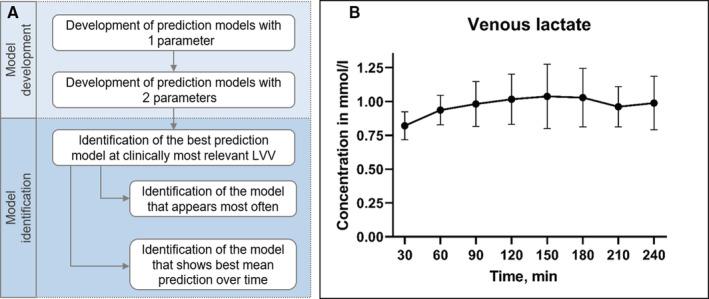
Background Hearts procured from circulatory death donors (DCD) are predominantly maintained by machine perfusion (MP) with normothermic donor blood. Currently, DCD heart function is evaluated by lactate and visual inspection. We have shown that MP with the cardioplegic, crystalloid Custodiol-N solution is superior to blood perfusion to maintain porcine DCD hearts. However, no method has been developed yet to predict the contractility of DCD hearts after cardioplegic MP. We hypothesize that the shift of microvascular flow during continuous MP with a cardioplegic preservation solution predicts the contractility of DCD hearts. Methods and Results In a pig model, DCD hearts were harvested and maintained by MP with hypothermic, oxygenated Custodiol-N for 4 hours while myocardial microvascular flow was measured by Laser Doppler Flow (LDF) technology. Subsequently, hearts were perfused with blood for 2 hours, and left ventricular contractility was measured after 30 and 120 minutes. Various novel parameters which represent the LDF shift were computed. We used 2 combined LDF shift parameters to identify bivariate prediction models. Using the new prediction models based on LDF shifts, highest for end-systolic pressure was 0.77 (=0.027), for maximal slope of pressure increment was 0.73 (=0.037), and for maximal slope of pressure decrement was 0.75 (=0.032) after 30 minutes of reperfusion. After 120 minutes of reperfusion, highest for end-systolic pressure was 0.81 (=0.016), for maximal slope of pressure increment was 0.90 (=0.004), and for maximal slope of pressure decrement was 0.58 (=0.115). Identical prediction models were identified for maximal slope of pressure increment and for maximal slope of pressure decrement at both time points. Lactate remained constant and therefore was unsuitable for prediction. Conclusions Contractility of DCD hearts after continuous MP with a cardioplegic preservation solution can be predicted by the shift of LDF during MP.
背景
从循环死亡供体(DCD)获得的心脏主要通过常温供体血液的机器灌注(MP)来维持。目前,DCD 心脏功能通过乳酸和肉眼检查来评估。我们已经表明,使用心脏停搏液结晶晶体 Custodiol-N 的 MP 优于血液灌注,可维持猪 DCD 心脏。然而,目前还没有开发出预测心脏停搏后 MP 中 DCD 心脏收缩性的方法。我们假设,在使用心脏停搏液的连续 MP 过程中微血管流量的变化可以预测 DCD 心脏的收缩性。
方法和结果
在猪模型中,DCD 心脏在低温、充氧的 Custodiol-N 下通过 MP 维持 4 小时,同时通过激光多普勒流量(LDF)技术测量心肌微血管流量。随后,心脏用血液灌注 2 小时,并在 30 分钟和 120 分钟后测量左心室收缩性。计算了代表 LDF 变化的各种新参数。我们使用 2 个联合 LDF 变化参数来识别双变量预测模型。使用基于 LDF 变化的新预测模型,在再灌注 30 分钟后,收缩末期压力的最高 为 0.77(=0.027),压力增量最大斜率为 0.73(=0.037),压力下降最大斜率为 0.75(=0.032)。再灌注 120 分钟后,收缩末期压力的最高 为 0.81(=0.016),压力增量最大斜率为 0.90(=0.004),压力下降最大斜率为 0.58(=0.115)。在两个时间点,都可以识别出用于压力增量最大斜率和压力下降最大斜率的相同预测模型。乳酸保持不变,因此不适合预测。
结论
使用心脏停搏液的连续 MP 维持 DCD 心脏后,通过 MP 期间 LDF 的变化可以预测心脏的收缩性。




 Zotero 插件