Leiden Academic Centre for Drug Research, Leiden University, Leiden, The Netherlands.
Certara QSP, Canterbury, UK.
Clin Pharmacokinet. 2022 Dec;61(12):1735-1748. doi: 10.1007/s40262-022-01186-3. Epub 2022 Nov 19.
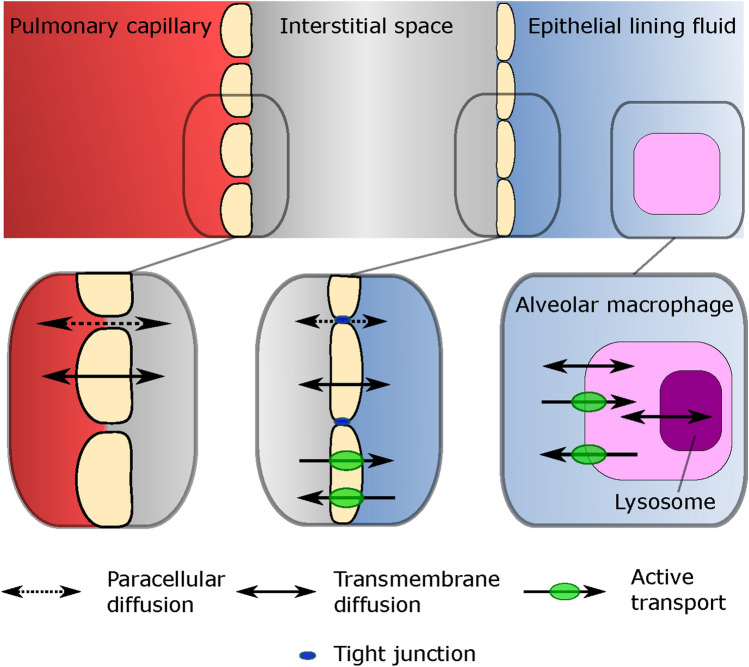
Prediction of antimicrobial target-site pharmacokinetics is of relevance to optimize treatment with antimicrobial agents. A physiologically based pharmacokinetic (PBPK) model framework was developed for prediction of pulmonary pharmacokinetics, including key pulmonary infection sites (i.e. the alveolar macrophages and the epithelial lining fluid).
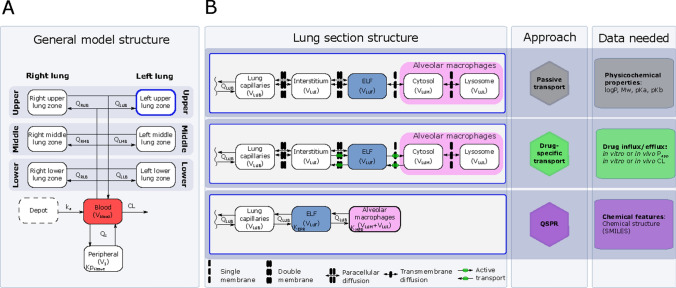
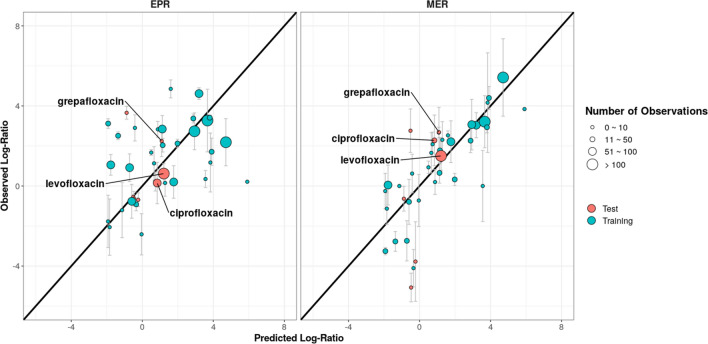
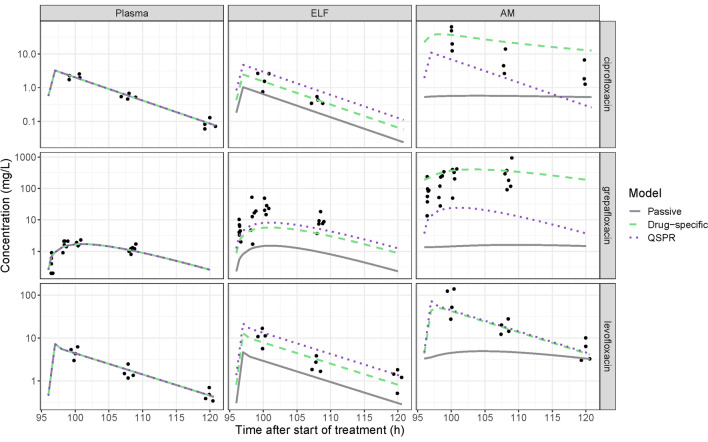
The modelling framework incorporated three lung PBPK models: a general passive permeability-limited model, a drug-specific permeability-limited model and a quantitative structure-property relationship (QSPR)-informed perfusion-limited model. We applied the modelling framework to three fluoroquinolone antibiotics. Incorporation of experimental drug-specific permeability data was found essential for accurate prediction.
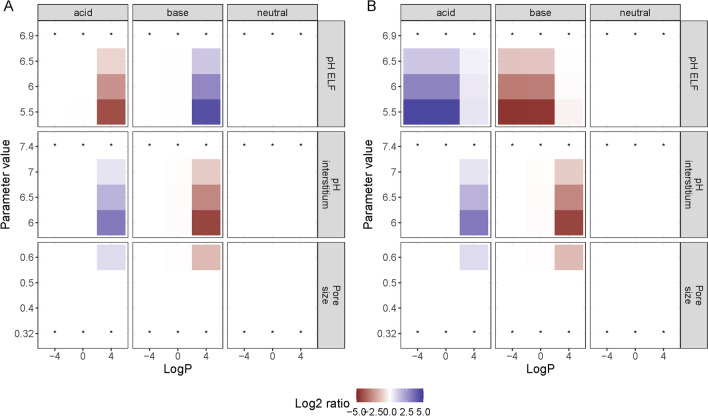
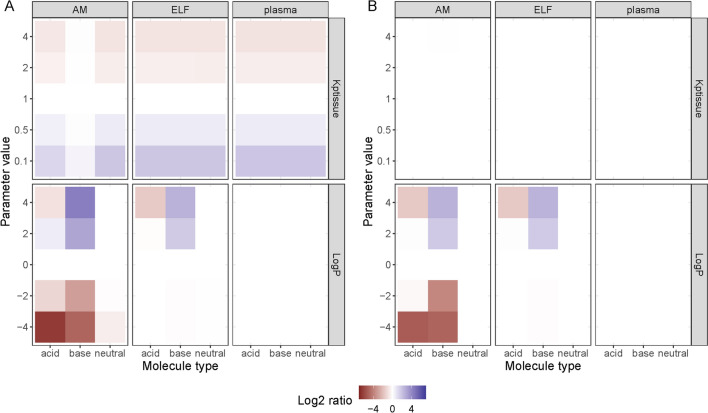
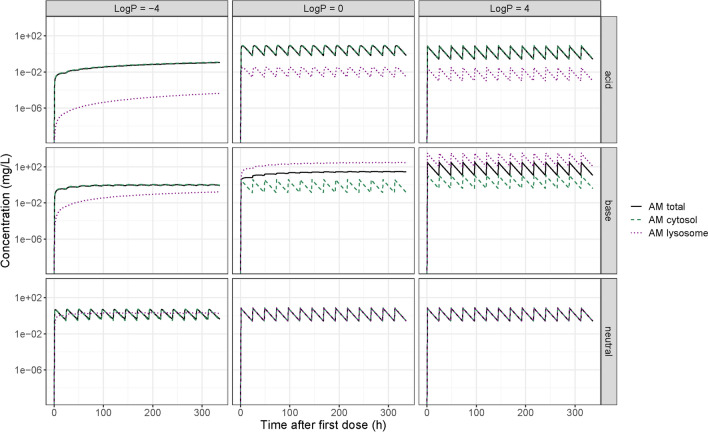
In the absence of drug-specific transport data, our QSPR-based model has generic applicability. Furthermore, we evaluated the impact of drug properties and pathophysiologically related changes on pulmonary pharmacokinetics. Pulmonary pharmacokinetics were highly affected by physiological changes, causing a shift in the main route of diffusion (i.e. paracellular or transcellular). Finally, we show that lysosomal trapping can cause an overestimation of cytosolic concentrations for basic compounds when measuring drug concentrations in cell homogenate.
The developed lung PBPK model framework constitutes a promising tool for characterization of pulmonary exposure of systemically administrated antimicrobials.
预测抗菌药物的靶部位药代动力学对于优化抗菌药物的治疗具有重要意义。本文建立了一种基于生理的药代动力学(PBPK)模型框架,用于预测肺部药代动力学,包括关键的肺部感染部位(即肺泡巨噬细胞和上皮衬液)。
该模型框架纳入了三个肺部 PBPK 模型:一个通用的被动渗透限制模型、一个药物特异性渗透限制模型和一个定量构效关系(QSPR)指导的灌注限制模型。我们将该模型框架应用于三种氟喹诺酮类抗生素。研究发现,纳入实验药物特异性渗透数据对于准确预测至关重要。
在缺乏药物特异性转运数据的情况下,我们的基于 QSPR 的模型具有通用适用性。此外,我们评估了药物性质和与病理生理学相关的变化对肺部药代动力学的影响。肺部药代动力学受生理变化的影响很大,导致扩散的主要途径(即细胞旁或细胞内)发生转移。最后,我们表明,溶酶体捕获可能导致碱性化合物在测量细胞匀浆中的药物浓度时细胞浆浓度的高估。
所开发的肺部 PBPK 模型框架构成了一种有前途的工具,可用于表征系统给予的抗菌药物的肺部暴露情况。