Stachowicz Aneta, Pandey Rakhi, Sundararaman Niveda, Venkatraman Vidya, Van Eyk Jennifer E, Fert-Bober Justyna
Chair of Pharmacology, Jagiellonian University Medical College, Krakow, Poland.
Advanced Clinical Biosystems Research Institute, Smidt Heart Institute, Cedars-Sinai Medical Center, CA, Los Angeles, USA.
J Inflamm (Lond). 2022 Nov 18;19(1):20. doi: 10.1186/s12950-022-00317-8.
Macrophages are effector cells of the innate immune system that undergo phenotypical changes in response to organ injury and repair. These cells are most often classified as proinflammatory M1 and anti-inflammatory M2 macrophages. Protein arginine deiminase (PAD), which catalyses the irreversible conversion of protein-bound arginine into citrulline, is expressed in macrophages. However, the substrates of PAD and its role in immune cells remain unclear. This study aimed to investigate the role of PAD in THP-1 macrophage polarization to the M1 and M2 phenotypes and identify the citrullinated proteins and modified arginines that are associated with this biological switch using mass spectrometry.
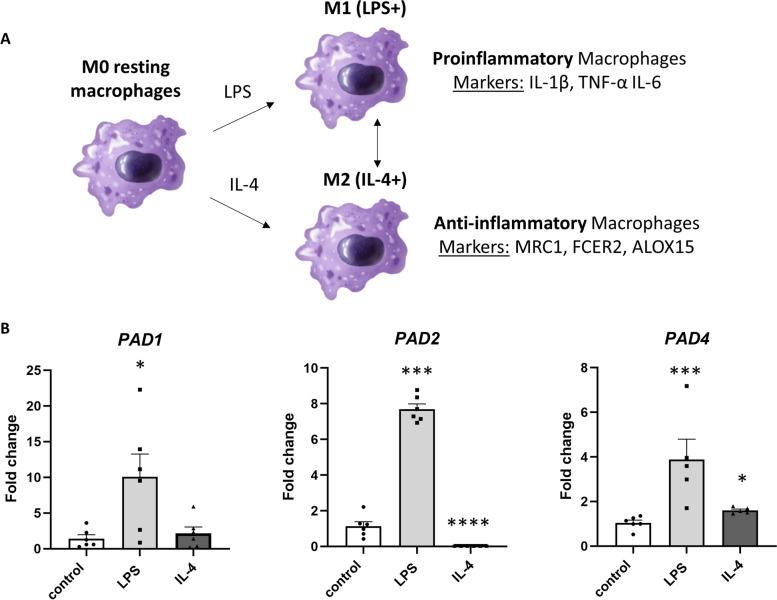
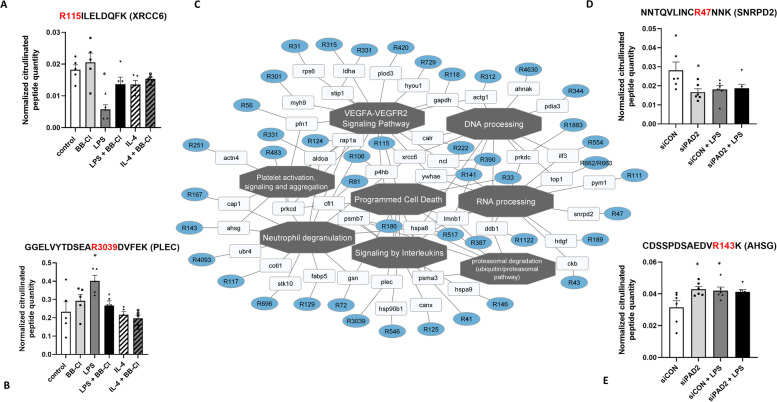
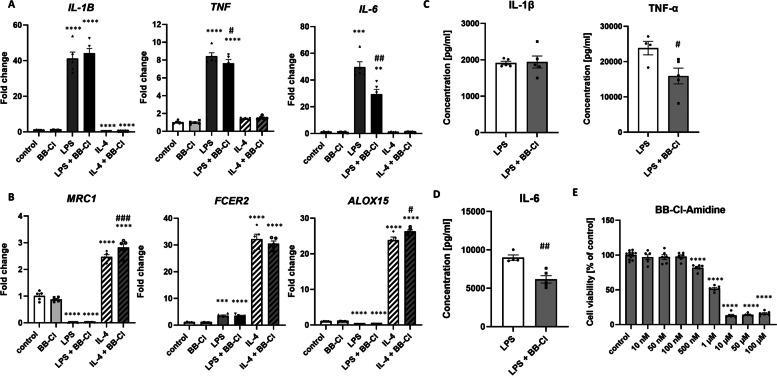
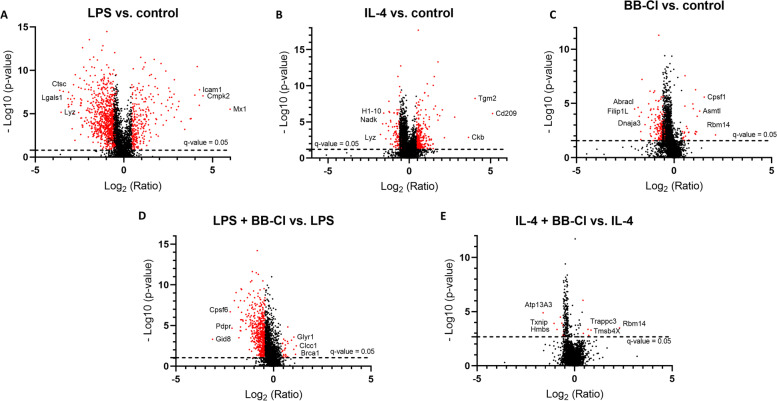
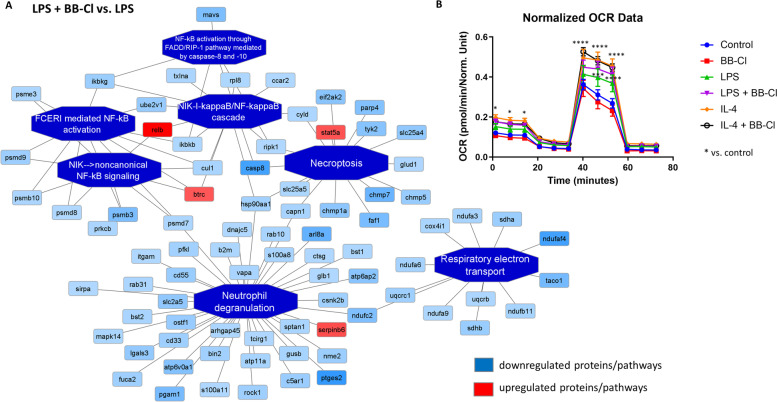
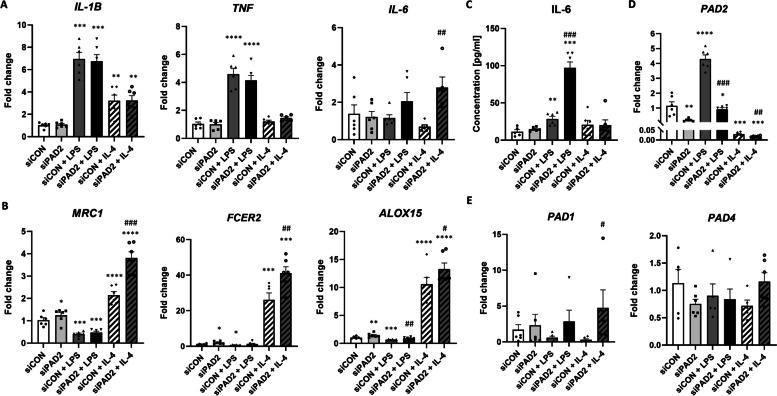
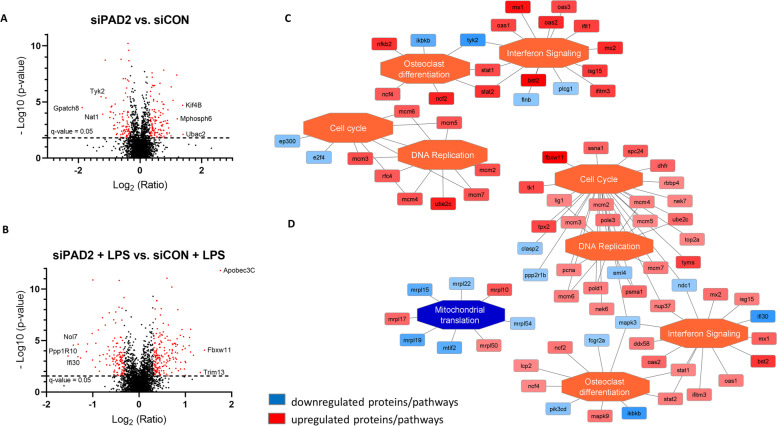
Our study showed that PAD2 and, to a lesser extent, PAD1 and PAD4 were predominantly expressed in M1 macrophages. We showed that inhibiting PAD expression with BB-Cl-amidine decreased macrophage polarization to the M1 phenotype (TNF-α, IL-6) and increased macrophage polarization to the M2 phenotype (MRC1, ALOX15). This process was mediated by the downregulation of proteins involved in the NF-κβ pathway. Silencing PAD2 confirmed the activation of M2 macrophages by increasing the antiviral innate immune response and interferon signalling. A total of 192 novel citrullination sites associated with inflammation, cell death and DNA/RNA processing pathways were identified in M1 and M2 macrophages.
We showed that inhibiting PAD activity using a pharmacological inhibitor or silencing PAD2 with PAD2 siRNA shifted the activation of macrophages towards the M2 phenotype, which can be crucial for designing novel macrophage-mediated therapeutic strategies. We revealed a major citrullinated proteome and its rearrangement following macrophage polarization, which after further validation could lead to significant clinical benefits for the treatment of inflammation and autoimmune diseases.
巨噬细胞是先天性免疫系统的效应细胞,可响应器官损伤和修复而发生表型变化。这些细胞最常被分类为促炎性M1巨噬细胞和抗炎性M2巨噬细胞。蛋白精氨酸脱亚氨酶(PAD)可催化蛋白质结合的精氨酸不可逆地转化为瓜氨酸,在巨噬细胞中表达。然而,PAD的底物及其在免疫细胞中的作用仍不清楚。本研究旨在探讨PAD在THP-1巨噬细胞向M1和M2表型极化中的作用,并使用质谱法鉴定与这种生物学转变相关的瓜氨酸化蛋白和修饰的精氨酸。
我们的研究表明,PAD2以及在较小程度上的PAD1和PAD4主要在M1巨噬细胞中表达。我们发现,用BB-Cl-脒抑制PAD表达可减少巨噬细胞向M1表型(TNF-α、IL-6)的极化,并增加巨噬细胞向M2表型(MRC1、ALOX15)的极化。这一过程是由NF-κβ途径中涉及的蛋白质下调介导的。沉默PAD2通过增强抗病毒先天性免疫反应和干扰素信号传导,证实了M2巨噬细胞的激活。在M1和M2巨噬细胞中总共鉴定出192个与炎症、细胞死亡和DNA/RNA加工途径相关的新瓜氨酸化位点。
我们表明,使用药理学抑制剂抑制PAD活性或用PAD2 siRNA沉默PAD2可使巨噬细胞的激活向M2表型转变,这对于设计新型巨噬细胞介导的治疗策略可能至关重要。我们揭示了一个主要的瓜氨酸化蛋白质组及其在巨噬细胞极化后的重排,经过进一步验证后,这可能会为炎症和自身免疫性疾病的治疗带来显著的临床益处。