Departamento de Bioquímica e Imunologia, Instituto de Ciências Biológicas, Universidade Federal de Minas Gerais, Belo Horizonte, Minas Gerais, Brazil.
Departamento de Genética, Ecologia e Evolução, Programa de Pós-Graduação em Genética, Instituto de Ciências Biológicas, Universidade Federal de Minas Gerais, Belo Horizonte, Minas Gerais, Brazil.
PLoS Pathog. 2021 May 14;17(5):e1009597. doi: 10.1371/journal.ppat.1009597. eCollection 2021 May.
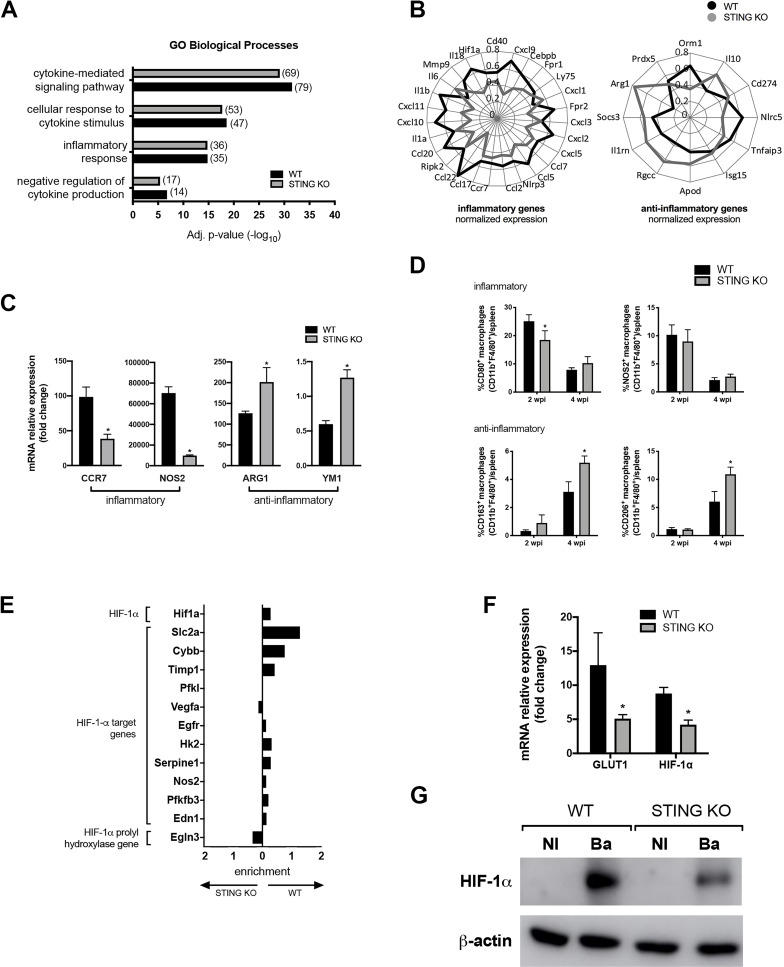
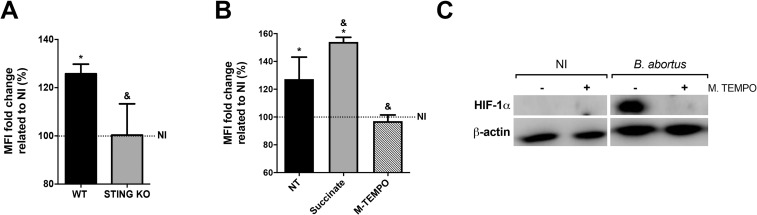
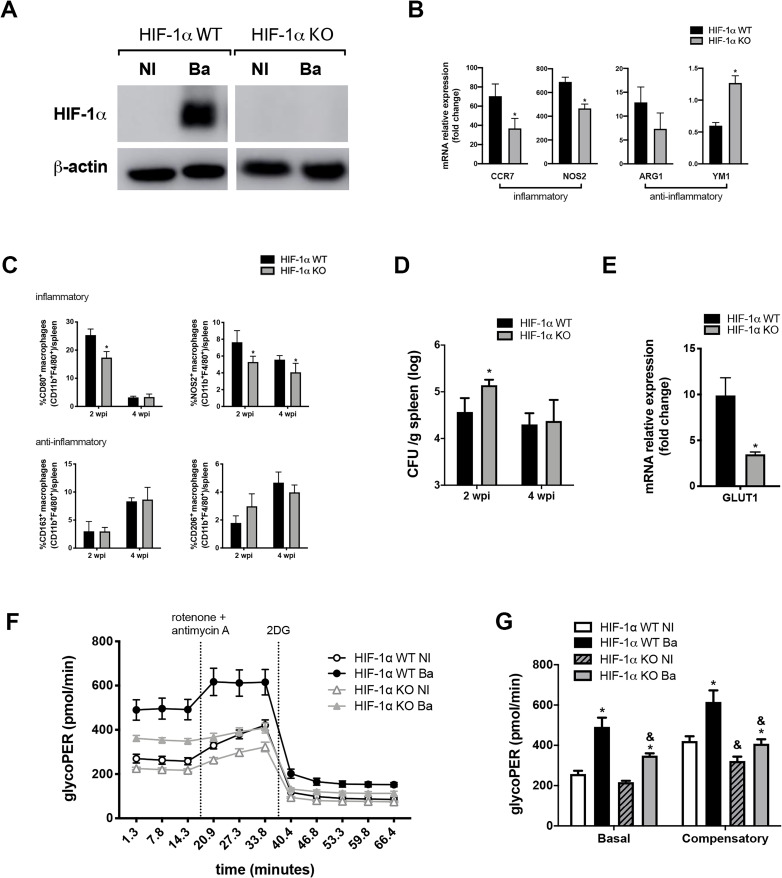
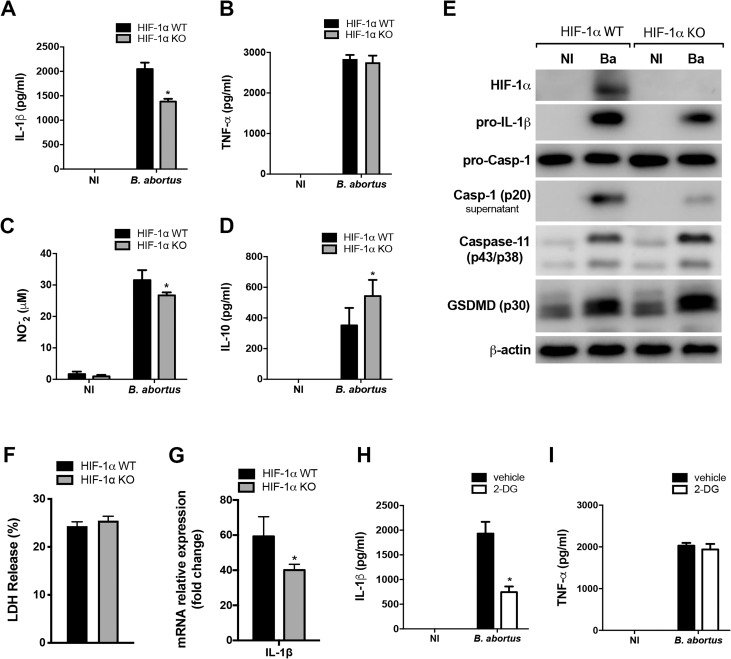
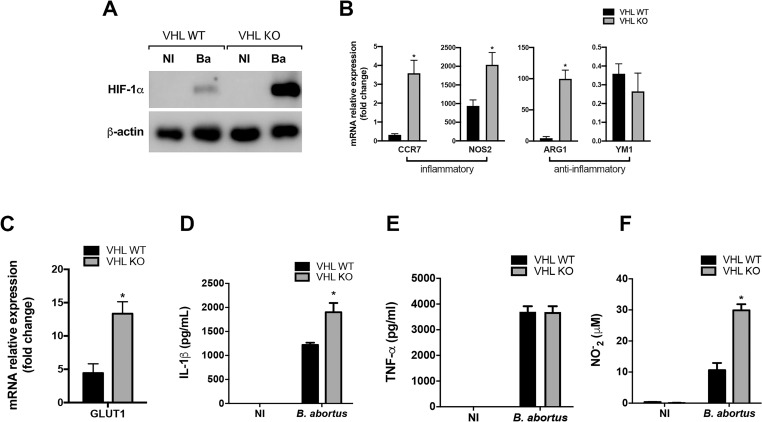
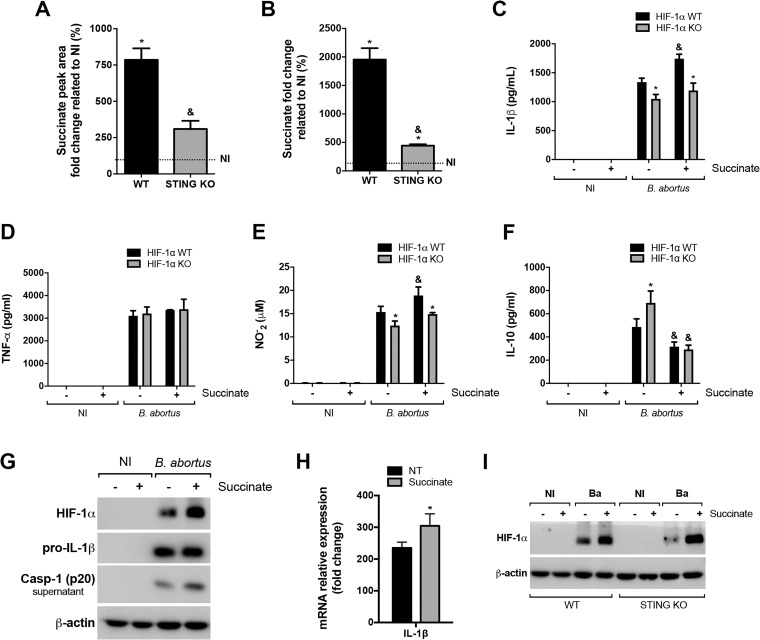
Macrophages metabolic reprogramming in response to microbial insults is a major determinant of pathogen growth or containment. Here, we reveal a distinct mechanism by which stimulator of interferon genes (STING), a cytosolic sensor that regulates innate immune responses, contributes to an inflammatory M1-like macrophage profile upon Brucella abortus infection. This metabolic reprogramming is induced by STING-dependent stabilization of hypoxia-inducible factor-1 alpha (HIF-1α), a global regulator of cellular metabolism and innate immune cell functions. HIF-1α stabilization reduces oxidative phosphorylation and increases glycolysis during infection with B. abortus and, likewise, enhances nitric oxide production, inflammasome activation and IL-1β release in infected macrophages. Furthermore, the induction of this inflammatory profile participates in the control of bacterial replication since absence of HIF-1α renders mice more susceptible to B. abortus infection. Mechanistically, activation of STING by B. abortus infection drives the production of mitochondrial reactive oxygen species (mROS) that ultimately influences HIF-1α stabilization. Moreover, STING increases the intracellular succinate concentration in infected macrophages, and succinate pretreatment induces HIF-1α stabilization and IL-1β release independently of its cognate receptor GPR91. Collectively, these data demonstrate a pivotal mechanism in the immunometabolic regulation of macrophages during B. abortus infection that is orchestrated by STING via HIF-1α pathway and highlight the metabolic reprogramming of macrophages as a potential treatment strategy for bacterial infections.
巨噬细胞对微生物入侵的代谢重编程是决定病原体生长或被控制的主要因素。在这里,我们揭示了一个独特的机制,干扰素基因刺激物(STING)作为一种调节先天免疫反应的细胞溶质传感器,在布鲁氏菌感染时有助于产生炎症性 M1 样巨噬细胞表型。这种代谢重编程是由 STING 依赖性缺氧诱导因子-1α(HIF-1α)稳定诱导的,HIF-1α是细胞代谢和先天免疫细胞功能的全局调节剂。在感染布鲁氏菌时,HIF-1α的稳定会降低氧化磷酸化并增加糖酵解,同样,也会增强一氧化氮的产生、炎性体的激活和感染巨噬细胞中 IL-1β的释放。此外,这种炎症表型的诱导参与了细菌复制的控制,因为 HIF-1α 的缺失使小鼠更容易感染布鲁氏菌。从机制上讲,布鲁氏菌感染激活 STING 会导致线粒体活性氧(mROS)的产生,最终影响 HIF-1α的稳定。此外,STING 增加了感染巨噬细胞中的细胞内琥珀酸浓度,琥珀酸预处理可独立于其同源受体 GPR91 诱导 HIF-1α稳定和 IL-1β释放。总之,这些数据表明,STING 通过 HIF-1α途径在布鲁氏菌感染期间对巨噬细胞的免疫代谢调控中起关键作用,并强调了巨噬细胞的代谢重编程作为细菌感染潜在治疗策略的可能性。