Department of Research, Health Insurance Review and Assessment Service, Wonju, South Korea.
Clin Transl Sci. 2023 Feb;16(2):193-205. doi: 10.1111/cts.13438. Epub 2022 Nov 19.
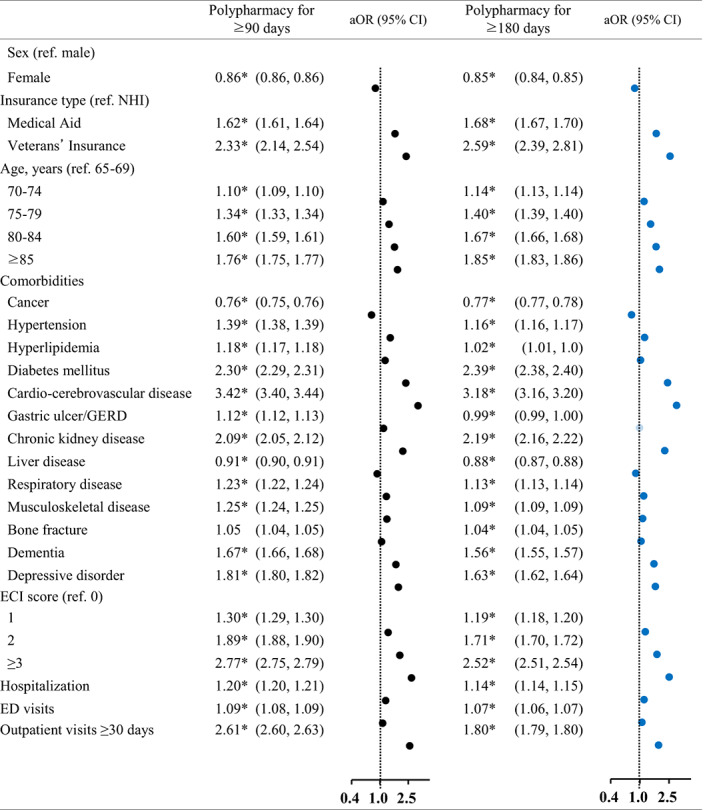
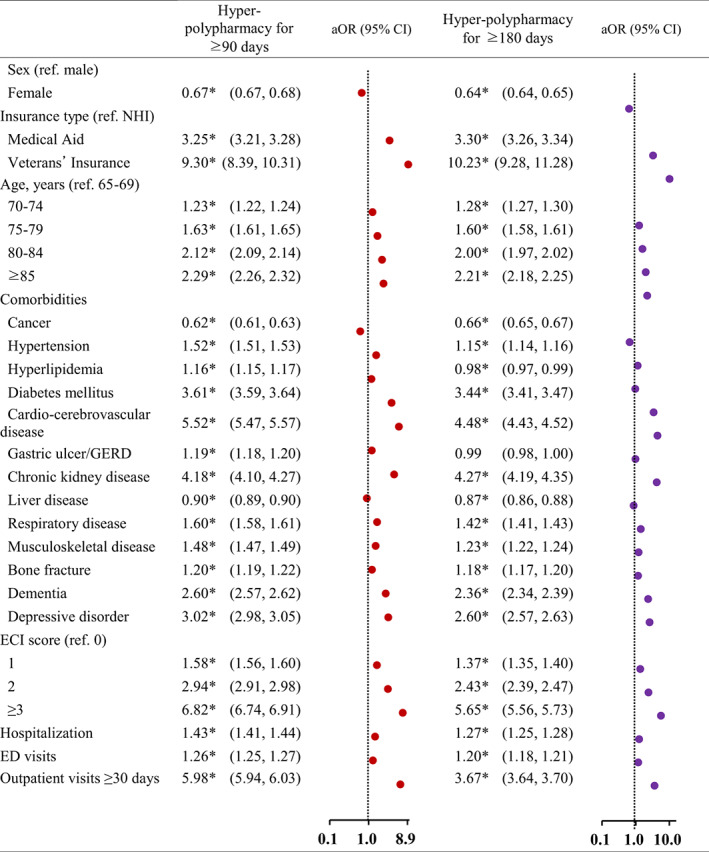
Polypharmacy may cause adverse health outcomes in the elderly. This study examined the prevalence of continuous polypharmacy and hyper-polypharmacy, factors associated with polypharmacy, and the most frequently prescribed medications among older adults in South Korea. This was a retrospective observational study using National Health Insurance claims data. In total, 7,358,953 Korean elderly patients aged 65 years and older were included. Continuous polypharmacy and hyper-polypharmacy were defined as the use of ≥5 and ≥10 medications, respectively, for both ≥90 days and ≥180 days within 1 year. A multivariate logistic regression analysis was conducted with adjustment for general characteristics (sex, age, insurance type), comorbidities (12 diseases, number of comorbidities, and Elixhauser Comorbidity Index [ECI] classification), and healthcare service utilization. Among 7.36 million elderly patients, 47.8% and 36.9% had polypharmacy for ≥90 and ≥180 days, and 11.9% and 7.1% of patients exhibited hyper-polypharmacy for ≥90 and ≥180 days, respectively. Male sex, older age, insurance, comorbidities (cardio-cerebrovascular disease, diabetes mellitus, depressive disorder, dementia, an ECI score of ≥3), and healthcare service utilization were associated with an increased probability of polypharmacy. The therapeutic class with the most prescriptions was drugs for acid-related disorders (ATC A02). The number of outpatient visit days more strongly influenced polypharmacy than hospitalizations and ED visits. This study provides health policymakers with important evidence about the critical need to reduce polypharmacy among older adults.
老年人同时服用多种药物可能会导致健康状况恶化。本研究旨在调查韩国老年人连续用药和超量用药的流行情况、与用药相关的因素,以及最常开给老年人的药物。本研究使用国家健康保险索赔数据进行回顾性观察研究。共纳入 7358953 名 65 岁及以上的韩国老年患者。连续用药和超量用药的定义分别为:在 1 年内,≥90 天和≥180 天内,使用≥5 种和≥10 种药物。通过多变量逻辑回归分析,对一般特征(性别、年龄、保险类型)、合并症(12 种疾病、合并症数量和 Elixhauser 合并症指数 [ECI] 分类)和医疗保健服务利用情况进行了调整。在 736 万名老年患者中,47.8%和 36.9%的患者分别连续用药≥90 天和≥180 天,11.9%和 7.1%的患者超量用药≥90 天和≥180 天。男性、年龄较大、保险、合并症(心脑血管疾病、糖尿病、抑郁障碍、痴呆、ECI 评分≥3)和医疗保健服务的利用与用药概率增加相关。处方最多的治疗类别是酸相关疾病药物(ATC A02)。门诊就诊天数比住院和急诊就诊天数对用药的影响更大。本研究为卫生政策制定者提供了重要证据,表明迫切需要减少老年人的用药种类。