Onn Hui Yi, Sikun Malissa Siao Yun Abdullah, Abdul Rahman Hanif, Dhaliwal Jagjit Singh
PAPRSB Institute of Health Sciences, Universiti Brunei Darussalam, Gadong, Bandar Seri Begawan, BE1410, Brunei Darussalam.
Ministry of Health, Department of Dental Services, Bandar Seri Begawan, Brunei Darussalam.
BDJ Open. 2022 Nov 19;8(1):32. doi: 10.1038/s41405-022-00125-5.
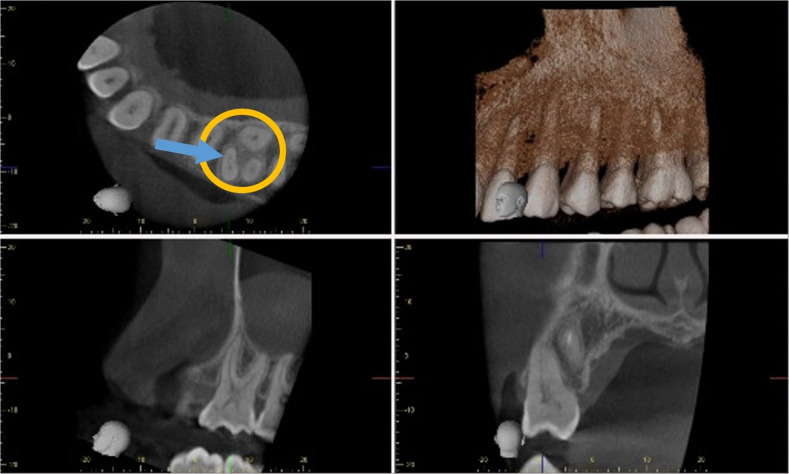
Identification of the second mesiobuccal canal (MB-2) in maxillary molars is considered an endodontic concern of many practitioners due to its complex morphology. The use of Cone-beam Computed Tomography (CBCT) is a necessity for easier location of this elusive canal during endodontic treatment.
To study the prevalence of the MB-2 canal in the maxillary first and second molars amongst the Bruneian population.
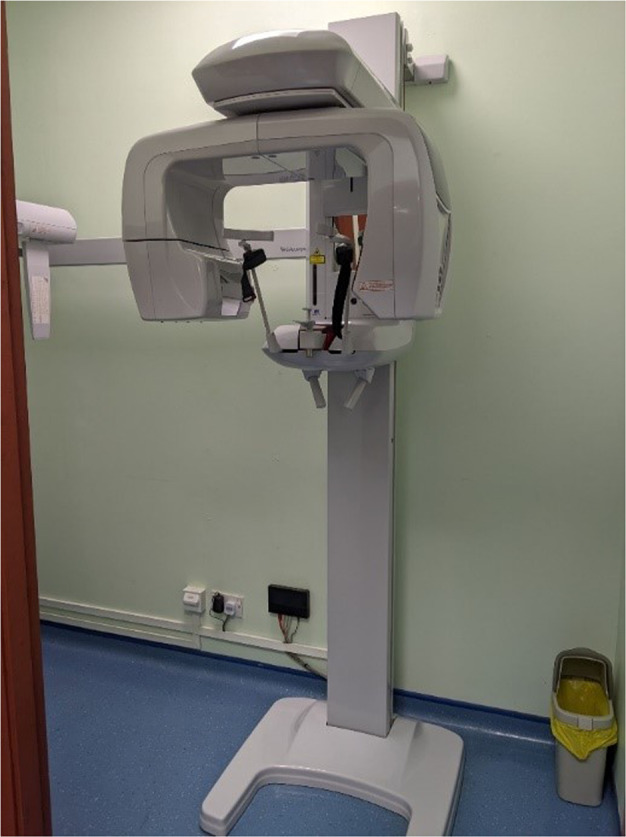
A retrospective study involving a review of scans taken from a CBCT scanner (J Morita; Veraviewepocs 3D R100 Panoramic/Cephalometric) over a 5-year period, from May 2016 to May 2021 was carried out. A total of 342 maxillary molars were evaluated independently by two observers. Any contradicting outcomes were discussed by both observers until a consensus was reached. In addition, the correlation of MB-2 canals with gender and age were calculated using the chi-squared test.
The prevalence of MB-2 canal in the maxillary first and second molars are 51.3% and 29.8% respectively. Both males and females have a similar prevalence of MB-2 canals in the maxillary first and second molars. The incidence of MB-2 canals in both maxillary first and second molars significantly decreases with increasing age. No significant correlation between the prevalence of MB-2 canals with different gender groups in the population.
It is crucial for clinicians to identify the presence of MB-2 canals when performing endodontic treatment of the maxillary first and second molars. Varying prevalence has been reported for different populations. Recognising this wide-ranging prevalence amongst different populations will allow for greater predictability in ensuring endodontic treatment success.
由于上颌磨牙的第二近中颊根管(MB-2)形态复杂,其识别被许多从业者视为牙髓治疗中的一个关注点。在牙髓治疗过程中,使用锥形束计算机断层扫描(CBCT)对于更容易定位这条难以捉摸的根管是必要的。
研究文莱人群上颌第一和第二磨牙中MB-2根管的发生率。
进行了一项回顾性研究,回顾了2016年5月至2021年5月期间使用CBCT扫描仪(J Morita;Veraviewepocs 3D R100全景/头影测量仪)进行的扫描。两位观察者独立评估了总共342颗上颌磨牙。任何有矛盾的结果都由两位观察者进行讨论,直到达成共识。此外,使用卡方检验计算MB-2根管与性别和年龄的相关性。
上颌第一和第二磨牙中MB-2根管的发生率分别为51.3%和29.8%。男性和女性在上颌第一和第二磨牙中MB-2根管的发生率相似。上颌第一和第二磨牙中MB-2根管的发生率均随年龄增长而显著降低。人群中不同性别组的MB-2根管发生率之间无显著相关性。
临床医生在对上颌第一和第二磨牙进行牙髓治疗时识别MB-2根管的存在至关重要。不同人群的发生率有所不同。认识到不同人群中这种广泛的发生率将有助于在确保牙髓治疗成功方面提高可预测性。