Mackie Tamara, Al Turkestani Najla, Bianchi Jonas, Li Tengfei, Ruellas Antonio, Gurgel Marcela, Benavides Erika, Soki Fabiana, Cevidanes Lucia
Department of Orthodontics and Pediatric Dentistry, University of Michigan, Ann Arbor, MI, United States.
Department of Restorative and Aesthetic Dentistry, Faculty of Dentistry, King Abdulaziz University, Jeddah, Saudi Arabia.
Front Dent Med. 2022;3. doi: 10.3389/fdmed.2022.1007011. Epub 2022 Sep 19.
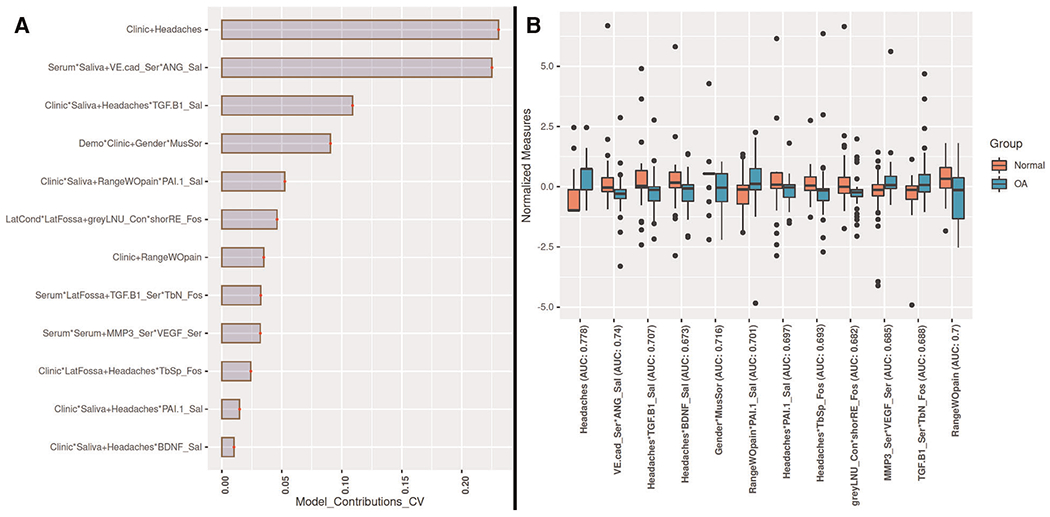
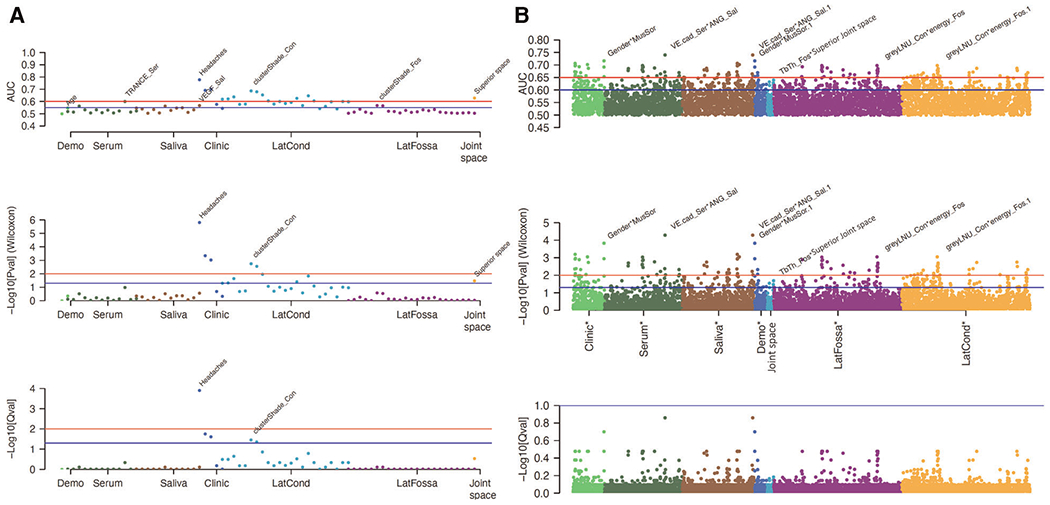
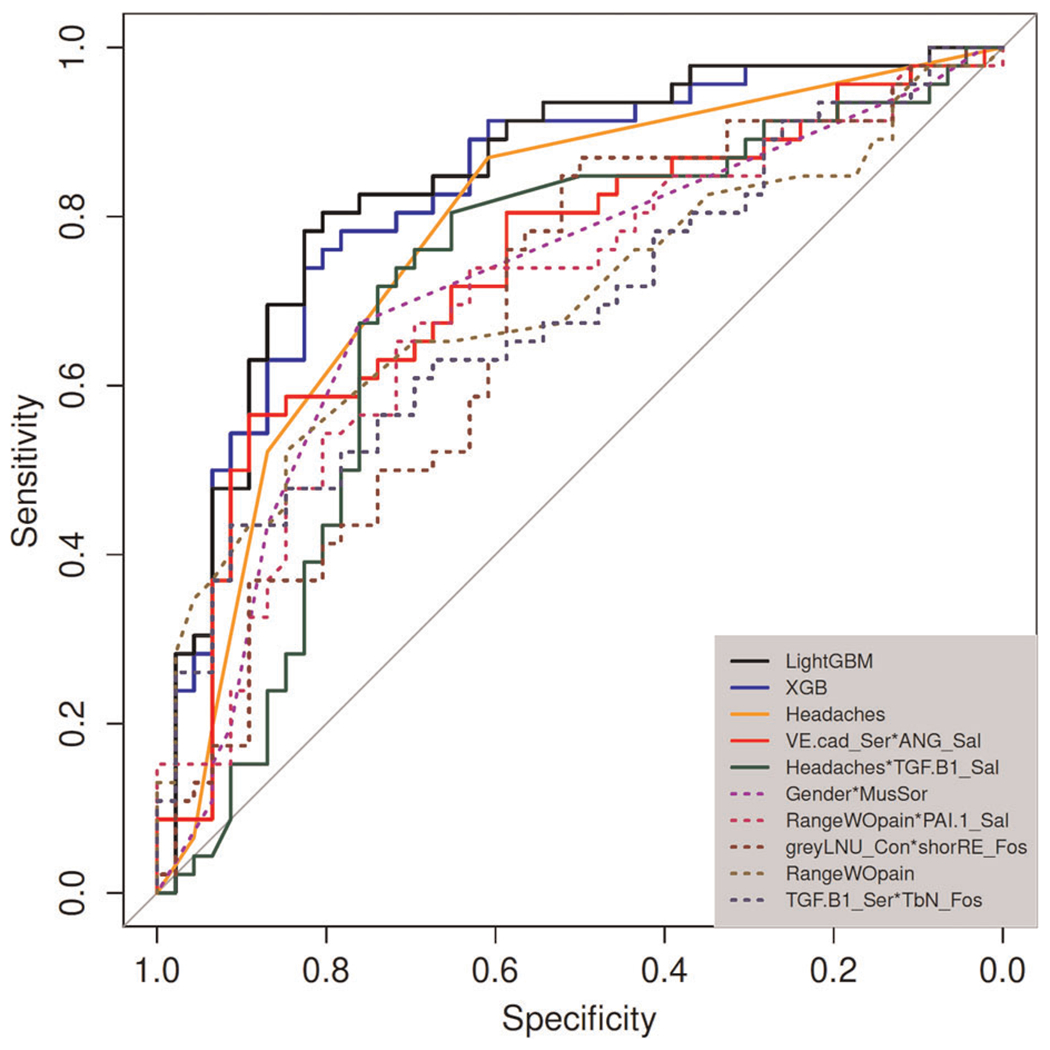
Temporomandibular joint osteoarthritis (TMJ OA) is a disease with a multifactorial etiology, involving many pathophysiological processes, and requiring comprehensive assessments to characterize progressive cartilage degradation, subchondral bone remodeling, and chronic pain. This study aimed to integrate quantitative biomarkers of bone texture and morphometry of the articular fossa and joint space to advance the role of imaging phenotypes for diagnosis of Temporomandibular Joint Osteoarthritis (TMJ OA) in early to moderate stages by improving the performance of machine-learning algorithms to detect TMJ OA status. Ninety-two patients were prospectively enrolled (184 h-CBCT scans of the right and left mandibular condyles), divided into two groups: 46 control and 46 TMJ OA subjects. No significant difference in the articular fossa radiomic biomarkers was found between TMJ OA and control patients. The superior condyle-to-fossa distance ( < 0.05) was significantly smaller in diseased patients. The interaction effects of the articular fossa radiomic biomarkers enhanced the performance of machine-learning algorithms to detect TMJ OA status. The LightGBM model achieved an AUC 0.842 to diagnose the TMJ OA status with Headaches and Range of Mouth Opening Without Pain ranked as top features, and top interactions of VE-cadherin in Serum and Angiogenin in Saliva, TGF-1 in Saliva and Headaches, Gender and Muscle Soreness, PA1 in Saliva and Range of Mouth Opening Without Pain, Lateral Condyle Grey Level Non-Uniformity and Lateral Fossa Short Run Emphasis, TGF-1 in Serum and Lateral Fossa Trabeculae number, MMP3 in Serum and VEGF in Serum, Headaches and Lateral Fossa Trabecular spacing, Headaches and PA1 in Saliva, and Headaches and BDNF in Saliva. Our preliminary results indicate that condyle imaging features may be more important in regards to main effects, but the fossa imaging features may have a larger contribution in terms of interaction effects. More studies are needed to optimize and further enhance machine-learning algorithms to detect early markers of disease, improve prediction of disease progression and severity to ultimately better serve clinical decision support systems in the treatment of patients with TMJ OA.
颞下颌关节骨关节炎(TMJ OA)是一种病因多因素的疾病,涉及许多病理生理过程,需要进行全面评估以表征软骨的渐进性退化、软骨下骨重塑和慢性疼痛。本研究旨在整合关节窝和关节间隙的骨纹理及形态计量学的定量生物标志物,通过提高机器学习算法检测颞下颌关节骨关节炎(TMJ OA)状态的性能,来推进成像表型在早期至中期颞下颌关节骨关节炎(TMJ OA)诊断中的作用。前瞻性纳入了92例患者(对左右下颌髁突进行了184次高分辨率锥形束计算机断层扫描),分为两组:46例对照者和46例TMJ OA患者。TMJ OA患者与对照患者之间在关节窝的放射组学生物标志物方面未发现显著差异。患病患者的髁突至关节窝距离(<0.05)显著更小。关节窝放射组学生物标志物的相互作用效应提高了机器学习算法检测TMJ OA状态的性能。LightGBM模型诊断TMJ OA状态的AUC为0.842,其中头痛和无痛开口范围被列为首要特征,血清中血管内皮钙黏蛋白与唾液中血管生成素、唾液中转化生长因子 -1与头痛、性别与肌肉酸痛、唾液中PA1与无痛开口范围、外侧髁突灰度不均匀性与外侧关节窝短程强调、血清中转化生长因子 -1与外侧关节窝骨小梁数量、血清中基质金属蛋白酶3与血清中血管内皮生长因子、头痛与外侧关节窝骨小梁间距、头痛与唾液中PA1、头痛与唾液中脑源性神经营养因子之间的顶级相互作用。我们的初步结果表明,就主要效应而言,髁突成像特征可能更重要,但就相互作用效应而言,关节窝成像特征可能有更大贡献。需要更多研究来优化并进一步增强机器学习算法,以检测疾病的早期标志物,改善疾病进展和严重程度的预测,最终更好地服务于TMJ OA患者治疗中的临床决策支持系统。