
线粒体拓扑异构酶 1 抑制导致慢性病毒感染患者的拓扑 DNA 损伤和 T 细胞功能障碍。
Mitochondrial topoisomerase 1 inhibition induces topological DNA damage and T cell dysfunction in patients with chronic viral infection.
机构信息
Center of Excellence in Inflammation, Infectious Disease and Immunity, Quillen College of Medicine, East Tennessee State University, Johnson, TN, United States.
Division of Infectious, Inflammatory and Immunologic Diseases, Department of Internal Medicine, Quillen College of Medicine, ETSU, Johnson, TN, United States.
出版信息
Front Cell Infect Microbiol. 2022 Nov 3;12:1026293. doi: 10.3389/fcimb.2022.1026293. eCollection 2022.
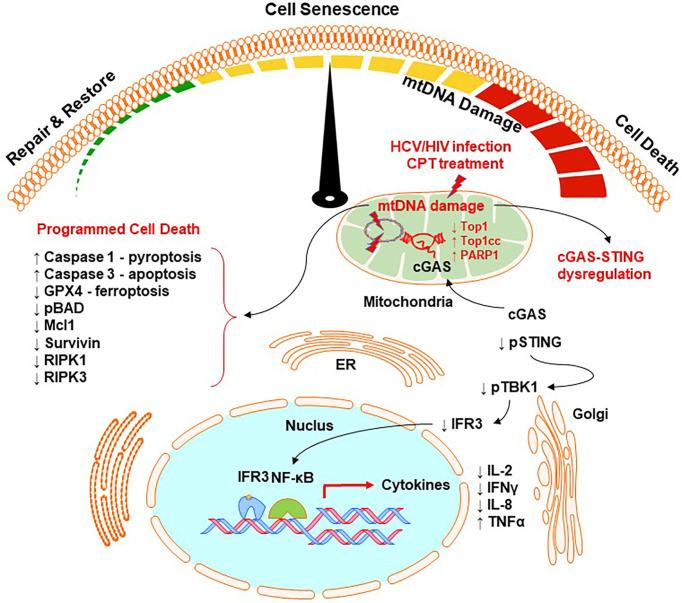
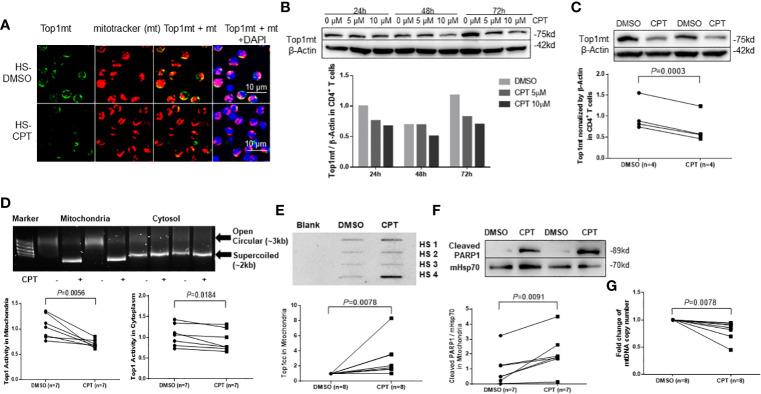
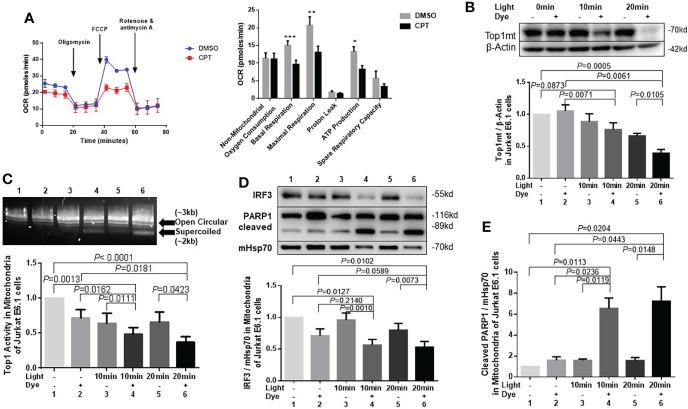
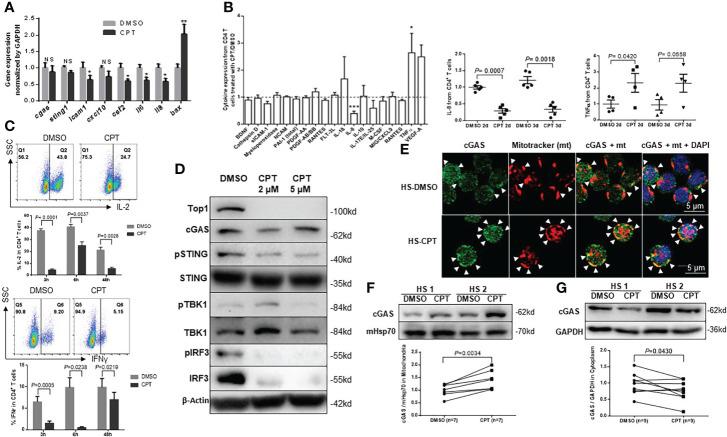
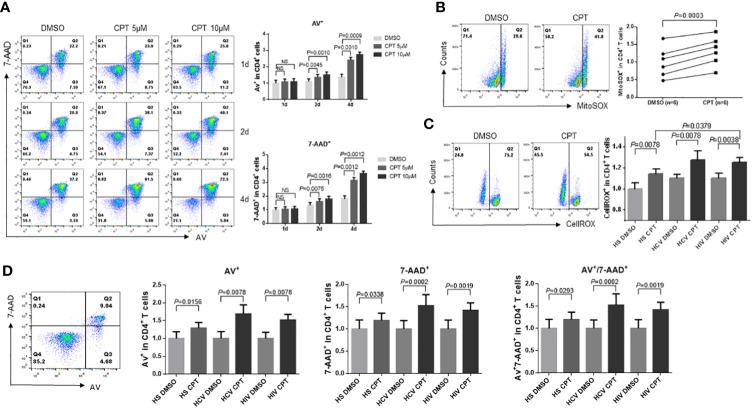
T cells are crucial for controlling viral infections; however, the mechanisms that dampen their responses during viral infections remain incompletely understood. Here, we studied the role and mechanisms of mitochondrial topoisomerase 1 (Top1mt) inhibition in mitochondrial dysfunction and T cell dysregulation using CD4 T cells from patients infected with HCV or HIV and compared it with CD4 T cells from healthy individuals following treatment with Top1 inhibitor - camptothecin (CPT). We found that Top1mt protein levels and enzymatic activity are significantly decreased, along with Top1 cleavage complex (Top1cc) formation, in mitochondria of CD4 T cells from HCV- and HIV-infected patients. Notably, treatment of healthy CD4 T cells with CPT caused similar changes, including inhibition of Top1mt, accumulation of Top1cc in mitochondria, increase in PARP1 cleavage, and decrease in mtDNA copy numbers. These molecular changes resulted in mitochondrial dysfunction, T cell dysregulation, and programmed cell death through multiple signaling pathways, recapitulating the phenotype we detected in CD4 T cells from HCV- and HIV-infected patients. Moreover, treatment of CD4 T cells from HCV or HIV patients with CPT further increased cellular and mitochondrial reactive oxygen species (ROS) production and cell apoptosis, demonstrating a critical role for Top1 in preventing mtDNA damage and cell death. These results provide new insights into the molecular mechanisms underlying immune dysregulation during viral infection and indicate that Top1 inhibition during chronic HCV or HIV infection can induce mtDNA damage and T cell dysfunction. Thus, reconstituting Top1mt protein may restore the mtDNA topology and T cell functions in humans with chronic viral infection.
T 细胞对于控制病毒感染至关重要;然而,其在病毒感染期间抑制反应的机制仍不完全清楚。在这里,我们研究了使用 HCV 或 HIV 感染患者的 CD4 T 细胞,以及与健康个体的 CD4 T 细胞进行比较后,线粒体拓扑异构酶 1(Top1mt)抑制在线粒体功能障碍和 T 细胞失调中的作用和机制,采用 Top1 抑制剂喜树碱(CPT)处理。我们发现,HCV 和 HIV 感染患者的 CD4 T 细胞中线粒体中的 Top1mt 蛋白水平和酶活性显著降低,同时 Top1 切割复合物(Top1cc)形成也降低。值得注意的是,CPT 处理健康的 CD4 T 细胞也会引起类似的变化,包括 Top1mt 抑制、Top1cc 在线粒体中的积累、PARP1 切割增加和 mtDNA 拷贝数减少。这些分子变化导致线粒体功能障碍、T 细胞失调和程序性细胞死亡,通过多种信号通路,再现了我们在 HCV 和 HIV 感染患者的 CD4 T 细胞中检测到的表型。此外,CPT 处理 HCV 或 HIV 患者的 CD4 T 细胞进一步增加了细胞和线粒体活性氧(ROS)的产生和细胞凋亡,表明 Top1 在防止 mtDNA 损伤和细胞死亡方面发挥着关键作用。这些结果为病毒感染期间免疫失调的分子机制提供了新的见解,并表明慢性 HCV 或 HIV 感染期间的 Top1 抑制会诱导 mtDNA 损伤和 T 细胞功能障碍。因此,重建 Top1mt 蛋白可能会恢复慢性病毒感染患者的 mtDNA 拓扑结构和 T 细胞功能。


 Zotero 插件