Bélanger Sébastien, Baldrich Patricia, Lemay Marc-André, Marchand Suzanne, Esteves Patricio, Meyers Blake C, Belzile François
Département de phytologie and Institut de biologie intégrative et des systèmes Université Laval Québec City Québec Canada.
Donald Danforth Plant Science Center St. Louis MO USA.
Plant Direct. 2020 Dec 8;4(12):e00289. doi: 10.1002/pld3.289. eCollection 2020 Dec.
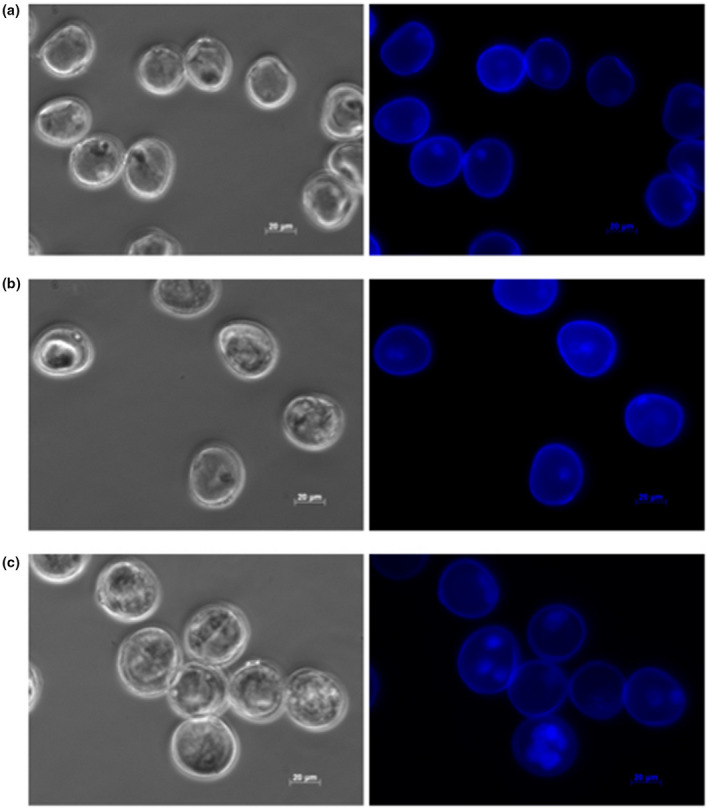
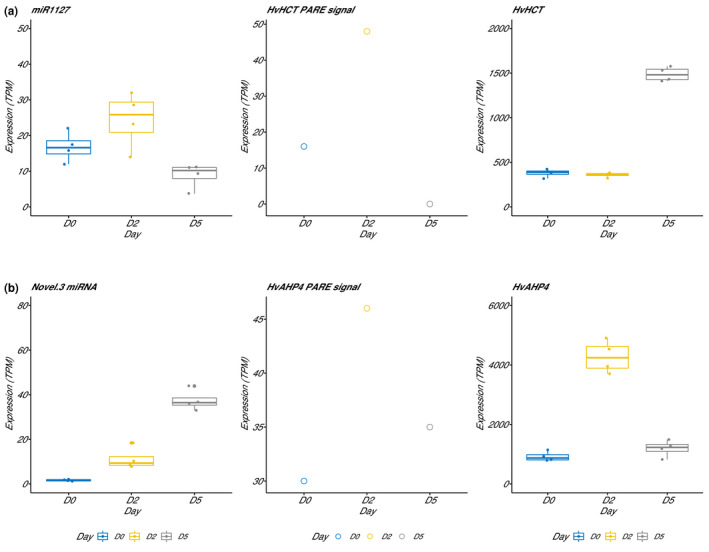
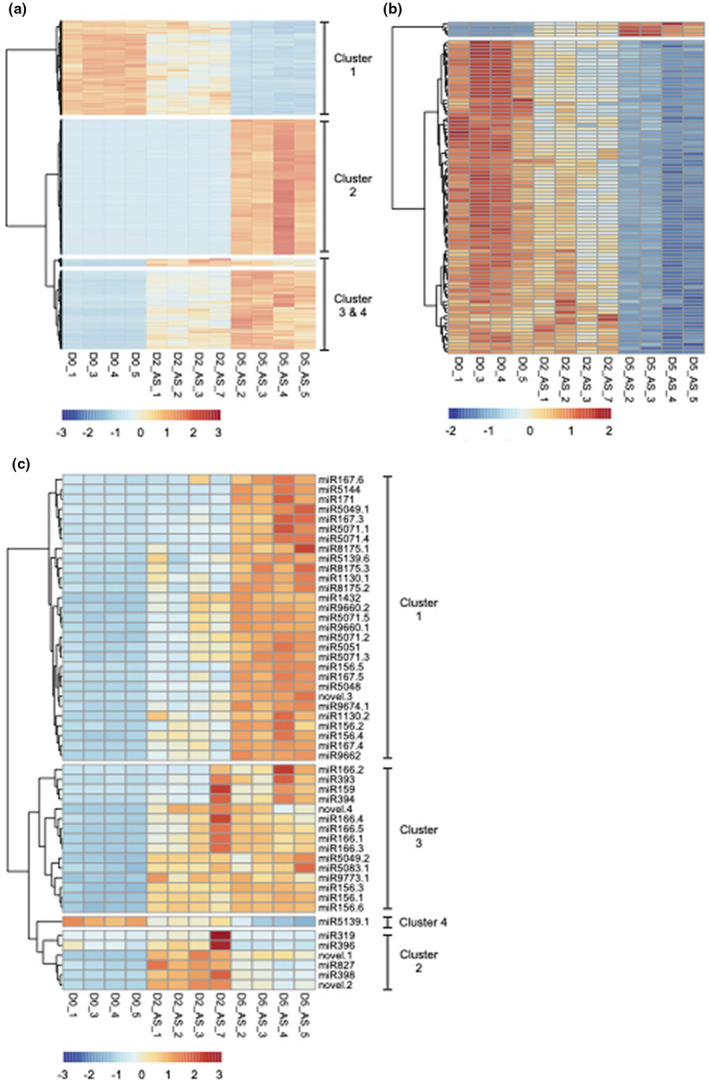
Microspore embryogenesis is a model for developmental plasticity and cell fate decisions. To investigate the role of miRNAs in this development, we sequenced sRNAs and the degradome of barley microspores collected prior to (day 0) and after (days 2 and 5) the application of a stress treatment known to induce embryogenesis. Microspores isolated at these timepoints were uniform in both appearance and in their complements of sRNAs. We detected 68 miRNAs in microspores. The abundance of 51 of these miRNAs differed significantly during microspore development. One group of miRNAs was induced when the stress treatment was applied, prior to being repressed when microspores transitioned to embryogenesis. Another group of miRNAs were up-regulated in day-2 microspores and their abundance remained stable or increased in day-5 microspores, a timepoint at which the first clear indications of the transition toward embryogenesis were visible. Collectively, these miRNAs might play a role in the modulation of the stress response, the repression of gametic development, and/or the gain of embryogenic potential. A degradome analysis allowed us to validate the role of miRNAs in regulating 41 specific transcripts. We showed that the transition of microspores toward the embryogenesis pathway involves miRNA-directed regulation of members of the , , and transcription factor families. We noted that 41.5% of these targets were shared between day-2 and day-5 microspores while 26.8% were unique to day-5 microspores. The former set may act to disrupt transcripts involved in pollen development while the latter set may drive the commitment to embryogenesis.
小孢子胚胎发生是发育可塑性和细胞命运决定的一个模型。为了研究miRNA在这一发育过程中的作用,我们对在施加已知可诱导胚胎发生的胁迫处理之前(第0天)和之后(第2天和第5天)收集的大麦小孢子的小RNA和降解组进行了测序。在这些时间点分离的小孢子在外观和小RNA组成上都是一致的。我们在小孢子中检测到68种miRNA。其中51种miRNA的丰度在小孢子发育过程中存在显著差异。一组miRNA在施加胁迫处理时被诱导,在小孢子转变为胚胎发生时被抑制。另一组miRNA在第2天的小孢子中上调,其丰度在第5天的小孢子中保持稳定或增加,在第5天可以看到向胚胎发生转变的第一个明显迹象。总的来说,这些miRNA可能在应激反应的调节、配子发育的抑制和/或胚胎发生潜能的获得中发挥作用。降解组分析使我们能够验证miRNA在调节41个特定转录本中的作用。我们表明,小孢子向胚胎发生途径的转变涉及miRNA对 、 、 和 转录因子家族成员的定向调控。我们注意到,这些靶标中有41.5%在第2天和第5天的小孢子之间共享,而26.8%是第5天的小孢子所特有的。前一组可能作用于破坏参与花粉发育的转录本,而后一组可能驱动对胚胎发生的定向。