Ratnaningsih Enny, Sukandar Sarah I, Putri Rindia M, Kadja Grandprix T M, Wenten I Gede
Biochemistry Division, Faculty of Mathematics and Natural Sciences, Institut Teknologi Bandung, Jalan Ganesha No.10, Bandung 40132, Indonesia.
Division of Inorganic and Physical Chemistry, Faculty of Mathematics and Natural Sciences, Institut Teknologi Bandung, Jalan Ganesha No.10, Bandung 40132, Indonesia.
Heliyon. 2022 Nov 9;8(11):e11546. doi: 10.1016/j.heliyon.2022.e11546. eCollection 2022 Nov.
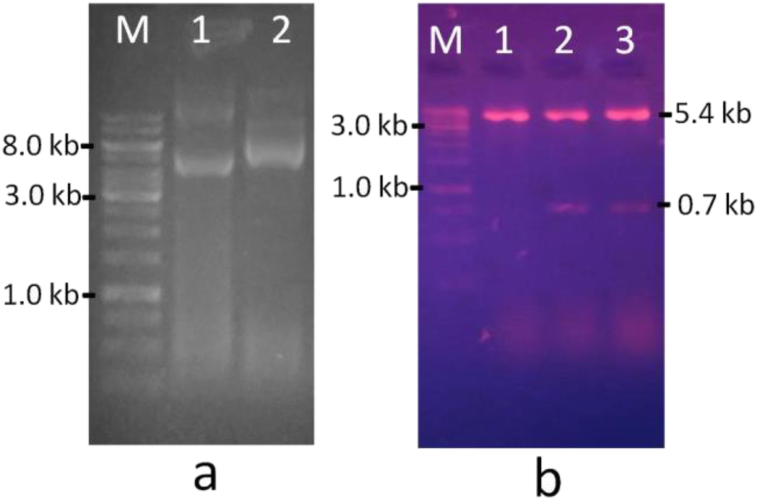
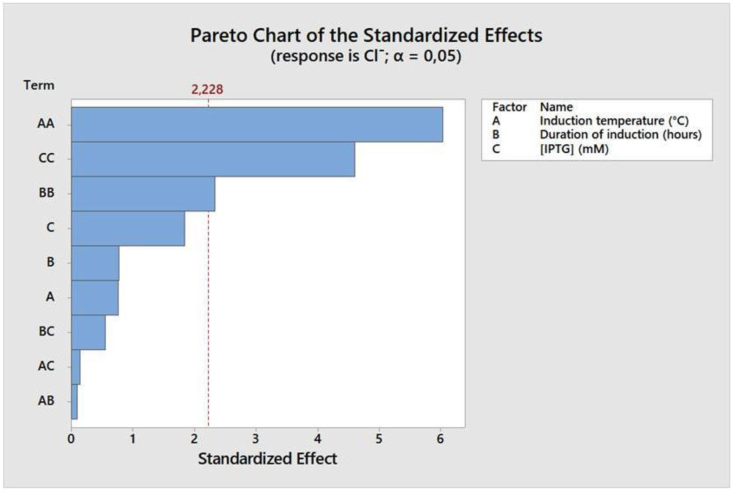
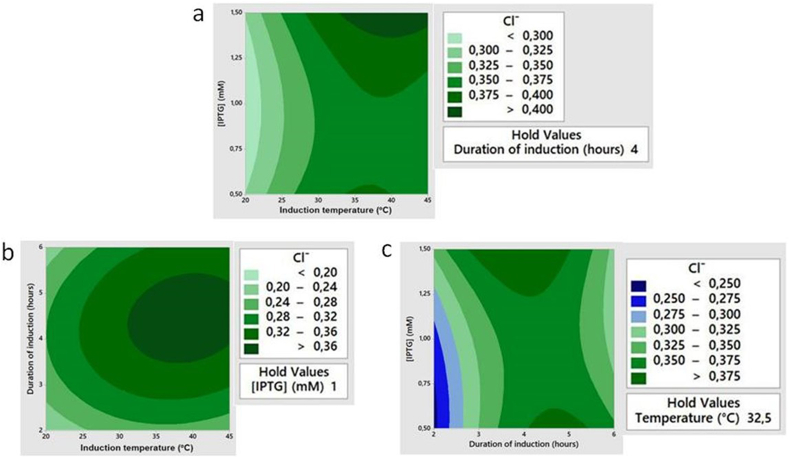
Organohalogens, including monochloroacetic acid (MCA), are abundantly synthesized compounds for various industrial purposes. MCA is widely used as a raw material or as an intermediate compound for the production of pesticides, herbicides, fungicides, plastics, surfactants, shampoos, liquid soaps, and emulsion agents. Nonetheless, widespread and large-scale utilization of organohalogens might negatively impact life quality as these compounds are toxic to organisms and persistently present in the environment. An effort to decrease the effect of MCA pollutant is by performing bioremediation, taking advantage of microorganisms that produce haloacid dehalogenases, a class of enzymes that catalyze the breakage of carbon halogen bonds. In this sense, we have isolated ITB1 that could degrade MCA. The haloacid dehalogenase gene from this bacterium has been successfully cloned into pGEM- and subcloned into pET-30a(+) expression vector to yield pET- recombinant clone in BL21 (DE) host cell. This research aimed to find an optimum condition for producing haloacid dehalogenase from this recombinant clone using Response Surface Methodology (RSM). Among the independent variables studied were the concentration of inducer, incubation temperature after the induction, and incubation period after the induction. We obtained the crude extract of the enzyme as cells' lysate after sonicating the bacterial cells. Haloacid dehalogenase activity against MCA substrate was determined by measuring the amount of chloride ions released into the medium of the enzymatic reaction using the colorimetry method, according to Bergmann and Sanik. The result indicated that the optimum condition for haloacid dehalogenase production by BL21 (DE3)/pET- was observed when using 1.8 mM IPTG (isopropyl-β-D-1-thiogalactopyranoside) as the inducer, followed by 4 h incubation with shaking at 37 °C, which was predicted to result in a maximum of 0.48 mM chloride ions from 0.50 mM of MCA substrate. This report provides an insight into applying RSM for optimization of enzyme production from recombinant clones.
有机卤化物,包括一氯乙酸(MCA),是为各种工业目的大量合成的化合物。MCA被广泛用作生产农药、除草剂、杀菌剂、塑料、表面活性剂、洗发水、液体肥皂和乳化剂的原料或中间化合物。尽管如此,有机卤化物的广泛和大规模使用可能会对生活质量产生负面影响,因为这些化合物对生物体有毒,并持续存在于环境中。减少MCA污染物影响的一种方法是进行生物修复,利用产生卤酸脱卤酶的微生物,卤酸脱卤酶是一类催化碳卤键断裂的酶。从这个意义上说,我们分离出了能够降解MCA的ITB1。来自这种细菌的卤酸脱卤酶基因已成功克隆到pGEM-中,并亚克隆到pET-30a(+)表达载体中,以在BL21(DE)宿主细胞中产生pET重组克隆。本研究旨在使用响应面法(RSM)找到从该重组克隆生产卤酸脱卤酶的最佳条件。所研究的自变量包括诱导剂浓度、诱导后的孵育温度和诱导后的孵育时间。在对细菌细胞进行超声处理后,我们获得了作为细胞裂解物的酶粗提物。根据伯格曼和萨尼克的方法,通过比色法测量释放到酶促反应介质中的氯离子量,来测定卤酸脱卤酶对MCA底物的活性。结果表明,当使用1.8 mM异丙基-β-D-1-硫代半乳糖苷(IPTG)作为诱导剂,随后在37°C下振荡孵育4小时时,观察到BL21(DE3)/pET-生产卤酸脱卤酶的最佳条件,预计这将从0.50 mM的MCA底物中产生最多0.48 mM的氯离子。本报告提供了关于应用RSM优化重组克隆酶生产的见解。