Song Haiyan, Liu Junhong, Chen Chaoqun, Zhang Yao, Tang Wenjing, Yang Wenlong, Chen Hongxu, Li Mengyao, Jiang Guoliang, Sun Shuxia, Li Jing, Tu Meiyan, Wang Lingli, Xu Zihong, Gong Ronggao, Chen Dong
College of Horticulture, Sichuan Agricultural University, Chengdu, China.
Horticulture Research Institute, Sichuan Academy of Agricultural Sciences, Chengdu, China.
Front Plant Sci. 2022 Nov 3;13:1055779. doi: 10.3389/fpls.2022.1055779. eCollection 2022.
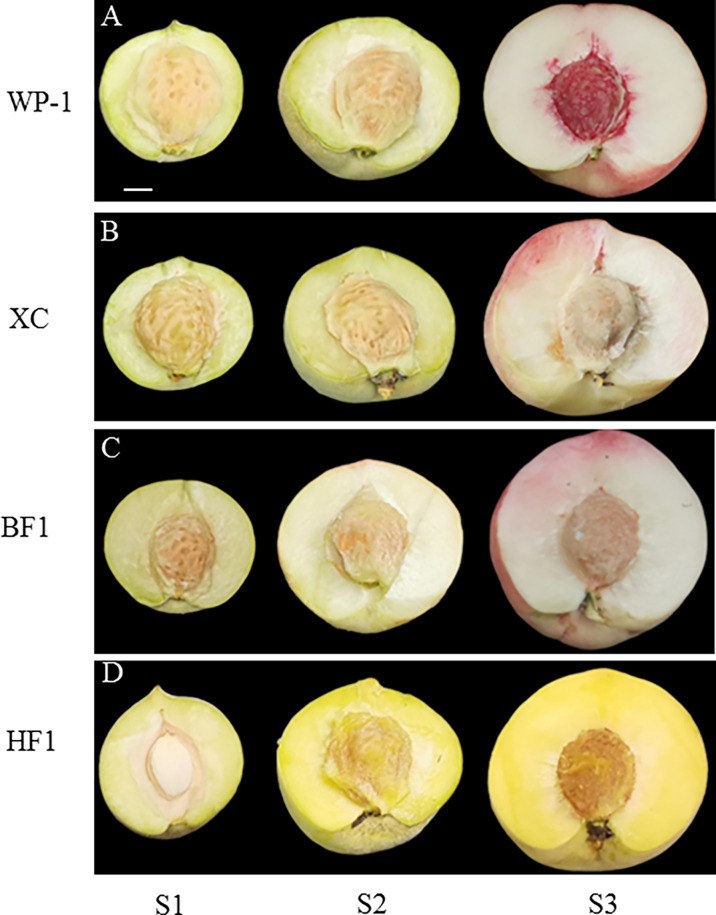
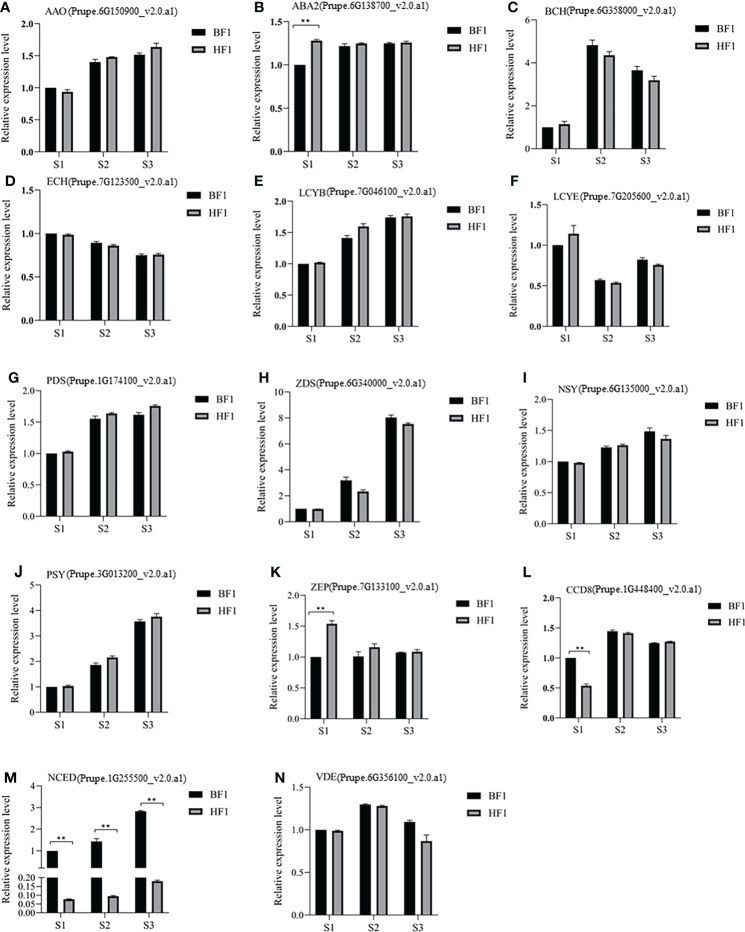
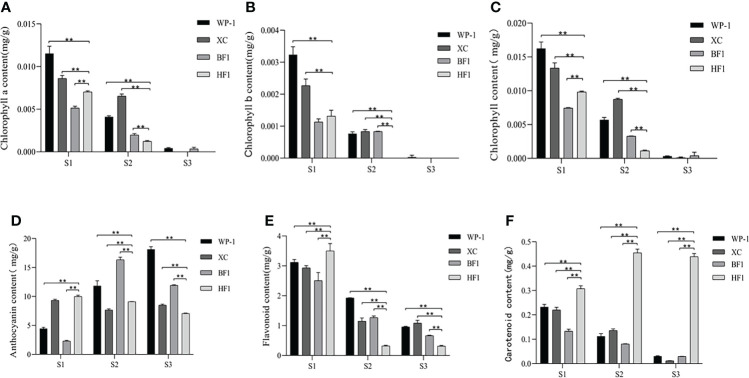
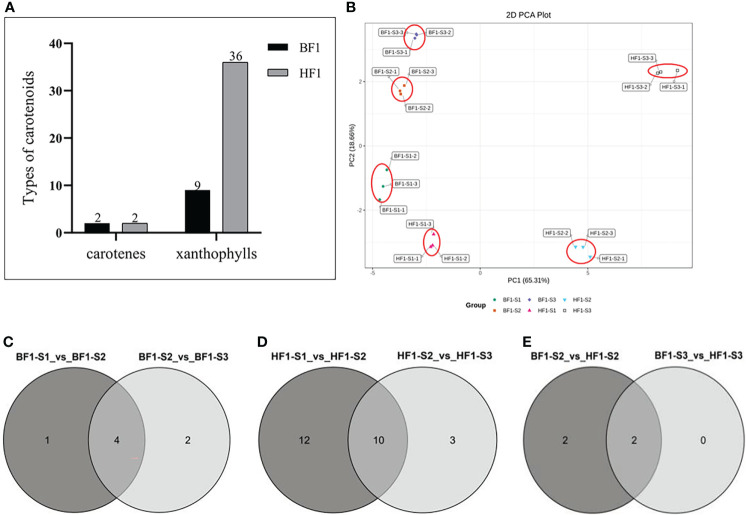
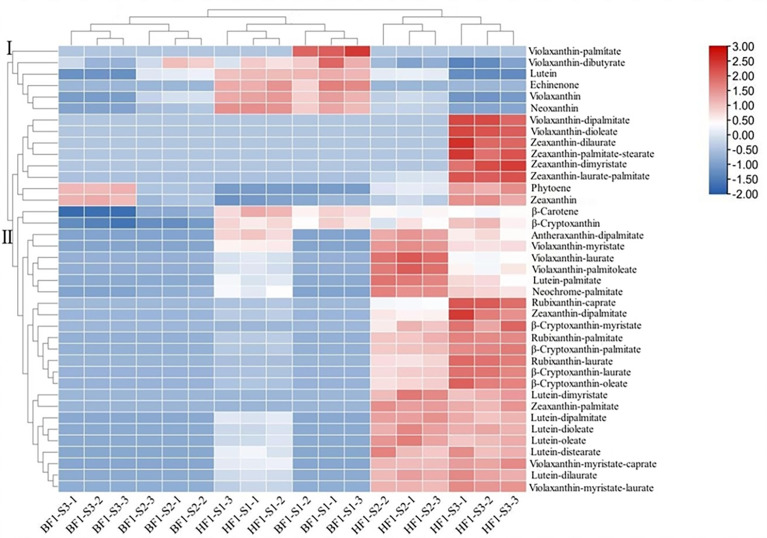
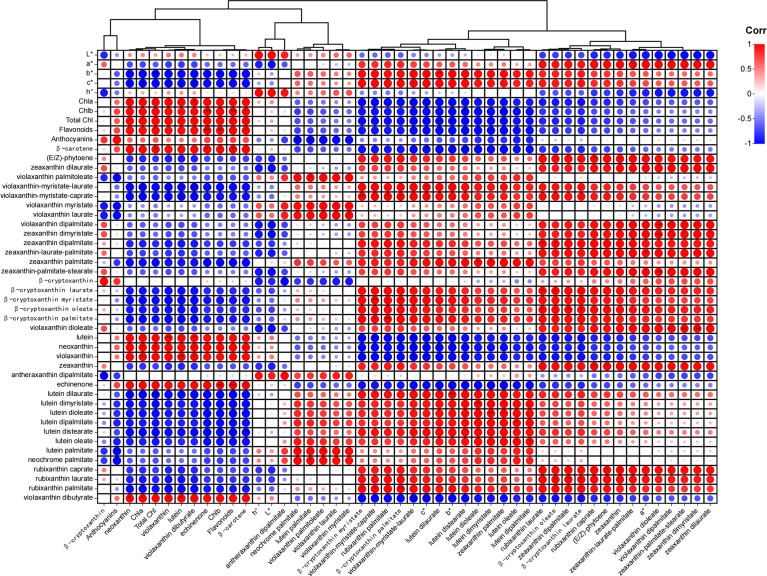
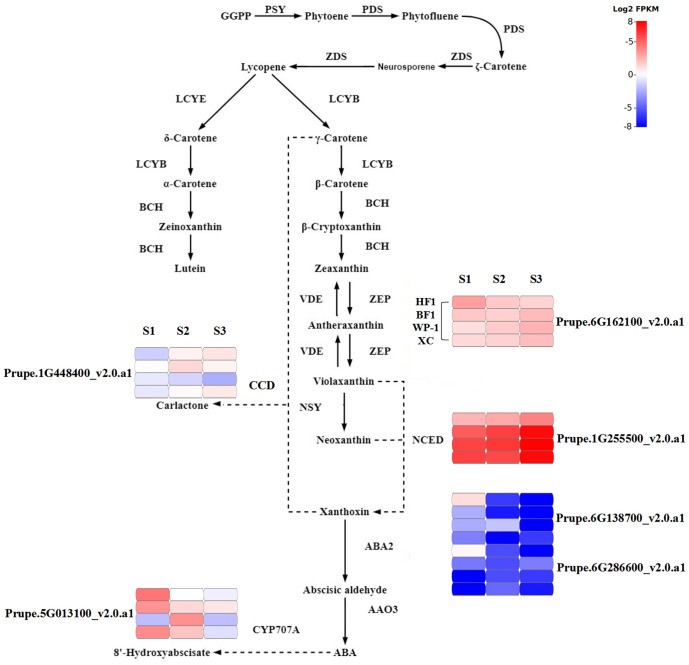
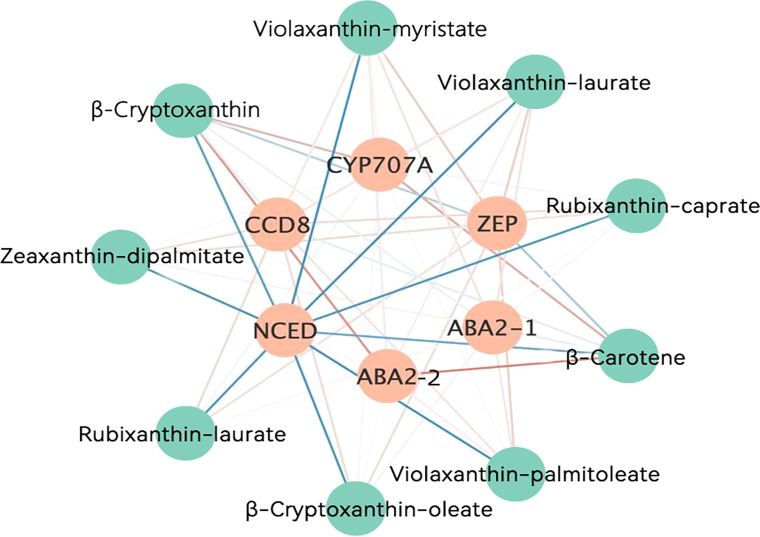
Flesh color is an important target trait in peach [ (L.) Batsch] breeding. In this study, two white-fleshed peach cultivars were crossed [Changsong Whitepeach (WP-1) × 'Xiacui'], and their hybrid F generation showed color segregation of white flesh (BF1) and yellow flesh (HF1). Metabolome analysis revealed that the flesh color segregation in the hybrid F generation was related to the carotenoid content. The decrease in β-carotene and β-cryptoxanthin in BF1 flesh and increase in β-cryptoxanthin oleate, rubixanthin caprate, rubixanthin laurate and zeaxanthin dipalmitate in HF1 flesh contributed to their difference in carotenoid accumulation. Transcriptome analysis demonstrated that compared with BF1, HF1 showed significant up-regulation and down-regulation of and at the core-hardening stage, respectively, while significant down-regulation of in the whole fruit development stage. The down-regulation of might inhibit the breakdown of the violaxanthin and its upstream substances and further promote the accumulation of carotenoids, resulting in yellow flesh. Therefore, may be a key gene controlling the fruit color traits of peach. In this study, targeted metabolomics and transcriptomics were used to jointly explore the mechanism controlling the fruit color of peach, which may help to identify the key genes for the differences in carotenoid accumulation and provide a reference for the breeding of yellow-fleshed peach.
果肉颜色是桃[ (L.) Batsch]育种中的一个重要目标性状。在本研究中,两个白肉桃品种进行了杂交[长松白桃(WP - 1)ב夏翠’],其杂交F代出现了白肉(BF1)和黄肉(HF1)的颜色分离。代谢组分析表明,杂交F代的果肉颜色分离与类胡萝卜素含量有关。BF1果肉中β - 胡萝卜素和β - 隐黄质的减少以及HF1果肉中β - 隐黄质油酸酯、玉红黄质癸酸酯、玉红黄质月桂酸酯和玉米黄质二棕榈酸酯的增加导致了它们在类胡萝卜素积累上的差异。转录组分析表明,与BF1相比,HF1在硬核期分别表现出显著的上调和下调,而在整个果实发育阶段则显著下调。的下调可能抑制了紫黄质及其上游物质的分解,进而促进了类胡萝卜素的积累,导致果肉变黄。因此,可能是控制桃果实颜色性状的关键基因。本研究利用靶向代谢组学和转录组学联合探究桃果实颜色的调控机制,这可能有助于鉴定类胡萝卜素积累差异的关键基因,并为黄肉桃育种提供参考。