• 文献检索
  • 文档翻译
  • 深度研究
  • 学术资讯
  • Suppr Zotero 插件Zotero 插件
  • 邀请有礼
  • 套餐&价格
  • 历史记录
应用&插件
Suppr Zotero 插件Zotero 插件浏览器插件Mac 客户端Windows 客户端微信小程序
定价
高级版会员购买积分包购买API积分包
服务
文献检索文档翻译深度研究API 文档MCP 服务
关于我们
关于 Suppr公司介绍联系我们用户协议隐私条款
关注我们

Suppr 超能文献

核心技术专利:CN118964589B侵权必究
粤ICP备2023148730 号-1Suppr @ 2026

文献检索

告别复杂PubMed语法,用中文像聊天一样搜索,搜遍4000万医学文献。AI智能推荐,让科研检索更轻松。

立即免费搜索

文件翻译

保留排版,准确专业,支持PDF/Word/PPT等文件格式,支持 12+语言互译。

免费翻译文档

深度研究

AI帮你快速写综述,25分钟生成高质量综述,智能提取关键信息,辅助科研写作。

立即免费体验

基于微信的健康教育应用程序在患者自我管理中的设计与应用

Design and Application of Health Education Apps Based on WeChat for Self-Management among Patients.

作者信息

Yang Hai-Ling, Luan Xiao-Rong, Zhao Ling-Ling, Wang Jun-Wen, Chen Yuan-Yuan

机构信息

Department of Logistics Support, Qilu Hospital of Shandong University, Jinan 250012, Shandong, China.

Philippine Women's University, Manila, Philippines.

出版信息

Iran J Public Health. 2022 May;51(5):1020-1029. doi: 10.18502/ijph.v51i5.9417.

DOI:10.18502/ijph.v51i5.9417
PMID:36407732
原文链接:https://pmc.ncbi.nlm.nih.gov/articles/PMC9643230/
Abstract

BACKGROUND

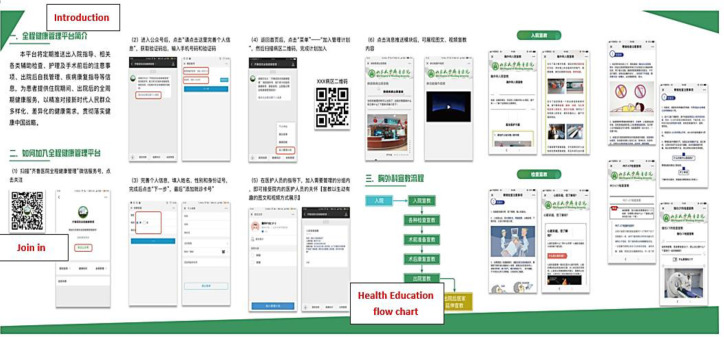
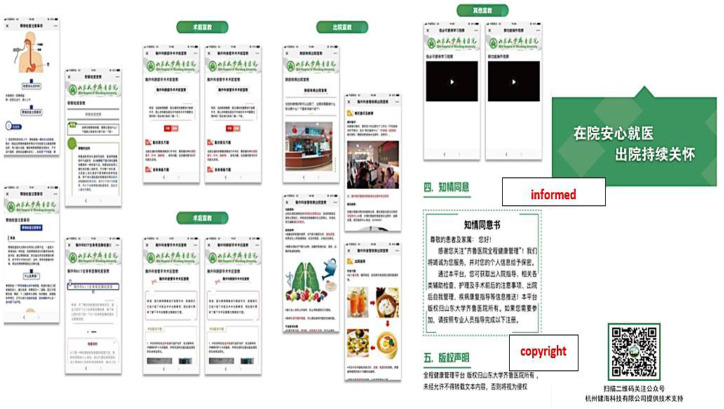
We started to design and test health education Apps for self-management among patients to provide a rich source of clinical support and information for patients to increase their ability of self-management.

METHODS

First, a multidisciplinary research team worked together to design and conduct the research. With their help, we redesigned an apps to incorporate some personalized changes for patients' needs. Second, we chose a questionnaire from the Comprehensive Service Platform for the Elderly self-designed by CHENYu. Finally, a purposive sample of 34 users were tested experiences and satisfaction of users in Jul 2021.

RESULTS

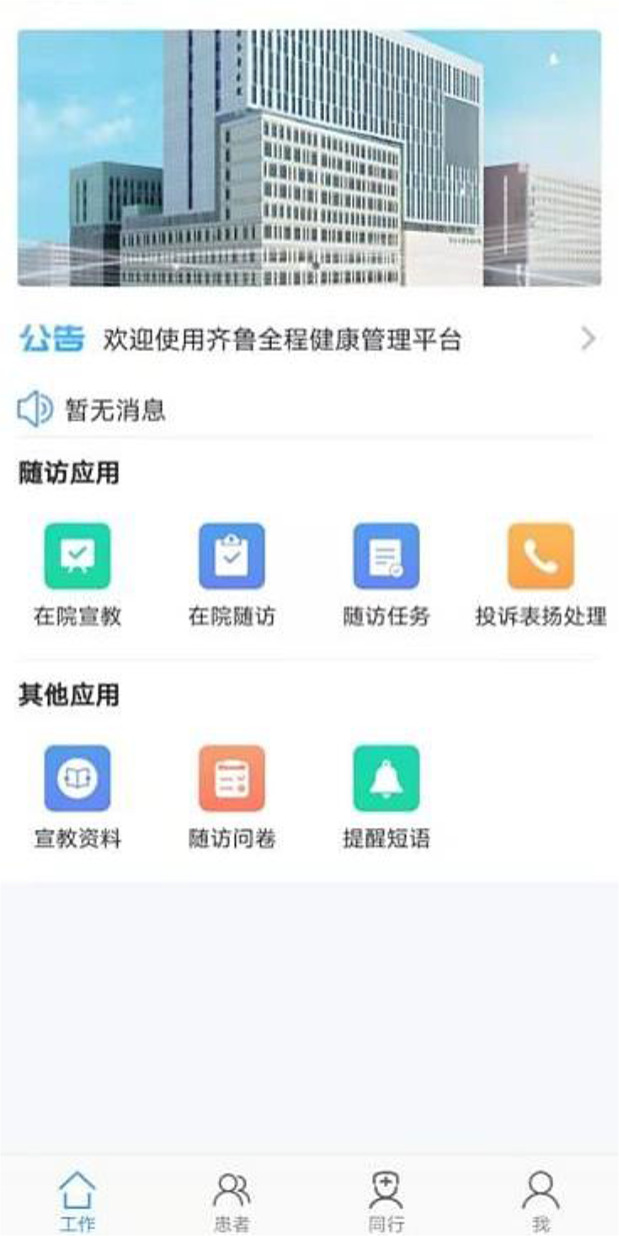
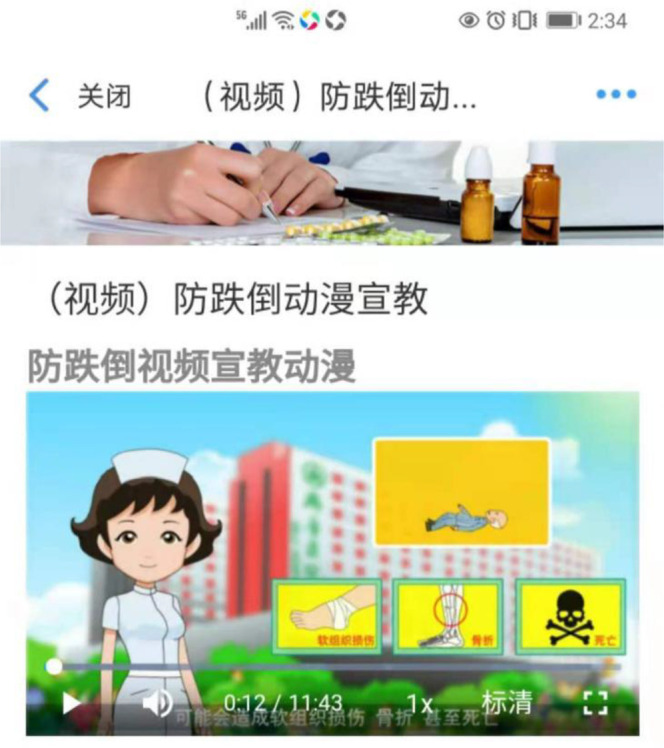
This research was successfully conducted in 22 wards among 23159 patients and 40440 chapters about healthy information sent to patients from Mar 2019 to January 2021 by smartphone. The data showed that 91.2% of participants resolved that the evaluation effect of the proposed application was better, in comparison with the paper version as routine verbal instruction. Additionally, 85.3% of participants wanted to continue to receive medical education information after discharge from the hospital. The top four most popular medical education information that they would like to receive included drug administration, disease prevention, nursing, and home care. Moreover, the top four most popular types of user suggestions were one-on-one online Q & A, continue to see every session, accelerate the speed of browsing and page updated, and free Wifi. The user satisfaction of the application was considerably high.

CONCLUSION

The apps was welcomed by patients who wanted to increase their knowledge level of disease and perform self-management better.

摘要

背景

我们开始设计和测试面向患者自我管理的健康教育应用程序,为患者提供丰富的临床支持和信息来源,以提高他们的自我管理能力。

方法

首先,一个多学科研究团队共同努力设计和开展这项研究。在他们的帮助下,我们重新设计了一款应用程序,根据患者需求纳入了一些个性化改变。其次,我们从陈玉自行设计的老年人综合服务平台中选取了一份问卷。最后,2021年7月,对34名用户进行了有目的抽样,测试用户体验和满意度。

结果

这项研究在22个病房的23159名患者中成功开展,2019年3月至2021年1月期间通过智能手机向患者发送了40440条关于健康信息的章节。数据显示,与纸质版常规口头指导相比,91.2%的参与者认为所提议应用程序的评估效果更好。此外,85.3%的参与者希望出院后继续接收医学教育信息。他们最希望接收的四大最受欢迎的医学教育信息包括用药、疾病预防、护理和家庭护理。此外,最受欢迎的四大用户建议类型是一对一在线问答、继续观看每一期、加快浏览速度和页面更新以及免费无线网络。该应用程序的用户满意度相当高。

结论

该应用程序受到了希望提高疾病知识水平并更好地进行自我管理的患者的欢迎。
https://cdn.ncbi.nlm.nih.gov/pmc/blobs/1806/9643230/81d4238b9289/IJPH-51-1020-g005.jpg
https://cdn.ncbi.nlm.nih.gov/pmc/blobs/1806/9643230/defc1f4e600c/IJPH-51-1020-g001.jpg
https://cdn.ncbi.nlm.nih.gov/pmc/blobs/1806/9643230/2fdd745872ec/IJPH-51-1020-g002.jpg
https://cdn.ncbi.nlm.nih.gov/pmc/blobs/1806/9643230/f626548d3631/IJPH-51-1020-g003.jpg
https://cdn.ncbi.nlm.nih.gov/pmc/blobs/1806/9643230/54c16d586da1/IJPH-51-1020-g004.jpg
https://cdn.ncbi.nlm.nih.gov/pmc/blobs/1806/9643230/81d4238b9289/IJPH-51-1020-g005.jpg
https://cdn.ncbi.nlm.nih.gov/pmc/blobs/1806/9643230/defc1f4e600c/IJPH-51-1020-g001.jpg
https://cdn.ncbi.nlm.nih.gov/pmc/blobs/1806/9643230/2fdd745872ec/IJPH-51-1020-g002.jpg
https://cdn.ncbi.nlm.nih.gov/pmc/blobs/1806/9643230/f626548d3631/IJPH-51-1020-g003.jpg
https://cdn.ncbi.nlm.nih.gov/pmc/blobs/1806/9643230/54c16d586da1/IJPH-51-1020-g004.jpg
https://cdn.ncbi.nlm.nih.gov/pmc/blobs/1806/9643230/81d4238b9289/IJPH-51-1020-g005.jpg

相似文献

1
Design and Application of Health Education Apps Based on WeChat for Self-Management among Patients.基于微信的健康教育应用程序在患者自我管理中的设计与应用
Iran J Public Health. 2022 May;51(5):1020-1029. doi: 10.18502/ijph.v51i5.9417.
2
User Preferences and Design Recommendations for an mHealth App to Promote Cystic Fibrosis Self-Management.用户对促进囊性纤维化自我管理的移动医疗应用程序的偏好和设计建议。
JMIR Mhealth Uhealth. 2014 Oct 24;2(4):e44. doi: 10.2196/mhealth.3599.
3
Smartphone and tablet self management apps for asthma.用于哮喘的智能手机和平板电脑自我管理应用程序。
Cochrane Database Syst Rev. 2013 Nov 27;2013(11):CD010013. doi: 10.1002/14651858.CD010013.pub2.
4
Educating Patients by Providing Timely Information Using Smartphone and Tablet Apps: Systematic Review.通过使用智能手机和平板电脑应用程序提供及时信息来教育患者:系统评价
J Med Internet Res. 2020 Apr 13;22(4):e17342. doi: 10.2196/17342.
5
Commercially Available Smartphone Apps to Support Postoperative Pain Self-Management: Scoping Review.支持术后疼痛自我管理的商用智能手机应用程序:范围综述
JMIR Mhealth Uhealth. 2017 Oct 23;5(10):e162. doi: 10.2196/mhealth.8230.
6
User Perceptions of Virtual Hospital Apps in China: Systematic Search.用户对中国虚拟医院应用程序的看法:系统搜索。
JMIR Mhealth Uhealth. 2020 Aug 12;8(8):e19487. doi: 10.2196/19487.
7
Going digital: a narrative overview of the effects, quality and utility of mobile apps in chronic disease self-management.走向数字化:移动应用程序在慢性病自我管理中的效果、质量及效用的叙述性概述
Aust Health Rev. 2020 Feb;44(1):62-82. doi: 10.1071/AH18064.
8
"": Design Implications for Mobile Apps and Wearables Contributing to Self-Efficacy of Patients With Chronic Conditions.《对有助于慢性病患者自我效能感的移动应用程序和可穿戴设备的设计启示》
Front Psychol. 2019 Oct 23;10:2388. doi: 10.3389/fpsyg.2019.02388. eCollection 2019.
9
Facilitators and barriers to using physical activity smartphone apps among Chinese patients with chronic diseases.中国慢性病患者使用体育活动智能手机应用程序的促进因素和障碍
BMC Med Inform Decis Mak. 2017 Apr 19;17(1):44. doi: 10.1186/s12911-017-0446-0.
10
Using Participatory Design Methodologies to Co-Design and Culturally Adapt the Spanish Version of the Mental Health eClinic: Qualitative Study.运用参与式设计方法共同设计心理健康电子诊所的西班牙语版本并进行文化调适:定性研究。
J Med Internet Res. 2019 Aug 2;21(8):e14127. doi: 10.2196/14127.

引用本文的文献

1
Nurses' Roles in mHealth App Development: Scoping Review.护士在移动健康应用程序开发中的角色:范围综述
JMIR Nurs. 2023 Oct 17;6:e46058. doi: 10.2196/46058.
2
Study on the Efficacy of "Information Platform + Self-Care Model" on the Health Status of Discharged Patients Following Vaginal Natural Orifice Transluminal Endoscopic Surgery.“信息平台+自我护理模式”对经阴道自然腔道内镜手术出院患者健康状况的疗效研究
Int J Womens Health. 2023 Jul 25;15:1185-1195. doi: 10.2147/IJWH.S416134. eCollection 2023.

本文引用的文献

1
"Shared Decision Making Assistant": A Smartphone Application to Meet the Decision-Making Needs of Patients With Primary Liver Cancer.“共享决策辅助”:一款满足原发性肝癌患者决策需求的智能手机应用程序。
Comput Inform Nurs. 2021 Jun 3;39(12):984-991. doi: 10.1097/CIN.0000000000000775.
2
Development of a Web Exercise Video for Nursing Intervention in Outpatients With Low Back Pain.开发用于门诊腰痛患者护理干预的网络锻炼视频。
Comput Inform Nurs. 2020 Mar 5;38(9):466-472. doi: 10.1097/CIN.0000000000000606.
3
The Development of the Postpartum Depression Self-Management Mobile Application "Happy Mother".
《产后抑郁自我管理手机应用程序“快乐妈妈”的研发》
Comput Inform Nurs. 2021 Apr 2;39(8):439-449. doi: 10.1097/CIN.0000000000000738.
4
Effects of Self-Education on Patient Safety via Smartphone Application for Self-Efficacy and Safety Behaviors of Inpatients in Korea.韩国通过智能手机应用程序进行自我教育对住院患者自我效能和安全行为的影响及其对患者安全的作用
Healthc Inform Res. 2021 Jan;27(1):48-56. doi: 10.4258/hir.2021.27.1.48. Epub 2021 Jan 31.
5
Using a Systems Engineering Approach to Design an Interactive Mobile Health Application for Improving Asthma Self-management.采用系统工程方法设计交互式移动健康应用程序以改善哮喘自我管理
Comput Inform Nurs. 2020 Dec 4;39(4):221-228. doi: 10.1097/CIN.0000000000000691.
6
Improving the quality of bowel preparation through an app for inpatients undergoing colonoscopy: A randomized controlled trial.通过为接受结肠镜检查的住院患者开发的应用程序提高肠道准备质量:一项随机对照试验。
J Adv Nurs. 2020 Apr;76(4):1037-1045. doi: 10.1111/jan.14295. Epub 2020 Jan 8.
7
"": Design Implications for Mobile Apps and Wearables Contributing to Self-Efficacy of Patients With Chronic Conditions.《对有助于慢性病患者自我效能感的移动应用程序和可穿戴设备的设计启示》
Front Psychol. 2019 Oct 23;10:2388. doi: 10.3389/fpsyg.2019.02388. eCollection 2019.
8
Are Austrian practitioners ready to use medical apps? Results of a validation study.奥地利从业者是否准备好使用医疗应用程序?验证研究的结果。
BMC Med Inform Decis Mak. 2019 Apr 24;19(1):88. doi: 10.1186/s12911-019-0811-2.
9
A User-Centered Approach: Understanding Client and Caregiver Needs and Preferences in the Development of mHealth Apps for Self-Management.一种以用户为中心的方法:在开发用于自我管理的移动健康应用程序时了解客户和护理人员的需求与偏好。
JMIR Mhealth Uhealth. 2017 Sep 26;5(9):e141. doi: 10.2196/mhealth.7136.
10
Selecting, appraising, recommending and using mobile applications (apps) in nursing.护理中移动应用程序(应用)的选择、评估、推荐及使用
J Clin Nurs. 2017 Nov;26(21-22):3253-3255. doi: 10.1111/jocn.13834. Epub 2017 Aug 9.