School of Public Health, Faculty of Medicine, The University of Queensland, Brisbane, QLD, Australia.
Division of Public Health Sciences, Department of Surgery, Washington University School of Medicine, St Louis, MO, USA.
Breast Cancer Res Treat. 2023 Apr;198(3):413-421. doi: 10.1007/s10549-022-06792-0. Epub 2022 Nov 23.
Circadian rhythm disruptors (e.g., night-shift work) are risk factors for breast cancer, however studies on their association with prognosis is limited. A small but growing body of research suggests that altered sleep patterns and eating behaviours are potential mechanistic links between circadian rhythm disruptors and breast cancer. We therefore systematically summarised literature examining the influence of circadian rhythm disrupting behaviours on cancer outcomes in women with breast cancer.
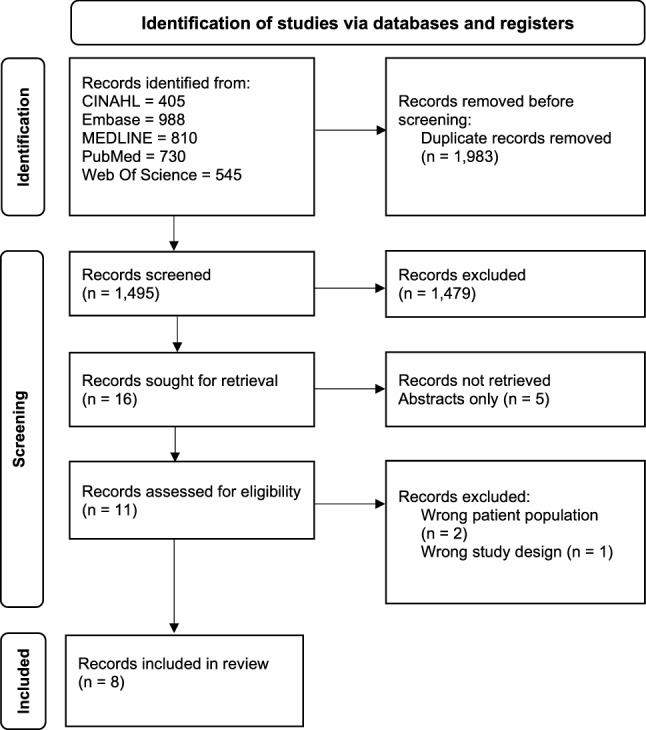
A systematic search of five databases from inception to January 2021 was conducted. Original research published in English, assessing the relationship between post-diagnosis sleep patters and eating behaviours, and breast cancer outcomes were considered. Risk of bias was assessed using the Newcastle-Ottawa Assessment Scale for Cohort Studies.
Eight studies published original evidence addressing sleep duration and/or quality (k = 7) and, eating time and frequency (k = 1). Longer sleep duration (≥ 9 h versus [referent range] 6-8 h) was consistently associated with increased risk of all outcomes of interest (HR range: 1.37-2.33). There was limited evidence to suggest that measures of better sleep quality are associated with lower risk of all-cause mortality (HR range: 0.29-0.97). Shorter nightly fasting duration (< 13 h versus ≥ 13 h) was associated with higher risk of all breast cancer outcomes (HR range: 1.21-1.36).
Our review suggests that circadian rhythm disrupting behaviours may influence cancer outcomes in women with breast cancer. While causality remains unclear, to further understand these associations future research directions have been identified. Additional well-designed studies, examining other exposures (e.g., light exposure, temporal eating patterns), biomarkers, and patient-reported outcomes, in diverse populations (e.g., breast cancer subtype-specific, socio-demographic diversity) are warranted.
昼夜节律紊乱(例如,夜班工作)是乳腺癌的危险因素,但是关于其与预后相关性的研究有限。越来越多的研究表明,睡眠模式和饮食习惯的改变可能是昼夜节律紊乱与乳腺癌之间的潜在机制联系。因此,我们系统地总结了评估昼夜节律紊乱行为对乳腺癌女性癌症结局影响的文献。
从开始到 2021 年 1 月,对五个数据库进行了系统搜索。考虑了发表在英文期刊上的、评估诊断后睡眠模式和饮食习惯与乳腺癌结局之间关系的原始研究。使用纽卡斯尔-渥太华评估量表(Newcastle-Ottawa Assessment Scale)评估偏倚风险。
八项研究发表了原始证据,涉及睡眠持续时间和/或质量(k=7)和,进食时间和频率(k=1)。较长的睡眠持续时间(≥9 小时与[参考范围]6-8 小时)与所有感兴趣结局的风险增加一致(HR 范围:1.37-2.33)。有限的证据表明,更好的睡眠质量指标与全因死亡率降低相关(HR 范围:0.29-0.97)。夜间禁食时间较短(<13 小时与≥13 小时)与所有乳腺癌结局的风险增加相关(HR 范围:1.21-1.36)。
我们的综述表明,昼夜节律紊乱行为可能影响乳腺癌女性的癌症结局。虽然因果关系尚不清楚,但为了进一步了解这些关联,已经确定了未来的研究方向。需要在不同人群中(例如,乳腺癌亚型特异性、社会人口统计学多样性)进行更多设计良好的研究,以检查其他暴露(例如,光照暴露、时间性饮食模式)、生物标志物和患者报告的结局。