
使用定量脑电图对儿童注意力缺陷/多动障碍亚型进行分类的特征
Characteristics of Attention-Deficit/Hyperactivity Disorder Subtypes in Children Classified Using Quantitative Electroencephalography.
作者信息
Ji Yoonmi, Choi Tae Young, Lee Jonghun, Yoon Seoyoung, Won Geun Hui, Jeong Hyerin, Kang Seung Wan, Kim Jun Won
机构信息
Department of Psychiatry, Daegu Catholic University School of Medicine, Daegu, Republic of Korea.
iMediSync Inc, Seoul, Republic of Korea.
出版信息
Neuropsychiatr Dis Treat. 2022 Nov 21;18:2725-2736. doi: 10.2147/NDT.S386774. eCollection 2022.
PURPOSE
This study used quantitative electroencephalography (QEEG) to investigate the characteristics of attention-deficit/hyperactivity disorder (ADHD) subtypes in children.
PATIENTS AND METHODS
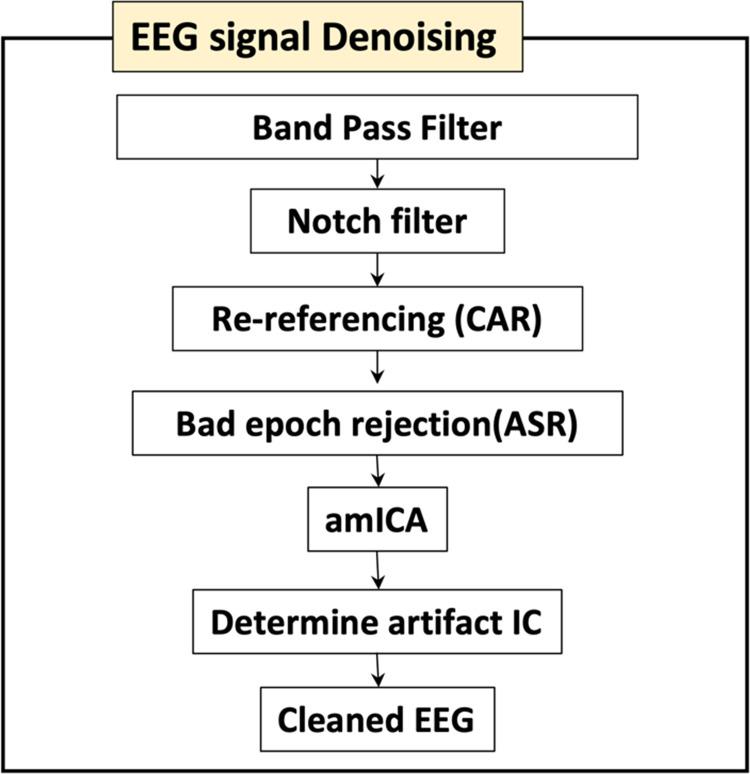
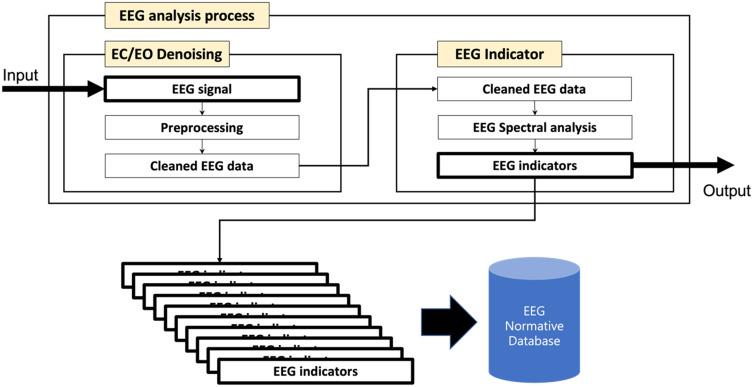
There were 69 subjects (42 with ADHD and 27 neurotypical (NT)) in this study. A semi-structured interview was conducted with each participant for psychiatric diagnostic evaluation. We measured the absolute and relative power in 19 channels and analyzed QEEG using the following frequency ranges: delta (1-4 Hz), theta (4-8 Hz), alpha 1 (8-10 Hz), alpha 2 (10-12 Hz), beta 1 (12-15 Hz), beta 2 (15-20 Hz), beta 3 (20-30 Hz), and gamma (30-45 Hz). Group analyses and EEG noise preprocessing were conducted using iSyncBrain, a cloud-based, artificial intelligence EEG analysis platform. Analysis of covariance adjusted for IQ, age, and sex was used.
RESULTS
QEEG analysis revealed three ADHD subtypes, characterized by (A) elevated relative fast alpha and beta power, (B) elevated absolute slow frequency (delta and theta power), or (C) elevated absolute and relative beta power. A significant difference was found in the Korean ADHD Rating Scale (K-ARS) among the four groups (df=3, F=8.004, p<0.001); group C had the highest score (25.31±11.16), followed by group A (21.67±13.18). The score of group B (12.64±7.84) was similar to that of the NT group (11.07±6.12) and did not reach the cut-off point of the K-ARS. In the Wender-Utah Rating Scale (WURS), group B score (55.82±23.17) was significantly higher than the NT group score (42.81±13.26).
CONCLUSION
These results indicate that children with ADHD do not constitute a neurophysiologically homogenous group. Children with QEEG subtype B (elevated slow frequency) may be difficult to distinguish from normal children using the K-ARS, which is the most common screening tool for ADHD. Moreover, parents of children with this subtype may be less sensitive to observing ADHD symptoms.
目的
本研究采用定量脑电图(QEEG)来探究儿童注意力缺陷多动障碍(ADHD)亚型的特征。
患者与方法
本研究中有69名受试者(42名ADHD患儿和27名神经典型(NT)儿童)。对每位参与者进行了半结构化访谈以进行精神科诊断评估。我们测量了19个通道的绝对功率和相对功率,并使用以下频率范围分析QEEG:δ波(1 - 4赫兹)、θ波(4 - 8赫兹)、α1波(8 - 10赫兹)、α2波(10 - 12赫兹)、β1波(12 - 15赫兹)、β2波(15 - 20赫兹)、β3波(20 - 30赫兹)和γ波(30 - 45赫兹)。使用基于云的人工智能脑电图分析平台iSyncBrain进行组间分析和脑电图噪声预处理。采用协方差分析并对智商、年龄和性别进行了校正。
结果
QEEG分析揭示了三种ADHD亚型,其特征分别为:(A)相对快速的α波和β波功率升高;(B)绝对慢频率(δ波和θ波功率)升高;或(C)绝对和相对β波功率升高。四组在韩国ADHD评定量表(K - ARS)上存在显著差异(自由度 = 3,F = 8.004,p < 0.001);C组得分最高(25.31±11.16),其次是A组(21.67±13.18)。B组得分(12.64±7.84)与NT组(11.07±6.12)相似,未达到K - ARS的临界值。在温德尔 - 犹他评定量表(WURS)中,B组得分(55.82±23.17)显著高于NT组得分(42.81±13.26)。
结论
这些结果表明,ADHD患儿并非神经生理学上的同质群体。QEEG亚型B(慢频率升高)的儿童可能难以使用ADHD最常用的筛查工具K - ARS与正常儿童区分开来。此外,该亚型患儿的父母可能对观察ADHD症状不太敏感。

 Zotero 插件