Department of Biology, Memorial University of Newfoundland, St. John's, NL A1C 5S7, Canada.
Morden Research and Development Centre, Agriculture and Agri-Food Canada, Morden, MB R6M 1Y5, Canada.
Plant Physiol. 2023 Apr 3;191(4):2104-2119. doi: 10.1093/plphys/kiac541.
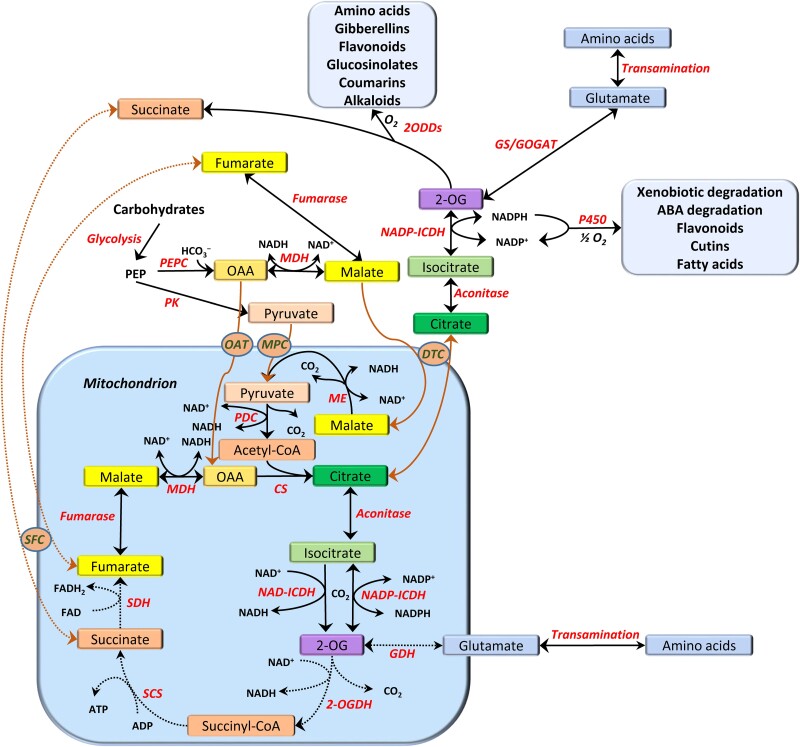
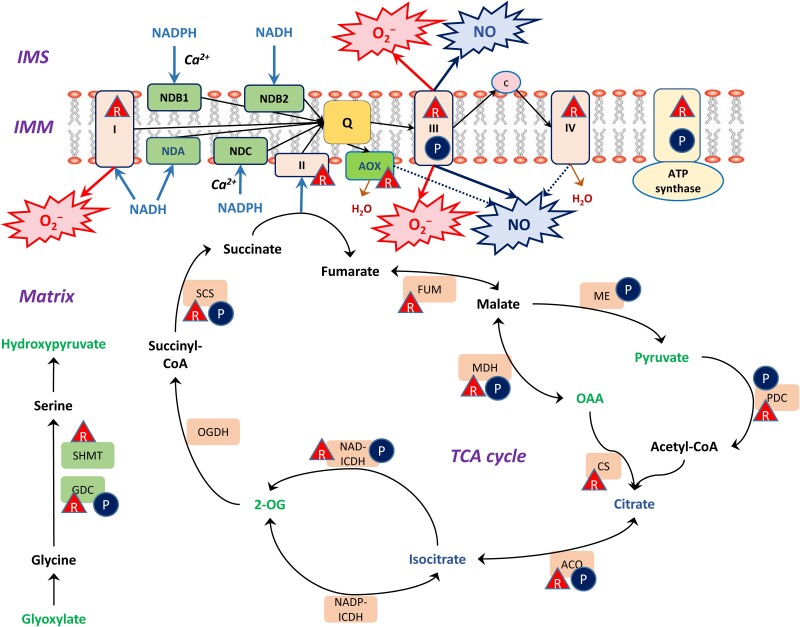
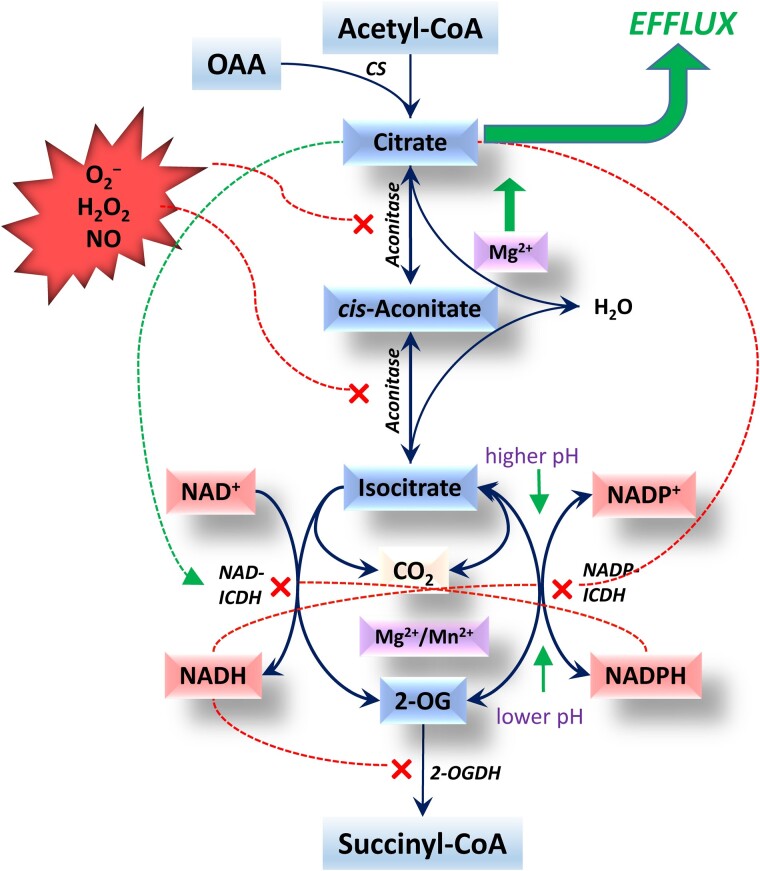
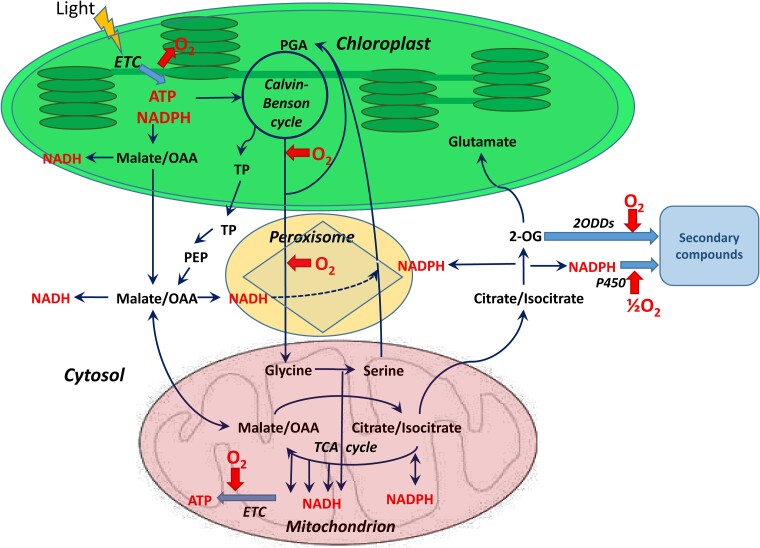
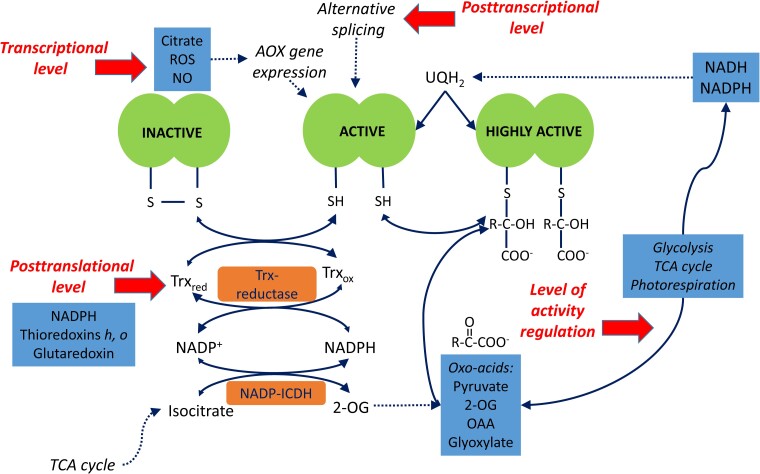
In photosynthetic tissues in the light, the function of energy production is associated primarily with chloroplasts, while mitochondrial metabolism adjusts to balance ATP supply, regulate the reduction level of pyridine nucleotides, and optimize major metabolic fluxes. The tricarboxylic acid cycle in the light transforms into a noncyclic open structure (hemicycle) maintained primarily by the influx of malate and the export of citrate to the cytosol. The exchange of malate and citrate forms the basis of feeding redox energy from the chloroplast into the cytosolic pathways. This supports the level of NADPH in different compartments, contributes to the biosynthesis of amino acids, and drives secondary metabolism via a supply of substrates for 2-oxoglutarate-dependent dioxygenase and for cytochrome P450-catalyzed monooxygenase reactions. This results in the maintenance of redox and energy balance in photosynthetic plant cells and in the formation of numerous bioactive compounds specific to any particular plant species. The noncoupled mitochondrial respiration operates in coordination with the malate and citrate valves and supports intensive fluxes of respiration and photorespiration. The metabolic system of plants has features associated with the remarkable metabolic plasticity of mitochondria that permit the use of energy accumulated during photosynthesis in a way that all anabolic and catabolic pathways become optimized and coordinated.
在光照下的光合组织中,能量产生的功能主要与叶绿体相关,而线粒体代谢则进行调整以平衡 ATP 的供应,调节吡啶核苷酸的还原水平,并优化主要代谢通量。光照下的三羧酸循环转变为主要由苹果酸流入和柠檬酸向细胞质输出维持的非循环开放结构(半循环)。苹果酸和柠檬酸的交换构成了从叶绿体向细胞质途径输入氧化还原能量的基础。这支持了不同隔室中 NADPH 的水平,有助于氨基酸的生物合成,并通过为依赖 2-氧戊二酸的加双氧酶和细胞色素 P450 催化的单加氧酶反应的底物供应来驱动次级代谢。这导致了光合植物细胞中氧化还原和能量平衡的维持,并形成了许多特定于任何特定植物物种的生物活性化合物。非偶联的线粒体呼吸与苹果酸和柠檬酸阀协调运作,支持呼吸和光呼吸的强烈通量。植物的代谢系统具有与线粒体显著的代谢可塑性相关的特征,这些特征允许以优化和协调所有合成代谢和分解代谢途径的方式利用光合作用中积累的能量。