Department of Experiment Center, School of Medical Technology, Beihua University, No. 3999 Binjiang East Road, Fengman District, Jilin City, Jilin Province, China.
Mol Cell Biochem. 2023 Jul;478(7):1621-1631. doi: 10.1007/s11010-022-04615-w. Epub 2022 Nov 28.
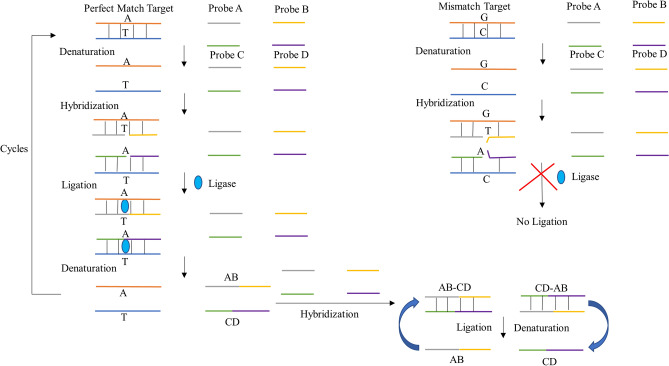
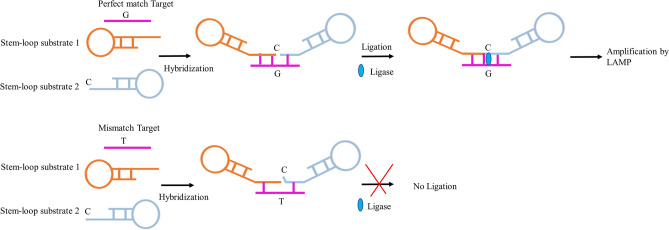
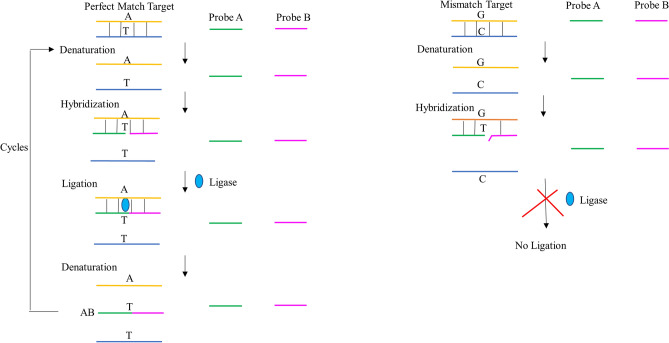
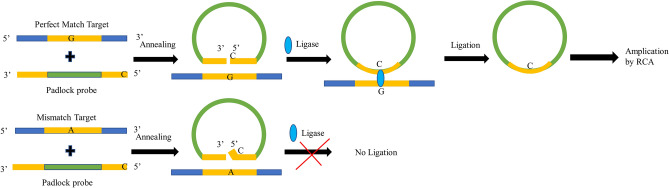
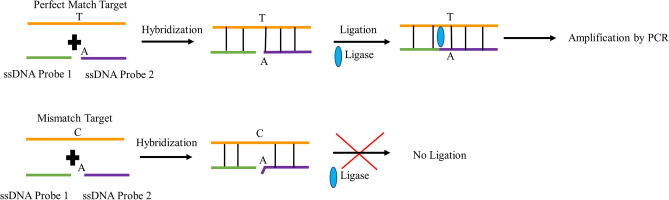
Gene mutation has been a concern for researchers because it results in genetic variations with base changes in molecular structure. Researchers continue to explore methods to detect gene mutations, which may help in disease diagnosis, medication guidance, and so on. Currently, the detection methods, such as whole-genome sequencing and polymerase chain reaction, have some limitations in terms of cost and sensitivity. Ligase (an enzyme) can recognize base mismatch as a commonly used tool in genetic engineering. Therefore, the ligase-related nucleic acid amplification technology for detecting gene mutations has become a research hotspot. In this study, the main techniques explored for detecting gene mutations included the ligase detection reaction, ligase chain reaction, rolling circle amplification reaction, enzyme-assisted polymerase chain reaction, and loop-mediated isothermal amplification reaction. This review aimed to analyze the aforementioned techniques and mainly present their advantages and disadvantages, sensitivity, specificity, cost, detection time, applications, and so on. The findings may help develop sufficient grounds for further studies on detecting gene mutations.
基因突变一直是研究人员关注的问题,因为它会导致分子结构中碱基变化的遗传变异。研究人员一直在探索检测基因突变的方法,这可能有助于疾病诊断、药物指导等。目前,全基因组测序和聚合酶链反应等检测方法在成本和灵敏度方面存在一些局限性。连接酶(一种酶)可以识别碱基错配,是基因工程中常用的工具。因此,用于检测基因突变的连接酶相关核酸扩增技术已成为研究热点。本研究中,用于检测基因突变的主要技术包括连接酶检测反应、连接酶链反应、滚环扩增反应、酶辅助聚合酶链反应和环介导等温扩增反应。本综述旨在分析上述技术,并主要介绍它们的优缺点、灵敏度、特异性、成本、检测时间、应用等。这些发现可能有助于为进一步研究基因突变检测提供充分的依据。