Abid Fizzah, Iqbal Talha, Khan Khushbukhat, Badshah Yasmin, Trembley Janeen H, Ashraf Naeem Mahmood, Shabbir Maria, Afsar Tayyaba, Almajwal Ali, Razak Suhail
Atta-Ur-Rahman School of Applied Biosciences, National University of Sciences and Technology, Islamabad, Pakistan.
Minneapolis VA Health Care System Research Service, Minneapolis, MN, USA.
Biomark Res. 2022 Nov 30;10(1):87. doi: 10.1186/s40364-022-00437-6.
HCC is a major health concern worldwide. PKC gamma, a member of the conventional PKC subclass, is involved in many cancer types, but the protein has received little attention in the context of single nucleotide polymorphisms and HCC. Therefore, the study aims to investigate the association of PKC gamma missense SNP with HCV-induced hepatocellular carcinoma.
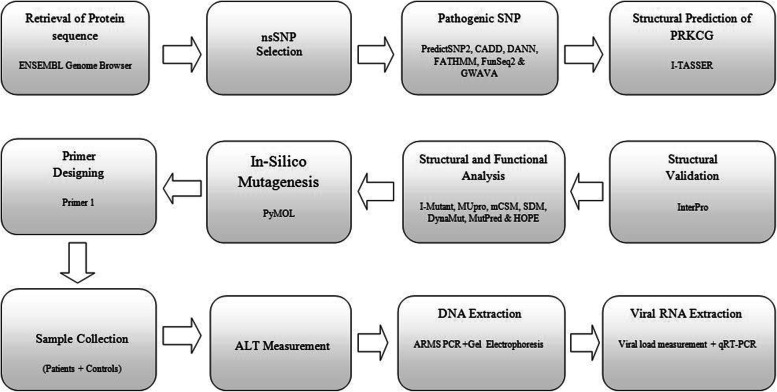
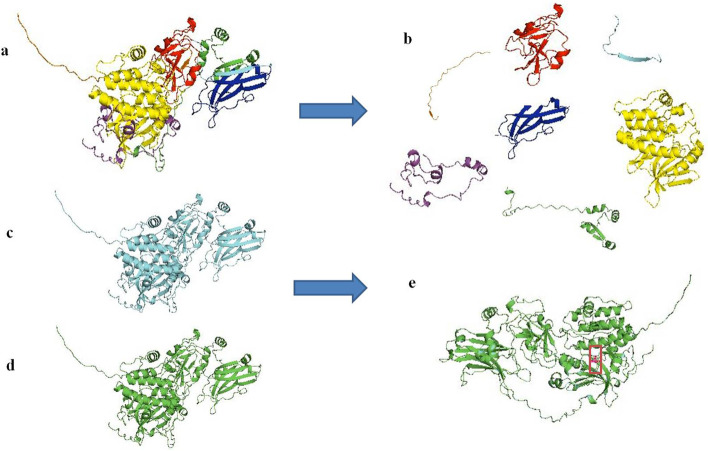
The PKC gamma nsSNPs were retrieved from the ENSEMBL genome browser and the deleterious nsSNPs were filtered out through involvingPredictSNP2, CADD, DANN, FATHMM, FunSeq2 and GWAVA. Among the filtered nsSNPs, nsSNP rs1331262028 was identified to be the most pathogenic one. Through involving I-TASSER, ProjectHOPE, I-Mutant, MUpro, mCSM, SDM, DynaMut and MutPred, the influence of SNP rs1331262028 on protein structure, function and stability was estimated. A molecular Dynamic simulation was run to determine the conformational changes in mutant protein structure compared to wild. The blood samples were collected for genotyping analysis and for assessing ALT levels in the blood.
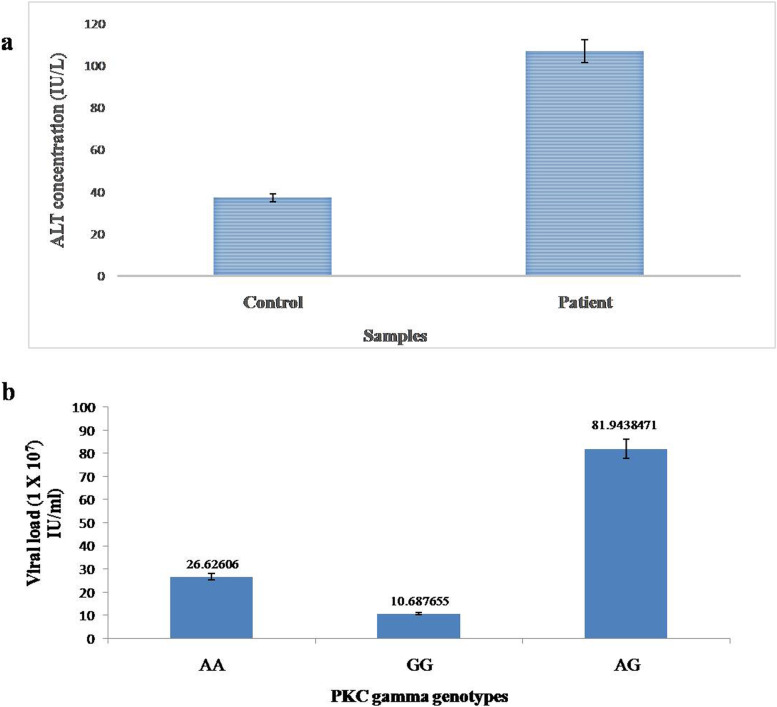
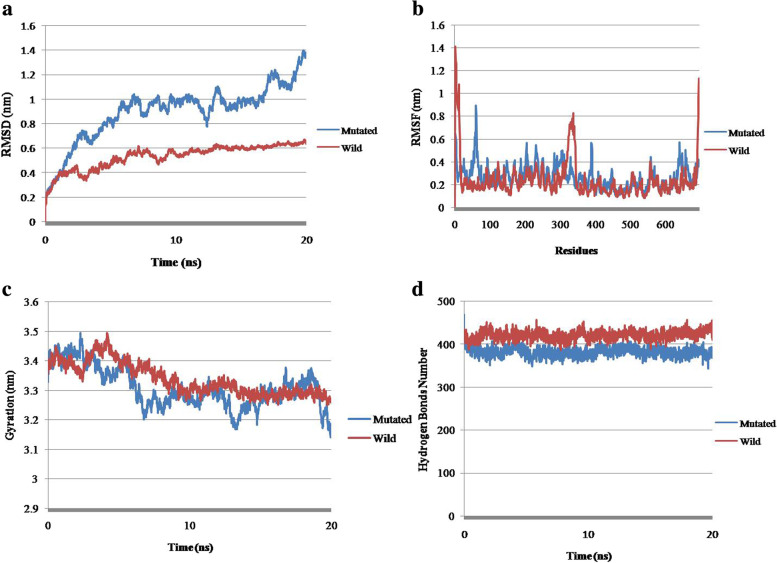
The study identified for the first time an SNP (rs1331262028) of PRKCG to strongly decrease protein stability and induce HCC. The RMSD, RMSF, and Rg values of mutant and wild types found were significantly different. Based on OR and RR values of 5.194 and 2.287, respectively, genotype analysis revealed a higher correlation between the SNP homozygous wild Typeform, AA, and the disease while patients with genotype AG have higher viral load.
Outcomes of the current study delineated PKC gamma SNP rs1331262028 as a genetic marker for HCV-induced HCC that could facilitate disease management after further validation.
肝癌是全球主要的健康问题。蛋白激酶Cγ(PKCγ)是传统PKC亚类的成员,参与多种癌症类型,但在单核苷酸多态性和肝癌背景下,该蛋白很少受到关注。因此,本研究旨在探讨PKCγ错义单核苷酸多态性与丙型肝炎病毒(HCV)诱导的肝细胞癌之间的关联。
从ENSEMBL基因组浏览器中检索PKCγ非同义单核苷酸多态性(nsSNPs),并通过PredictSNP2、CADD、DANN、FATHMM、FunSeq2和GWAVA筛选出有害的nsSNPs。在筛选出的nsSNPs中,nsSNP rs1331262028被确定为最具致病性的一个。通过I-TASSER、ProjectHOPE、I-Mutant、MUpro、mCSM、SDM、DynaMut和MutPred评估SNP rs1331262028对蛋白质结构、功能和稳定性的影响。进行分子动力学模拟以确定突变蛋白结构与野生型相比的构象变化。采集血样进行基因分型分析并评估血液中的谷丙转氨酶(ALT)水平。
该研究首次发现PRKCG的一个单核苷酸多态性(rs1331262028)会显著降低蛋白质稳定性并诱发肝癌。所发现的突变型和野生型的均方根偏差(RMSD)、均方根波动(RMSF)和回旋半径(Rg)值存在显著差异。基于比值比(OR)和相对危险度(RR)值分别为5.194和2.287,基因型分析显示单核苷酸多态性纯合野生型(AA)与疾病之间的相关性更高,而基因型为AG的患者病毒载量更高。
本研究结果将PKCγ单核苷酸多态性rs1331262028描绘为HCV诱导的肝癌的遗传标志物,经过进一步验证后可能有助于疾病管理。